Ben Okri - The Famished Road
Здесь есть возможность читать онлайн «Ben Okri - The Famished Road» весь текст электронной книги совершенно бесплатно (целиком полную версию без сокращений). В некоторых случаях можно слушать аудио, скачать через торрент в формате fb2 и присутствует краткое содержание. Жанр: Современная проза, на английском языке. Описание произведения, (предисловие) а так же отзывы посетителей доступны на портале библиотеки ЛибКат.
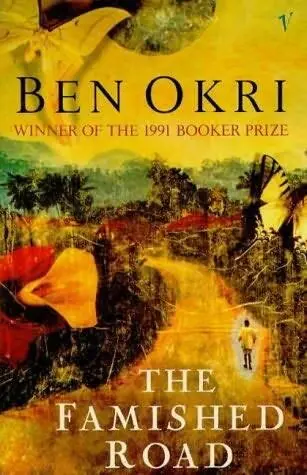
- Название:The Famished Road
- Автор:
- Жанр:
- Год:неизвестен
- ISBN:нет данных
- Рейтинг книги:5 / 5. Голосов: 1
-
Избранное:Добавить в избранное
- Отзывы:
-
Ваша оценка:
The Famished Road: краткое содержание, описание и аннотация
Предлагаем к чтению аннотацию, описание, краткое содержание или предисловие (зависит от того, что написал сам автор книги «The Famished Road»). Если вы не нашли необходимую информацию о книге — напишите в комментариях, мы постараемся отыскать её.
The Famished Road — читать онлайн бесплатно полную книгу (весь текст) целиком
Ниже представлен текст книги, разбитый по страницам. Система сохранения места последней прочитанной страницы, позволяет с удобством читать онлайн бесплатно книгу «The Famished Road», без необходимости каждый раз заново искать на чём Вы остановились. Поставьте закладку, и сможете в любой момент перейти на страницу, на которой закончили чтение.
Интервал:
Закладка:
‘Where have you been?’ he growled. Mum froze.
‘And why are you so late?’
‘I was at the market.’
‘Doingwhat?’
‘Trading.’
‘What market? What trade? This is how you women behave when you get into the newspapers. I have been sitting here, starving, and there is no food in the house. A man breaks his back for you all and you can’t prepare food for me when I come home! This is why people have been advising me to stop you tradingin that market. You women start a little trade and then begin to follow bad circles of women and get strange ideas in your head and neglect your family and leave me here starving with only cigarettes for food! Will a cigarette feed me?’ Dad shouted in his angriest voice, his hands lashingout everywhere.
‘I’m sorry, my husband, let me go and…’
‘You’re sorry? Will sorrow feed me? Do you know what kind of a terrible goat and donkey’s day I have had, eh? You should go and carry bags of cement one day to know what sort of an animal’s life I have!’ Dad went on shouting. He frightened us. He made the room unbearably small with his rage. He would not listen to anything and he did not notice anything and he went on about hisviciousday.Hewentonabouthowidiotshadbeenorderinghimaroundand thugs bossing everyone and that he was a hero and how he felt like giving up this whole life.
‘What about me?’ Mum said. ‘So what about you?’‘You think I don’t feellikegivingup, eh?’‘Give up!’ Dad screamed. ‘Go on, go on, give up, and let your son starve and wander everywhere like a beggar or an orphan!’ ‘Let me go and make food,’ Mum said in a conciliatory tone. ‘I’m not hungry any more. Go and make food for yourself.’ Mum started towards the kitchen and Dad pounced on her and grabbed her neck and pressed her face against the mattress. Mum didn’t resist or fight back and Dad pushed her head sideways, toweringoverhersoIcouldn’tseeherface,andthenwentbackto his chair.
‘Leave Mum alone,’ I said.‘Shut up! And wherehaveyou been anyway?’ Dad asked, glaringat me.I didn’t answer. I scurried out of the room. Soon Mum came out and we went to the backyard. We made some eba and warmed the stew. ‘Men arefools,’ was allMumsaid as wesat in thekitchen, staringinto thefire. When we finished cooking we served the food. We all ate silently. Dad was particularly ravenous. He finished his eba and asked for more. Mum left in the middle of her eating and made some more for him, which he swallowed shamelessly in great dollops. The steaming eba didn’t seem to affect his hands or his throat. When he had polished off his second helpinghesat back and rubbed his stomach contentedly.
‘I do a man’s work and eat a man’s food,’ he said, smiling.We didn’t smile with him.He sent me off to buy some ogogoro and cigarettes. As he drank and smoked his temper visibly waned. He tried to joke with us and we didn’t respond at all. ‘So what kept you?’ he asked Mother. ‘Nothing.’ ‘Nothing?’ ‘Nothing,’ she said, not looking at him. He looked worried and asked me what kept us.
‘Nothing,’ I said. ‘Nothing?’ ‘Yes.’ ‘Then what is that mud doingon your mother’s face?’ ‘Nothing,’ I said. Helookedat bothofusasifwewereconspiringagainsthim.Hewentonaskingus andwewent onrefusingtotellhim.Hesoughtatemperbut,havingeatenandfeeling contented, he could not whip one up. Mum was silent, deep in her solitude, and her face was impassive. It showed no pain, no unhappiness, but it showed no joy or contentment either. Dad pleaded for us to tell him what had kept us.
‘Did anyone threaten you?’‘No.’‘Did they steal your things?’‘No.’‘You didn’t hear any bad news?’‘Nothing.’‘Did the thugs harass you?’Mum paused a little before she said:‘Nothing.’
Dad creaked his back and stretched. He was deeply uncomfortable and almost miserable. Mum got up, cleared the table, and went to bathe. When she came back she went straight to bed. Dad sat in his chair, belching, and smoking, suffering the insomnia of one who cannot fathom the mystery of his wife’s implacable silence. I spreadoutmy matandlay watchinghimforawhile.Hiscigarettebecameastar.
‘There’s a full moon out tonight,’ he said.
While I watched his silhouette, the moon fell from the sky into the empty spaces of the darkness. I went looking for the moon. I followed great wide paths till I came to a shack near awell.Thephotographerwashidingbehindthewell,takingpicturesofthe stars and constellations. His camera flashed and thugs in dark glasses appeared from the flash and proceeded to beat him up. The camera fell from the photographer’s hands. I heard people screaming inside the camera. The thugs jumped on the camera and stamped onit,tryingtocrushanddestroy it.Andthepeoplewhowereinsidethe camera, who were waiting to become real, and who were trying to get out, began wailingand wouldn’t stop.
The photographer snatched up the broken camera. We ran into the shack and discovered that it had moved over the well. We fell down the well and found ourselves in a hail. The three men in dark glasses were everywhere, constantly multiplying. Dad was smokingamosquito coiland helooked at meand said:
‘What was mud doingon your mother’s face?’
One of the thugs in dark glasses heard him and saw us and said:
‘She is not one of us.’
The thugs ran after us. Me and the photographer fled into a room and encountered the sedate figure of Madame Koto, dressed in lace with gold trimmings, with a large fan of crocodile skin in her hand. She invited us in, welcomed us, and as we sat three men came and bound us. They shut us in a glass cabinet which would not break. Outside the cabinet chickens fluttered and turned into politicians. The politicians, wearingwhiterobes,flewabout theplace,talkinginstrangelanguages.Istayedthere, trapped behind glass, a photograph that Dad stared at, till dawn broke.
TWELVE
A FEW DAYS later I came upon Madame Koto and the three men. They were standing near a tree. They were involved in a passionate argument. Madame Koto looked fat and haggard. She didn’t have the white beads round her neck. When she saw me she stopped arguing. She made a movement towards me and a fear I couldn’t understand made me run.
‘Catch him!’ she cried.
The three men started after me, but without much conviction. They soon gave up the chase. I didn’t stop till I was near our compound.
I sat on the cement platform. Chickens roamed the street. Two dogs circled one another and when the afternoon seemed at its hottest one of the dogs succeeded in mounting the other. It was only when children gathered around them that it occurred to me that the two dogs were stuck. The dogs couldn’t separate themselves and the children laughed. They threw stones at the dogs and the pain forced them to come unstuck and they ran, howling, in opposite directions.
I sat watching the listless motions of the world. The bushes simmered in the heat. Birds settled on our roof. Dust rose from numerous footsteps and became inseparable from the blinding heat. My sweat was dry. The flies came. The wind stirred and turned into little whirlwinds; dust and bits of paper and rubbish spiralled upwards. Children ran round the whirlwinds and only their piercingcries carried, alongwith the birdsong, over the somnolent air of the world.
Everything blazed in the bright liquid heat. Sounds had their edges softened. Beggars dragged themselves past. Roving cobblers and tailors came around the compounds. Men who sold charms and slippers made in the desert and bamboo artefacts and bright red mats also came round. Then a goatherd led his goats down the street. The goats shat and left their smells in the air, unmoved by the wind. I got bored watching the ordinary events of the world. Flashes from the photographer’s glass cabinet called me. I went over and looked at the pictures. They hadn’t been changed. I went to the photographer’s room. I knocked and no one answered. I knocked again and the door was opened cautiously. The photographer’s face appeared at my level. He was crouchingand hesaid, in avoicespiked with fear:
Читать дальшеИнтервал:
Закладка:
Похожие книги на «The Famished Road»
Представляем Вашему вниманию похожие книги на «The Famished Road» списком для выбора. Мы отобрали схожую по названию и смыслу литературу в надежде предоставить читателям больше вариантов отыскать новые, интересные, ещё непрочитанные произведения.




Обсуждение, отзывы о книге «The Famished Road» и просто собственные мнения читателей. Оставьте ваши комментарии, напишите, что Вы думаете о произведении, его смысле или главных героях. Укажите что конкретно понравилось, а что нет, и почему Вы так считаете.