Ben Okri - The Famished Road
Здесь есть возможность читать онлайн «Ben Okri - The Famished Road» весь текст электронной книги совершенно бесплатно (целиком полную версию без сокращений). В некоторых случаях можно слушать аудио, скачать через торрент в формате fb2 и присутствует краткое содержание. Жанр: Современная проза, на английском языке. Описание произведения, (предисловие) а так же отзывы посетителей доступны на портале библиотеки ЛибКат.
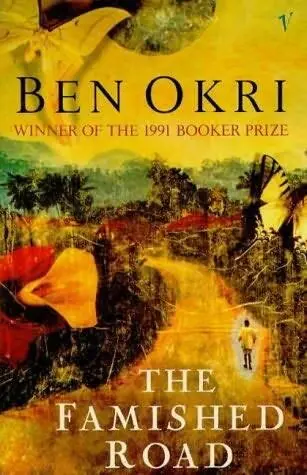
- Название:The Famished Road
- Автор:
- Жанр:
- Год:неизвестен
- ISBN:нет данных
- Рейтинг книги:5 / 5. Голосов: 1
-
Избранное:Добавить в избранное
- Отзывы:
-
Ваша оценка:
The Famished Road: краткое содержание, описание и аннотация
Предлагаем к чтению аннотацию, описание, краткое содержание или предисловие (зависит от того, что написал сам автор книги «The Famished Road»). Если вы не нашли необходимую информацию о книге — напишите в комментариях, мы постараемся отыскать её.
The Famished Road — читать онлайн бесплатно полную книгу (весь текст) целиком
Ниже представлен текст книги, разбитый по страницам. Система сохранения места последней прочитанной страницы, позволяет с удобством читать онлайн бесплатно книгу «The Famished Road», без необходимости каждый раз заново искать на чём Вы остановились. Поставьте закладку, и сможете в любой момент перейти на страницу, на которой закончили чтение.
Интервал:
Закладка:
I couldn’t see anything. But from across the street I heard, first in a whisper, then loudly under the spell of grief:
‘Azaro! Azaro! Where are you?’ It was Mum.
‘Azaro! Azaro!’
Then there was silence. In my childhood hour of darkness, I listened to Mum waiting for my response. But the night and the wind defeated us. From mouth to mouth, from one side of the street to the other, I listened with horror as the wind blew the name.
‘AZARO! AZARO!’
The wind passed the name on. The name flowed to our part of the street and then towards MadameKoto’sbar.Thenamesurroundedme,waveringabovetheburntvan in a thousand quivering voices, as if God were calling me with the mouths of violent people.
Even the dead played with my name that night.
I listened in my childhood hour as the name eventually flowed towards the photographer’scompoundandechoedfaintly downthepassagebeforepassingaway into silence. I did not hear Mum’s voice afterwards.
As I sat in the car, overcome with fear, I saw the dead rising. I saw them rising at the same moment that the second wave of havoc started with the chants of the antagonists. The dead joined the innocents, mingled with the thugs, merged with the night, and plundered the antagonists with the cries of the wounded. The dead uttered howls of mortal joy and they found the livid night a shrine glistening with fevers. They revelled in that night of mirrors, where bodies shimmered with blood and silver. The dead shook off their rust of living and seized up steel. Their lips quivered with the defiance of the innocents, with the manipulations of politicians and their interchangeable dreams, and with the insanity of thugs who don’t even know for which parties they commit their atrocities.
It wasanight without memory.It wasanightreplayingitscorrosiverecurrenceon the road of our lives, on the road which was hungry for great transformations.
The dead, slowly awakening the sleep of the road, were acrobats of violence. They somersaulted with new political dreams amongst men, women, and children. I heard several voices, without fear or beyond it, uttering a new rallying call. Then I heard fighting. I heard the bright howls of resistance, footsteps running into the darkness, flashing steel on solid bodies, chests painted with antimony being beaten down, and women with mortars for pounding yam pounding on shadows. I heard strong men bewildered by the mutinous wind, deep voices crying out the names of hard gods. I realisedthat theantagonistswerebeingrepulsed.Thepeoplefromthephotographer’s compound were in the vanguard. The dead were curiously on the side of the innocents. Voices I knew bravely cried:
‘Fight them back!’‘Fight for your freedom!’‘Stone them!’‘They poisoned us with milk.’
‘And words.’ ‘And promises.’ ‘And they want to rule our country!’ ‘Our lives!’ ‘And now they attack us!’ ‘On our own Street!’ ‘Fight them without fear!’ Machetes burst into flame. Chants were reversed in syllables. Spells were broken on the jagged teeth of night. The antagonists attempted a last desperate rally. ‘Pour petrol on the house!’ ‘Burn it down!’ ‘Burn out the photographer!’ ‘Burn out Azaro!’ I trembled in the van. Someone hurled a firebrand at the photographer’s compound.
The dead caught it and ate up the flames. Someone threw another brand in the air. It landed on the van, and spluttered out on the bonnet. Something crawled up my legs. Smoke drifted in from a side window. The van was alive with spiders and worms. I started to get out of the van. I had got my head out of the other window when I heard agreat deafeningblastfromthephotographer’scompound.Aftertheblasttherewasa profound silence. The wind whistled over the noise.
And then the shadows, the footsteps, the green bodies, the fierce jaguars, the disaster-mongers, the fire-breathers, the rousers of the dead, and the rampagers of sleep, became fleeing footfalls scattered by the wind and the great detonation. The dark walls of their bodies disintegrated. Their voices were not so menacing any more, but full of fear.
Another gunshot, not aimed in any particular direction, but cracking the air as though astarhadexplodedoverourstreet,madetheescapingstampedeofantagonists moredesperate. I could hear themfallingover oneanother,runningintotheterrorsof their own making, colliding into their own shadows, into the luminous bodies in the dark. I could hear them screaming the names of their mothers, calling for their wives, wondering who would take care of their children, as the innocents crashed their heads with bottles, as the men of the street rained an insistent beat of clubs on their retreat, and as they fell under the anger of lacerating claws and blunt-edged cutlasses.
New forces had joined the night, converted the night, made it the ally of the innocents. When the tidal force had retreated, the agitation quelled, when the antagonists had started their trucks and taken off at Madame Koto’s end of the street – the hosts of the dead descended into the open bleeding mouth of the earth. I saw them from the van. I watched the world dissolving into a delirium of stories. The dead descended into the forgetfulness of our blue memories, with their indigo eyes and their silver glances.
The inhabitants of the street regained the night. Voices were reawakened. Lamps came on one after another. People tentatively gathered at compound-fronts. The only thing that was missing was the photographer to record the events of the night and make them real with his magic instrument. I got out of the van and fled across the street, into thedespairingarms of Mother.
In the morning we learned about the wounded, about the woman slashed across the face with a knife, the man whose head was raw with the blunt vengeance of a machete, the people whose noses were cut open with broken bottles, those flagellated with wires, the man who had lost half an ear, the woman whose back was burnt. Against the innocents who were wounded, we heard of the death of an antagonist. We also heard one party claim that the atrocities had been committed by the other.
The energies that went into fighting back exhausted the street. We did not celebrate our resistance. We knew that the troubles were incomplete, that the reprisals had been deferred to another night, when we would have forgotten. The inhabitants of the street, frightened and angry, set up vigilantes. They were armed with knives, clubs, and dane guns. We waited for new forms of iron to fall on us. We waited for a long time. Nothing happened the way we expected. After two weeks, the vigilantes disbanded. We sank back into our usual lives.
The photographer vanished altogether. His room had been wrecked. His door was broken down, his clothes shredded, his mattress slashed, his available pictures and negatives destroyed, and some of his cameras broken up. His landlord, who had no sympathy for heroes, went around looking for him, demanding that his door be repaired.
We feared that the photographer had been murdered. His glass cabinet remained permanently shattered. It looked misbegotten. It became a small representation of what powerful forces in society can do if anyone speaks out against their corruptions. And because the photographer hadn’t been there to record what had happened that night, nothing of the events appeared in the newspapers. It was as if the events were never real. They assumed the status of rumour.
At first thestreet sufferedfear.Stall-ownersstoppedsellingthingsintheevenings. The street seemed darker than usual at night. People became so cautious that no one opened their doors merely because they were knocked on. Those who usually went out drinking, and who returned late, took to getting drunk in their rooms, and singing into the nights.
After a while, when nothing happened, when no reprisals fell on us, it seemed that nothing significant had happened. Some of us began to distrust our memories. We began to think that we had collectively dreamt up the fevers of that night. It wouldn’t be the first or the last time. Meanwhile, the river of wild jaguars flowed below the surface of our hungry roads.
Читать дальшеИнтервал:
Закладка:
Похожие книги на «The Famished Road»
Представляем Вашему вниманию похожие книги на «The Famished Road» списком для выбора. Мы отобрали схожую по названию и смыслу литературу в надежде предоставить читателям больше вариантов отыскать новые, интересные, ещё непрочитанные произведения.




Обсуждение, отзывы о книге «The Famished Road» и просто собственные мнения читателей. Оставьте ваши комментарии, напишите, что Вы думаете о произведении, его смысле или главных героях. Укажите что конкретно понравилось, а что нет, и почему Вы так считаете.