Tracy Chevalier - Remarkable Creatures
Здесь есть возможность читать онлайн «Tracy Chevalier - Remarkable Creatures» — ознакомительный отрывок электронной книги совершенно бесплатно, а после прочтения отрывка купить полную версию. В некоторых случаях можно слушать аудио, скачать через торрент в формате fb2 и присутствует краткое содержание. Жанр: Современная проза, на английском языке. Описание произведения, (предисловие) а так же отзывы посетителей доступны на портале библиотеки ЛибКат.
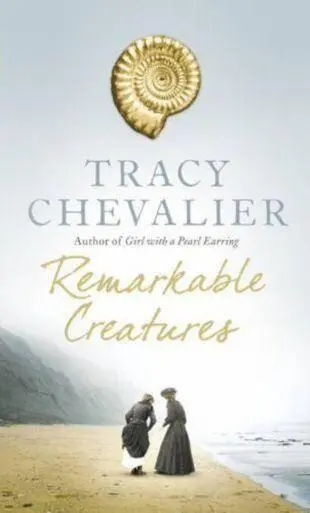
- Название:Remarkable Creatures
- Автор:
- Жанр:
- Год:неизвестен
- ISBN:нет данных
- Рейтинг книги:4 / 5. Голосов: 1
-
Избранное:Добавить в избранное
- Отзывы:
-
Ваша оценка:
Remarkable Creatures: краткое содержание, описание и аннотация
Предлагаем к чтению аннотацию, описание, краткое содержание или предисловие (зависит от того, что написал сам автор книги «Remarkable Creatures»). Если вы не нашли необходимую информацию о книге — напишите в комментариях, мы постараемся отыскать её.
Remarkable Creatures — читать онлайн ознакомительный отрывок
Ниже представлен текст книги, разбитый по страницам. Система сохранения места последней прочитанной страницы, позволяет с удобством читать онлайн бесплатно книгу «Remarkable Creatures», без необходимости каждый раз заново искать на чём Вы остановились. Поставьте закладку, и сможете в любой момент перейти на страницу, на которой закончили чтение.
Интервал:
Закладка:
I found reasons why I couldn’t go up Silver Street. I needed to hunt curies to make up for the months when I hadn’t. Or I insisted on cleaning the house to prepare for Colonel Birch coming to see us. Or I went out to Pinhay Bay to find him a pentacrinite since he had sold all of his. Then I went to meet each coach from London, though three came and went without him stepping off.
I was on my way back from the third coach, cutting through St Michael’s from the cliff path, when I met Miss Elizabeth coming the other way. Both of us jumped a little, startled, like we wished we’d seen the other first and had held back so we wouldn’t have to stop and greet each other.
Miss Elizabeth asked if I had been upon beach, and I had to admit I’d gone to Charmouth without hunting. She knew it were the day the coach arrived-I could see it in her face, working out why I had been there, and trying to hide her displeasure. She changed the subject, and we talked a little of Lyme and its doings while she had been gone. It was awkward, though, not the way we usually were with each other, and after a time we fell silent. I felt stiff, as if I’d sat too long on a leg and it had gone to sleep. It made me stand funny. Miss Elizabeth too held her head at an angle, like her neck still had a crick in it from all that riding in the London coach.
I was about to make an excuse and set off for Cockmoile Square when Miss Elizabeth seemed to reach a decision. When she is going to say something important she sticks out her chin and tightens her jaw. “I want to tell you about what happened in London, Mary. You are not to tell anyone I told you. Not your mother or brother, nor particularly my sisters, for they do not know what I witnessed.” Then she told me all about the auction, describing in detail what was sold and who was there and what they bought, how even the Frenchman Cuvier wanted a specimen for Paris. She said how Colonel Birch made his announcement about me at the end, naming me as the hunter. All the time she was talking I felt I were listening to a lecture about someone else, a Mary Anning who lived in another town, in another country, on the other side of the world, who collected something other than fossils-butterflies or old coins.
Miss Elizabeth frowned. “Are you listening, Mary?”
“I am, ma’am, but I’m not sure I’m hearing right.”
Miss Elizabeth gazed at me, her grey eyes pinched and serious. “Colonel Birch has named you in public, Mary. He has told some of the most interested fossil collectors in the country to seek you out. They will be coming here to ask you to take them out as you have done Colonel Birch. You must prepare yourself, and take care that you don’t…com-promise your character further.” She said the last with such a pursed mouth it were a marvel any words come out at all.
I fingered some lichen on the gravestone I stood next to. “I am not worried for my character, ma’am, nor what others think of me. I love Colonel Birch, and am waiting for him to come back.”
“Oh, Mary.” A whole set of emotions crossed Miss Elizabeth’s face-it was like watching playing cards being dealt one after the other-but mostly there was anger and sadness. Those two combined make jealousy, and it come over me then that Elizabeth Philpot was jealous of the attention Colonel Birch paid me. She shouldn’t be. She never had to sell or burn her furniture to keep a roof over her head and stay warm. She had plenty of tables rather than just the one. She didn’t go out every day no matter the weather or her health and stay out for hours hunting curies till her head swam. She didn’t have chilblains on her hands and feet, and fingertips cut and torn and grey with embedded clay. She didn’t have neighbours talking about her behind her back. She should pity me, and yet she envied me.
I shut my eyes for a moment, steadying myself with the gravestone. “Why can’t you be glad for me?” I said. “Why can’t you say, ‘I hope you will be very happy’?”
“I-” Miss Elizabeth gulped as if words were choking her. “I do hope that,” she finally managed to say, though it come out all strangled. “But I don’t want you to make a fool of yourself. I want you to think sensibly about what is possible for your life.”
I ripped the lichen off the stone. “You’re jealous of me.”
“I’m not!”
“Yes, you are. You’re jealous of Colonel Birch because he courted me. You loved him and he paid no attention to you.”
Miss Elizabeth looked stricken, like I’d hit her. “Stop, please.”
But it was as if a river had risen in me and broken its banks. “He never even looked at you. It was me he wanted! And why shouldn’t he? I’m young, and I’ve got the eye! All your education and your one hundred and fifty pounds a year and your elderflower champagne and your silly tonics, and your silly sisters with their turbans and roses. And your fish! Who cares about fish when there are monsters in the cliffs to be found? But you won’t find them because you haven’t got the eye. You’re a dried up old spinster who will never get a man or a monster. And I will.” It felt so good and so horrible to say these things aloud that I thought I might be sick.
Miss Elizabeth stood very still. It were like she was waiting for a gust of wind to blow itself out. When it had and I was finished, she took a deep breath, though what come out were almost a whisper, with no force behind it. “I saved your life once. I dug you out of the clay. And this is how you repay me, with the unkindest thoughts.”
The wind come back like a gale. I cried out in such rage Miss Elizabeth stepped back. “Yes, you saved my life! And I’ll feel the burden of being grateful to you for always. I’ll never be equal to you, no matter what I do. Whatever monsters I find, however much money I earn, it will never equal your place. So why can’t you leave Colonel Birch to me? Please.” I was crying now.
Miss Elizabeth watched me with her level grey eyes until I had used up my tears. “I release you of the burden of your gratitude, Mary,” she said. “I can at least do that. I dug you out that day as I would have done for anyone, and as anyone else passing would have done for you too.” She paused, and I could see her deciding what to say next. “But I must tell you something,” she continued, “not to hurt you, but to warn you. If you are expecting anything from Colonel Birch you will be disappointed. I had occasion to meet him before the auction. We ran into each other at the British Museum.” She paused. “He was accompanying a lady. A widow. They seemed to have an understanding. I’m telling you this so that you will not have your expectations raised. You are a working girl, and you cannot expect more than you have. Mary, don’t go.”
But I had already turned and begun to run, as fast and far from her words as I could.
I was not there to meet the next London coach when it come to Charmouth. It was a soft afternoon, with plenty of visitors out, and I was behind the table outside our house, selling curies to passersby.
I am not a superstitious person, but I knew he would come, for though he did not know it, it was my birthday. I had never had a birthday present, and was due one. Mam would say his auction money was the present, but to me he was the gift.
When the clock on the Shambles bell-tower struck five I begun to follow Colonel Birch’s progress in my mind even as I was selling. I saw him alight from the coach and hire a horse from the stables, then ride along the road till he could cut across one of Lord Henley’s fields above Black Ven to Charmouth Lane. He would follow that to Church Street, then down past St Michael’s and into Butter Market. There all he had to do was to go right round the corner and he’d come into Cockmoile Square.
Читать дальшеИнтервал:
Закладка:
Похожие книги на «Remarkable Creatures»
Представляем Вашему вниманию похожие книги на «Remarkable Creatures» списком для выбора. Мы отобрали схожую по названию и смыслу литературу в надежде предоставить читателям больше вариантов отыскать новые, интересные, ещё непрочитанные произведения.


Обсуждение, отзывы о книге «Remarkable Creatures» и просто собственные мнения читателей. Оставьте ваши комментарии, напишите, что Вы думаете о произведении, его смысле или главных героях. Укажите что конкретно понравилось, а что нет, и почему Вы так считаете.