Margaret Atwood - The Robber Bride
Здесь есть возможность читать онлайн «Margaret Atwood - The Robber Bride» весь текст электронной книги совершенно бесплатно (целиком полную версию без сокращений). В некоторых случаях можно слушать аудио, скачать через торрент в формате fb2 и присутствует краткое содержание. Год выпуска: 1993, Жанр: Современная проза, на английском языке. Описание произведения, (предисловие) а так же отзывы посетителей доступны на портале библиотеки ЛибКат.
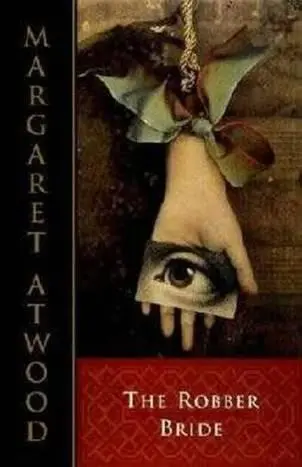
- Название:The Robber Bride
- Автор:
- Жанр:
- Год:1993
- ISBN:нет данных
- Рейтинг книги:5 / 5. Голосов: 1
-
Избранное:Добавить в избранное
- Отзывы:
-
Ваша оценка:
The Robber Bride: краткое содержание, описание и аннотация
Предлагаем к чтению аннотацию, описание, краткое содержание или предисловие (зависит от того, что написал сам автор книги «The Robber Bride»). Если вы не нашли необходимую информацию о книге — напишите в комментариях, мы постараемся отыскать её.
Even Zenia’s name is enough to provoke the old sense of outrage, of humiliation and confused pain. The truth is that at certain times—early mornings, the middle of the night—she finds it hard to believe that Zenia is really dead.’ Zenia is beautiful, smart and greedy; by turns manipulative and vulnerable, needy and ruthless; a man’s dream and a woman’s nightmare. She is also dead. Just to make absolutely sure Tony, Roz and Charis are there for the funeral. But five years on, as the three women share a sisterly lunch, the impossible happens: ‘with waves of ill will flowing out of her like cosmic radiation’, Zenia is back ...
This is the wise, unsettling, drastic story of three women whose lives share a common wound: Zenia, a woman they first met as university students in the sixties. Zenia is smart and beautiful, by turns manipulative, vulnerable—and irresistible. She has entered into their separate lives to ensnare their sympathy, betray their trust, and exploit their weaknesses. Now Zenia, thought dead, has suddenly reappeared. In this richly layered narrative, Atwood skilfully evokes the decades of the past as she retraces three women’s lives, until we are back in the present—where it’s yet to be discovered whether Zenia’s ‘pure, free-wheeling malevolence’ can still wreak havoc.
reports from the farthest reaches of the sex wars and is one of Margaret Atwood’s most intricate and subversive novels yet.
Exploring the paradox of female villainy, this tale of three fascinating women is another peerless display of literary virtuosity by the supremely gifted author of
and
. Roz, Charis and Tony all share a wound, and her name is Zenia. Beautiful, smart and hungry, by turns manipulative and vulnerable, needy and ruthless, Zenia is the turbulent center of her own neverending saga. She entered their lives in the sixties, when they were in college. Over the three decades since, she has damaged each of them badly, ensnaring their sympathy, betraying their trust, and treating their men as loot. Then Zenia dies, or at any rate the three women—with much relief -- attend her funeral. But as
begins, Roz, Charis and Tony have come together at a trendy restaraunt for their monthly lunch when in walks the seemingly resurrected Zenia...
In this consistently entertaining and profound new novel, Margaret Atwood reports from the farthest reaches of the war between the sexes with her characteristic well-crafted prose, rich and devious humor, and compassion.
The Robber Bride — читать онлайн бесплатно полную книгу (весь текст) целиком
Ниже представлен текст книги, разбитый по страницам. Система сохранения места последней прочитанной страницы, позволяет с удобством читать онлайн бесплатно книгу «The Robber Bride», без необходимости каждый раз заново искать на чём Вы остановились. Поставьте закладку, и сможете в любой момент перейти на страницу, на которой закончили чтение.
Интервал:
Закладка:
West sighed. He looked at Tony with something close to shame. “To be honest,” he said, and stopped.
“Yes?” said Tony.
“Well, to be honest, she kicked me out. She said she found me boring.”
Tony appalled herself by nearly laughing out loud. Maybe Zenia was right: from a certain point of view, West was boring. But one woman’s meat was another woman’s boredom, and West was boring in the same way children were boring, and interesting in the same way, too, and that’s what a woman like Zenia would never see. Anyway, what was true love if it couldn’t put up with a little boredom?
“Are you all right?” West asked. “Choked on a bone,” said Tony. West hung his head. “I guess I am boring,” he said.
Tony felt contrite. She was cruel for finding this funny. It wasn’t funny, because West had been deeply wounded. She got up from the table and put her arms around his neck from behind, and laid her cheek against the top of his sparsely covered head. “You aren’t at all boring,” she said. “You’re the most interesting man I’ve ever known.” This was correct, since West was in fact the only man Tony had ever known, in any way that counted.
West reached up and patted her hand. “I love you,” he said. “I love you much more than I ever loved Zenia.”
Which is all very well, thinks Tony, sitting in the lobby of the Arnold Garden Hotel, but if that’s really true, why didn’t he tell me that Zenia called? Maybe he’s already seen her. Maybe she’s already lured him into bed. Maybe her teeth are in his neck, right now; maybe she’s sucking out his life’s blood while Tony sits here in this perverse leather chair, not even knowing where to look, because Zenia could be anywhere, she could be doing anything, and so far Tony doesn’t have a clue.
This is the third hotel she’s tried out. She’s spent two other mornings hanging around in the lobbies of the Arrival and the Avenue Park, with no results whatsoever. Her only lead is the extension number, the one scribbled by West and left beside his phone, but she’s hesitated to call all the hotels and use it because she doesn’t want to alert Zenia, she wants to take her by surprise. She doesn’t want to ask for her at the desk either, because ‘ she knows in her bones that Zenia will be using a false name; and once Tony has asked, and has been told there’s no guest of that name, it would look suspicious if she were to keep on sitting in the lobby. Also she doesn’t want to be remembered by the staff, should Zenia be found later wallowing in a pool of blood. So she merely sits, trying to look like someone waiting for a business meeting.
Her theory is that Zenia—who is by habit a late riser—must at some point get out of bed, must take the elevator to the main floor, must walk through the lobby. Of course it’s not beyond Zenia to stay in bed all day or, sneak down the fire stairs, but Tony is betting on the law of averages. Sooner or later—supposing Tony is in the right hotel—Zenia will appear.
And then what? Then Tony will leap or slither out of her chair, will patter across the floor to Zenia, will chirp a greeting, will be ignored; will scuttle after Zenia as she sweeps out through the glass doors. Gasping for breath, her outmoded gun and silly cordless drill clanking together in her bag, she will catch up to Zenia as she strides along the sidewalk. “We need to talk,” Tony will blurt.
“What about?” Zenia will say. At that point she will simply walk faster, and Tony will either have to trot ridiculously or give up.
This is the nightmare scenario, just thinking about it makes Tony blush with the sense of her own future humiliation. There’s another scenario, one in which Tony is persuasive and dexterous and Zenia is taken in, one that acts out some of Tony’s more violent although hypothetical fantasies and includes a neat red hole placed competently in the exact centre of Zenia’s forehead. But at the moment Tony doesn’t have a lot of faith in it.
She isn’t having much luck concentrating on her lecture notes, so she switches back to the Globe business section and forces herself to read. Tsol Sboj Erom. Gnisolc Tnalp. This has a satisfying Slavic ring to it. That, or Finnish, or some wild-haired tribe from Planet Pluto. As Tony is savouring it she feels a hand on her shoulder.
“Tony! There you are, finally!” Tony looks up, then stifles a small rodent-like shriek: Zenia is bending over her, smiling warmly. “Why didn’t you call before? And why are you just sitting here in the lobby? I gave West the room number!”
“Well,” says Tony. Her mind scrabbles, trying to fit all this together. “He jotted it down and then lost it. You know what he’s like.” Awkwardly she disentangles herself from the leather chair, which appears to have grown suction cups.
“I told him to make you call me right away,” says Zenia. “It was just after I saw you in the Toxique. I guess you didn’t recognize me! But I called up and told him it was very important:” She’s no longer smiling: she’s beginning to assume an expression Tony recalls well, something between a frown and a wince, urgent and at the same time beset. What it means is that Zenia wants something.
Tony is alert now, on her inner toes. Her darkest suspicions are being confirmed: this is obviously a fallback story, a story Zenia and West have concocted together just in case Tony should sniff the wind, or should run across Zenia in some unlikely place such as Tony’s own bedroom. The story is that the message was for Tony, not for West. It’s a cunning story, it has Zenia’s paw-prints all over it, but West must be colluding. Things are worse than Tony thought. The rot has gone deeper.
“Come on,” says Zenia. “We’ll go up to my room; I’ll order coffee:” She takes Tony’s arm. At the same time she glances around the lobby. It’s a look of anxiety, of fear even, a look Tony is not intended to see. Or is she?
She cranes her neck, peering up at Zenia’s still-amazing face. Mentally she adds something to it: a small red X, marking the spot.
Zenia’s hotel room is unremarkable except for its largeness and its neatness. The neatness is unlike Zenia. There are no clothes in evidence, no suitcases strewn around, no cosmetic bags on the bathroom counter, as far as Tony can see in one sideways glance. It’s as if no one is living here.
Zenia sheds her black leather coat and phones for coffee, and then sits down on the flowered pastel green sofa, crossing her endless black-stockinged legs, lighting a cigarette. The dress she wears is a clinging jersey wrap, the purple of stewed blueberries. Her dark eyes are enormous, and, Tony sees now, shadowed by fatigue, but her plum-coloured smile still quirks up ironically. She seems more at ease here than in the lobby. She raises an eyebrow at Tony. “Long time no see,” she says.
Tony is at a loss. How should she play this? It would be a mistake to display her anger: that would tip Zenia off, put her on her guard. Tony shuffles her inner deck and discovers that in fact she’s not angry, not at the moment. Instead she’s intrigued, and curious. The historian in her is taking over. “Why did you pretend to die?” she says. “What was all that stuff, with the ashes and the fake lawyer?”
“The lawyer was real,” says Zenia, blowing out smoke. “He believed it too. Lawyers are so gullible.”
“And?” says Tony.
“And. I needed to disappear. Trust me, I had my reasons. It wasn’t just the money! And I had disappeared, I’d set up about six dead ends for anyone trying to track me down. But that dolt Mitch was following me around, he just wouldn’t stop. He was really messing up my life. He was so goddamn persistent! He had the money too, he hired people; not amateurs either. He would’ve found me, he was right on the verge.
Читать дальшеИнтервал:
Закладка:
Похожие книги на «The Robber Bride»
Представляем Вашему вниманию похожие книги на «The Robber Bride» списком для выбора. Мы отобрали схожую по названию и смыслу литературу в надежде предоставить читателям больше вариантов отыскать новые, интересные, ещё непрочитанные произведения.





Обсуждение, отзывы о книге «The Robber Bride» и просто собственные мнения читателей. Оставьте ваши комментарии, напишите, что Вы думаете о произведении, его смысле или главных героях. Укажите что конкретно понравилось, а что нет, и почему Вы так считаете.