Margaret Atwood - The Robber Bride
Здесь есть возможность читать онлайн «Margaret Atwood - The Robber Bride» весь текст электронной книги совершенно бесплатно (целиком полную версию без сокращений). В некоторых случаях можно слушать аудио, скачать через торрент в формате fb2 и присутствует краткое содержание. Год выпуска: 1993, Жанр: Современная проза, на английском языке. Описание произведения, (предисловие) а так же отзывы посетителей доступны на портале библиотеки ЛибКат.
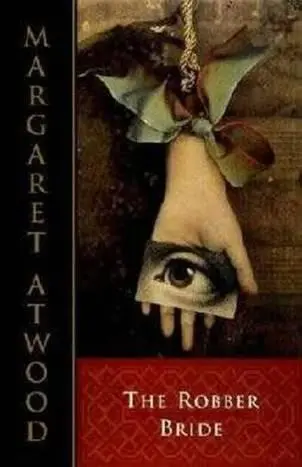
- Название:The Robber Bride
- Автор:
- Жанр:
- Год:1993
- ISBN:нет данных
- Рейтинг книги:5 / 5. Голосов: 1
-
Избранное:Добавить в избранное
- Отзывы:
-
Ваша оценка:
The Robber Bride: краткое содержание, описание и аннотация
Предлагаем к чтению аннотацию, описание, краткое содержание или предисловие (зависит от того, что написал сам автор книги «The Robber Bride»). Если вы не нашли необходимую информацию о книге — напишите в комментариях, мы постараемся отыскать её.
Even Zenia’s name is enough to provoke the old sense of outrage, of humiliation and confused pain. The truth is that at certain times—early mornings, the middle of the night—she finds it hard to believe that Zenia is really dead.’ Zenia is beautiful, smart and greedy; by turns manipulative and vulnerable, needy and ruthless; a man’s dream and a woman’s nightmare. She is also dead. Just to make absolutely sure Tony, Roz and Charis are there for the funeral. But five years on, as the three women share a sisterly lunch, the impossible happens: ‘with waves of ill will flowing out of her like cosmic radiation’, Zenia is back ...
This is the wise, unsettling, drastic story of three women whose lives share a common wound: Zenia, a woman they first met as university students in the sixties. Zenia is smart and beautiful, by turns manipulative, vulnerable—and irresistible. She has entered into their separate lives to ensnare their sympathy, betray their trust, and exploit their weaknesses. Now Zenia, thought dead, has suddenly reappeared. In this richly layered narrative, Atwood skilfully evokes the decades of the past as she retraces three women’s lives, until we are back in the present—where it’s yet to be discovered whether Zenia’s ‘pure, free-wheeling malevolence’ can still wreak havoc.
reports from the farthest reaches of the sex wars and is one of Margaret Atwood’s most intricate and subversive novels yet.
Exploring the paradox of female villainy, this tale of three fascinating women is another peerless display of literary virtuosity by the supremely gifted author of
and
. Roz, Charis and Tony all share a wound, and her name is Zenia. Beautiful, smart and hungry, by turns manipulative and vulnerable, needy and ruthless, Zenia is the turbulent center of her own neverending saga. She entered their lives in the sixties, when they were in college. Over the three decades since, she has damaged each of them badly, ensnaring their sympathy, betraying their trust, and treating their men as loot. Then Zenia dies, or at any rate the three women—with much relief -- attend her funeral. But as
begins, Roz, Charis and Tony have come together at a trendy restaraunt for their monthly lunch when in walks the seemingly resurrected Zenia...
In this consistently entertaining and profound new novel, Margaret Atwood reports from the farthest reaches of the war between the sexes with her characteristic well-crafted prose, rich and devious humor, and compassion.
The Robber Bride — читать онлайн бесплатно полную книгу (весь текст) целиком
Ниже представлен текст книги, разбитый по страницам. Система сохранения места последней прочитанной страницы, позволяет с удобством читать онлайн бесплатно книгу «The Robber Bride», без необходимости каждый раз заново искать на чём Вы остановились. Поставьте закладку, и сможете в любой момент перейти на страницу, на которой закончили чтение.
Интервал:
Закладка:
“I don’t think that will be possible,” says Tony, trying to keep her voice even. “I think I should go now”
“You don’t believe me, do you?” says Zenia. Her face has gone still. “Well, help yourself to some righteous indignation, you little snot. You always were the most awful two-faced hypocrite, Tony. A smug dog-in-the-manger prune-faced little shit with megalomaniac pretensions. You think you have some kind of an adventurous mind, but spare me! At heart you’re a coward, you hole yourself up in that bourgeois playpen of yours with your warped little battle-scars collection, you sit on poor West as if he’s your very own fresh-laid fucking egg! I bet he’s bored out of his skull, with nobody but you to stick his boring dick into! Jesus, it must be like fucking a gerbil!”
Zenia’s suave velvet cloak has dropped away; underneath is raw brutality. This is what a fist sounds like just as it smashes. Tony stands in the middle of the room, her mouth opening and closing. No sound comes out. The glass walls are closing in on her. Wildly she thinks about the gun in her purse, useless, useless: Zenia is right, she could never pull the trigger. All her wars are hypothetical: She’s incapable of real action.
But Zenia’s expression is changing now, from angry to cunning. “You know, I’ve still got that term paper, the one you., forged. The Russian slave trade, wasn’t it? Sounds like your brand of displaced sadism, all those paper dead bodies. You’re an armchair necrophiliac, you know that? You should try a real dead body some time! Maybe I’ll just pop that paper in the mail, send it to your precious History Department, stir up some shit for you, a tiny scandal! I’d like that! What price academic integrity?”
Tony feels the blunt objects whizzing past her head, the ground dissolving under her feet. The History Department would be pleased, it would be more than happy to discredit and disbar. She has colleagues but no allies. Ruin looms. Zenia is pure freewheeling malevolence; she wants wreckage, she wants scorched earth, she wants broken glass. Tony makes an effort to step back from the situation, to view it as if it’s something that happened long ago; as if she and Zenia are merely two small figures on a crumbling tapestry. But maybe this is what history is, when it’s really taking place: enraged people yelling at one another.
Forget the ceremony. Forget the dignity. Turn tail.
Tony walks unsteadily towards the door. “Goodbye,” she says, as firmly as she can; but her voice, to her own ears, sounds like a squeak. She has a moment of panic with the lock. As she scuttles out she expects to hear a feral growling, the thud of a heavy body against the door. But there’s nothing.
She goes down in the elevator with the odd sensation that she’s going up, and meanders across the lobby as if drunk, bumping into the leather furniture. There’s a bunch of men checking in at the front desk. Overcoats, briefcases, must be a convention. In front of her looms the dried flower arrangement. She reaches out, watching her left hand reaching, she breaks off a stem. Something dyed purple. She makes for the doors, but finds herself at the wrong set, the ones facing the patio and the fountain. This is not the way out. She’s disoriented, turned around in space: the visual world looks jumbled: She likes to have things clearly sorted in her head, but they are far from sorted.
She stuffs her filched sprig into her tote bag and aims for the front door, and wavers through it, and is finally outside, breathing in the cold air. There was so much smoke up there. She shakes her head, trying to clear it. It’s as if she’s been asleep.
This is not how Tony tells it to Roz and Charis, exactly. She leaves out the part about the term paper, although she conscientiously includes all the other bad things Zenia said about her. She includes the gun, which has a certain serious weight, but leaves out the cordless drill, which does not. She includes her own ignominious retreat. At the end of her account she produces the purple branch, as evidence.
“I must have been a little crazy,” she says. “To think I could actually kill her.”
“Not so crazy,” says Roz. “To want to kill her, anyway. She does that to people. You were lucky to get out of there with both eyes, is what I think:”
Yes, thinks Tony, checking”herself over. No obvious parts missing.
“Is the gun still in your purse?” Charis asks anxiously. She wouldn’t want such a dangerous object colliding with her aura. “No,” says Tony. “I went home after that, I put it back:”
“Good plan,” says Roz. “Now you go, Charis. I’ll be last.” Charis hesitates. “I don’t know whether I should tell all of it,” she says.
“Why not?” says Roz. “Tony did. I’m going to. Come on, we have no secrets!”
“Well,” says Charis, “there’s something in it you won’t like.”
“Heck, I probably won’t like any of it,” says Roz jovially. Her voice is a little too loud. Charis is reminded of the earlier Roz, the one who used to draw lipstick faces on her stomach and do the bump-and-grind, in the Common Room at McClung Hall. Maybe Roz is getting overexcited.
“It’s about Larry,” says Charis unhappily.
Roz sobers up immediately. “It’s okay, sweetie,” she says. “I’m a big girl.”
“Nobody is,” says Charis. “Not really.” She takes a deep breath.
After Zenia turned up at the Toxique that day, Charis spent about a week wondering what she should do. Or rather she knew what she should do, but she didn’t know how to go about doing it. Also she needed to fortify herself spiritually, because an’ encounter with Zenia would be no casual thing.
What she foresaw was the two of them locked in a stand-off: Zenia would be shooting out blood-red sparks of energy; her black hair would be crackling like burning fat, her eyeballs would be cerise, lit up from within like a cat’s in headlights. Charis on the other hand would be cool, upright, surrounded by a gentle glow. Around her would be drawn a circle of white chalk, to keep the evil vibrations at bay. She would raise her arms upwards, invoking the sky, and out of her would come a voice like tinkling bells: What have you done with Billy?
And Zenia, writhing and twisting and resisting, but mastered by the superiority of Charis’s positive force-field, would be compelled to tell.
Charis was not yet strong enough for this trial of strength. All by herself she might never be. She would have to borrow some weapons from her friends. No, not weapons; merely armour, because she did not see herself attacking. She didn’t want to hurt Zenia, did she? She just wanted Zenia to return stolen property: Charis’s life, the part with Billy in it. She wanted what was rightfully hers. That was all.
She went through some of the cardboard boxes in the small room upstairs, once a storeroom, then Zenia’s room, then August’s nursery and playroom, now a spare room, for guests if any. It was still August’s room really; that was where she stayed on weekend visits. In the boxes were a bunch of things Charis never used and had been meaning to recycle. She found a Christmas present from Roz—a horrifying pair of gloves, leather ones with real fur cuffs, dead animal skin, she could never wear those. From Tony she found a book, a book written by Tony herself. Four Lost Causes. It was all about war and killing, septic topics, and Charis has never been able to get into it.
She took the book and the gloves downstairs and put them on the small table under the main window in the living room—where the sunlight would shine in on them and dispel their shadow sides—and set her amethyst geode beside them, and surrounded them with dried marigold petals. To this arrangement she added, after some thought, her grandmother’s Bible, always a potent object, and a lump of earth from her garden. She meditated on this collection for twenty minutes twice a day.
Читать дальшеИнтервал:
Закладка:
Похожие книги на «The Robber Bride»
Представляем Вашему вниманию похожие книги на «The Robber Bride» списком для выбора. Мы отобрали схожую по названию и смыслу литературу в надежде предоставить читателям больше вариантов отыскать новые, интересные, ещё непрочитанные произведения.



Обсуждение, отзывы о книге «The Robber Bride» и просто собственные мнения читателей. Оставьте ваши комментарии, напишите, что Вы думаете о произведении, его смысле или главных героях. Укажите что конкретно понравилось, а что нет, и почему Вы так считаете.