Margaret Atwood - The Robber Bride
Здесь есть возможность читать онлайн «Margaret Atwood - The Robber Bride» весь текст электронной книги совершенно бесплатно (целиком полную версию без сокращений). В некоторых случаях можно слушать аудио, скачать через торрент в формате fb2 и присутствует краткое содержание. Год выпуска: 1993, Жанр: Современная проза, на английском языке. Описание произведения, (предисловие) а так же отзывы посетителей доступны на портале библиотеки ЛибКат.
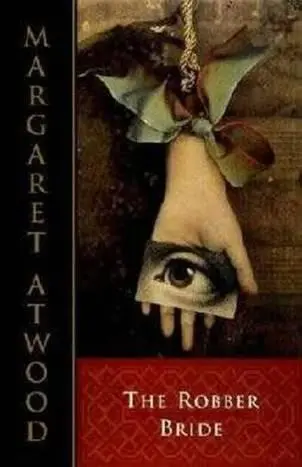
- Название:The Robber Bride
- Автор:
- Жанр:
- Год:1993
- ISBN:нет данных
- Рейтинг книги:5 / 5. Голосов: 1
-
Избранное:Добавить в избранное
- Отзывы:
-
Ваша оценка:
The Robber Bride: краткое содержание, описание и аннотация
Предлагаем к чтению аннотацию, описание, краткое содержание или предисловие (зависит от того, что написал сам автор книги «The Robber Bride»). Если вы не нашли необходимую информацию о книге — напишите в комментариях, мы постараемся отыскать её.
Even Zenia’s name is enough to provoke the old sense of outrage, of humiliation and confused pain. The truth is that at certain times—early mornings, the middle of the night—she finds it hard to believe that Zenia is really dead.’ Zenia is beautiful, smart and greedy; by turns manipulative and vulnerable, needy and ruthless; a man’s dream and a woman’s nightmare. She is also dead. Just to make absolutely sure Tony, Roz and Charis are there for the funeral. But five years on, as the three women share a sisterly lunch, the impossible happens: ‘with waves of ill will flowing out of her like cosmic radiation’, Zenia is back ...
This is the wise, unsettling, drastic story of three women whose lives share a common wound: Zenia, a woman they first met as university students in the sixties. Zenia is smart and beautiful, by turns manipulative, vulnerable—and irresistible. She has entered into their separate lives to ensnare their sympathy, betray their trust, and exploit their weaknesses. Now Zenia, thought dead, has suddenly reappeared. In this richly layered narrative, Atwood skilfully evokes the decades of the past as she retraces three women’s lives, until we are back in the present—where it’s yet to be discovered whether Zenia’s ‘pure, free-wheeling malevolence’ can still wreak havoc.
reports from the farthest reaches of the sex wars and is one of Margaret Atwood’s most intricate and subversive novels yet.
Exploring the paradox of female villainy, this tale of three fascinating women is another peerless display of literary virtuosity by the supremely gifted author of
and
. Roz, Charis and Tony all share a wound, and her name is Zenia. Beautiful, smart and hungry, by turns manipulative and vulnerable, needy and ruthless, Zenia is the turbulent center of her own neverending saga. She entered their lives in the sixties, when they were in college. Over the three decades since, she has damaged each of them badly, ensnaring their sympathy, betraying their trust, and treating their men as loot. Then Zenia dies, or at any rate the three women—with much relief -- attend her funeral. But as
begins, Roz, Charis and Tony have come together at a trendy restaraunt for their monthly lunch when in walks the seemingly resurrected Zenia...
In this consistently entertaining and profound new novel, Margaret Atwood reports from the farthest reaches of the war between the sexes with her characteristic well-crafted prose, rich and devious humor, and compassion.
The Robber Bride — читать онлайн бесплатно полную книгу (весь текст) целиком
Ниже представлен текст книги, разбитый по страницам. Система сохранения места последней прочитанной страницы, позволяет с удобством читать онлайн бесплатно книгу «The Robber Bride», без необходимости каждый раз заново искать на чём Вы остановились. Поставьте закладку, и сможете в любой момент перейти на страницу, на которой закончили чтение.
Интервал:
Закладка:
The Toxique is different at night. The lights are dimmer, and squat candles in red glass holders flicker on the tables; the outfits of the waiters and waitresses are subtly more outrageous. There are a few men in suits, having dinner; businessmen, Tony guesses, though with their mistresses rather than their wives. She likes to think that such men might still have mistresses, though probably they don’t call them that. Lovers. Main squeezes. Special friends. The Toxique is where you would take a special friend, but maybe not a wife. Though how would Tony know?’ It’s not a world she moves in. There are more men in leather jackets than there are in the daytime. There’s a subdued buzz.
She checks her big-numbers wristwatch: the rock band doesn’t come on till eleven, and she hopes she’ll be out of there by then. She’s had enough noise at home; today she had to listen to a full thirty minutes of aural torture, put together by West and played to her at full volume, with considerable arm-waving and expressions of glee. “I think I’ve done it,” was West’s comment. What could she say? “That’s good,” was what she came out with. It’s an all-occasion phrase, and appeared to suffice.
Tony is the first one here. She’s never had dinner at the Toxique before, only lunch. This dinner is last-minute: Roz phoned in a state of breathlessness and said there was something she really needed to tell. At first she suggested that Tony and Charis should come over to her place, but Tony pointed out that such a thing was difficult without a car.
She’s not that keen on going to Roz’s anyway, though Roz’s twins are—in theory—favourites of hers. She used to regret not having had children, though she wasn’t sure she would have been all that good at it, considering Anthea. But being a godmother has suited her better than being a mother—for one thing it’s more intermittent—and the twins have done her proud. They have a fine glittering edge to them, and so does her other goddaughter, Augusta. None of them is what you would call self-effacing—all three would be at home on horses, riding astride, hair flying, scouring the plains, giving no quarter. Tony isn’t sure how they’ve come by their confidence, their straightahead level gazes, their humorous but remorseless mouths. They have none of the timidity that used to be so built in, for women. She hopes they will gallop through the world in style, more style than she herself has been able to scrape together. They have her blessing; but from a distance, because close up Augusta is faintly chilling—she’s so intent on success—and the twins have become gigantic; gigantic, and also careless. Tony is slightly afraid of them. They might step on her by mistake.
So it was Tony who suggested the Toxique, this time. Roz may have something to tell, but Tony has something to tell also and it’s fitting that it should be told here. She has requested their usual table, the one in the corner by the smoked mirror. From the young woman, or possibly man, who appears beside her, dressed in a black cat-suit with a wide leather stud-covered belt and five silver earrings in each ear, she orders a bottle of white wine and a bottle of Evian.
Charis arrives at the same time as the bottles, looking strangely pale. Well, thinks Tony, she always looks strangely pale, but tonight she’s even more so. “Something weird happened to me today,” she tells Tony, shedding her damp woollen sweatercoat and her fuzzy knitted hat. But this is not an unusual thing for Charis to say, so Tony merely nods and pours her a glass of Evian. Sooner or later they will get the story of the dream about shiny people sitting in trees, or the odd coincidence involving street numbers or cats that look just like other cats that used to belong to someone Charis once knew and doesn’t any more, but Tony would rather have it wait till Roz gets here. Roz is more tolerant of such intellectual wispiness, and better at changing the subject.
Roz comes in, waving and yoo-hooing and wearing a flamered trench coat and matching sou’wester, and shaking herself. “Judas Priest!” she says, pulling off her purple gloves. “Wait till you hear! You won’t believe!” Her tone is dismayed rather than jubilant.
“You saw Zenia today,” says Charis.
Roz’s mouth opens. “How did you know?” she says. “Because, so did I,” says Charis.
“And so did I,” says Tony.
Roz sits heavily down, and stares at each one of them in turn. “All right,” she says. “Tell.”
Tony waits in the lobby of the Arnold Garden Hotel, which would not have been her own hotel of choice. It’s a graceless fifties construction, cement slabs on the outside and a lot of plate glass. From her vantage point she can see out through the double doors at the back, into a patio dotted with chunky planters and with a large circular fountain off in one corner, non-functional at this time of year and overlooked by tiers of balconies with orange-painted sheet-metal railings. The postmodern awning and brass at the front is just an add-on: the essence of the Arnold Garden is those balconies. Though efforts are being made: above Tony looms a prehensile arrangem,ent of purplish dried flowers and wires and strange pods, daring the aesthetically uninitiated to call it ugly.
The patio and the fountain must be the garden part of the Arnold Garden, Tony decides; but she wonders about the Arnold. Is it Arnold as in Matthew, he of the ignorant armies dashing by night? Or Arnold as in Benedict, traitor or hero depending on point of view? Or perhaps it’s a first name, denoting some bygone city councillor, some worthy backroom fixer whose friends called him Arnie. The lobby, with its framed prints of rotund pink-coated fox-hunting Englishmen, gives no clue.
The chair Tony sits in is leathery and slippery and built for colossi. Her feet don’t touch the ground even if she moves well forward, and if she slides herself all the way back, then her knees can’t-bend over the front edge and her legs stick out stiffly like the legs of a china doll. So she has adopted a compromise—a sort of hunched curvature—but she is far from comfortable.
Also, despite her demure navy blue coat and her sensible walking shoes and her wimpy Peter Pan collar, she feels conspicuous. Her bad intentions must be sticking out all over, her. She has the sensation that she’s growing hair, little prickles of it pushing out through the skin of her legs like the quills of a porcupine, hanks of it shoving through in tufts around her ears. It’s ‘ Zenia doing this, the effort of tracking Zenia: it’s fusing her neurons, rearranging the molecules in her brain. A hairy white devil is what she’s becoming, a fanged monster. It’s a necessary transformation perhaps, because fire must be fought with fire. But every weapon is two-edged, so there will be a price to pay: Tony won’t get out of this unaltered.
In her outsized tote bag is her father’s Luger, unearthed from the box of Christmas decorations where it’s usually stored, and freshly oiled and loaded according to the instructions in the manual of forties weaponry she photocopied in the library. She took care to wear gloves while photocopying, so as not to leave fingerprints, just in case. In case they try to pin anything on her, afterwards. The gun itself is unregistered, she believes. It is after all a sort of souvenir.
Beside it is another implement. Tony has taken advantage of one of the many tool circulars littering her front lawn to purchase a cordless drill, with screwdriver attachment, at a third off. She has never used one of these before. Also, she’s never used a gun before. But there’s a first time for everything. Her initial idea was that she could use the drill to break into Zenia’s room, if necessary. Unscrew the door hinges, or something. But it occurs to her, sitting here in the lobby, that the drill too is potentially lethal, and might be put to use. If she could murder Zenia with a cordless drill, what policeman would be smart enough to figure it out?
Читать дальшеИнтервал:
Закладка:
Похожие книги на «The Robber Bride»
Представляем Вашему вниманию похожие книги на «The Robber Bride» списком для выбора. Мы отобрали схожую по названию и смыслу литературу в надежде предоставить читателям больше вариантов отыскать новые, интересные, ещё непрочитанные произведения.





Обсуждение, отзывы о книге «The Robber Bride» и просто собственные мнения читателей. Оставьте ваши комментарии, напишите, что Вы думаете о произведении, его смысле или главных героях. Укажите что конкретно понравилось, а что нет, и почему Вы так считаете.