Margaret Atwood - The Robber Bride
Здесь есть возможность читать онлайн «Margaret Atwood - The Robber Bride» весь текст электронной книги совершенно бесплатно (целиком полную версию без сокращений). В некоторых случаях можно слушать аудио, скачать через торрент в формате fb2 и присутствует краткое содержание. Год выпуска: 1993, Жанр: Современная проза, на английском языке. Описание произведения, (предисловие) а так же отзывы посетителей доступны на портале библиотеки ЛибКат.
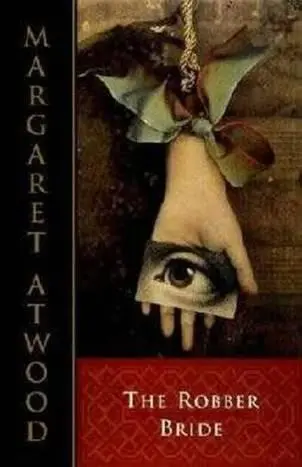
- Название:The Robber Bride
- Автор:
- Жанр:
- Год:1993
- ISBN:нет данных
- Рейтинг книги:5 / 5. Голосов: 1
-
Избранное:Добавить в избранное
- Отзывы:
-
Ваша оценка:
The Robber Bride: краткое содержание, описание и аннотация
Предлагаем к чтению аннотацию, описание, краткое содержание или предисловие (зависит от того, что написал сам автор книги «The Robber Bride»). Если вы не нашли необходимую информацию о книге — напишите в комментариях, мы постараемся отыскать её.
Even Zenia’s name is enough to provoke the old sense of outrage, of humiliation and confused pain. The truth is that at certain times—early mornings, the middle of the night—she finds it hard to believe that Zenia is really dead.’ Zenia is beautiful, smart and greedy; by turns manipulative and vulnerable, needy and ruthless; a man’s dream and a woman’s nightmare. She is also dead. Just to make absolutely sure Tony, Roz and Charis are there for the funeral. But five years on, as the three women share a sisterly lunch, the impossible happens: ‘with waves of ill will flowing out of her like cosmic radiation’, Zenia is back ...
This is the wise, unsettling, drastic story of three women whose lives share a common wound: Zenia, a woman they first met as university students in the sixties. Zenia is smart and beautiful, by turns manipulative, vulnerable—and irresistible. She has entered into their separate lives to ensnare their sympathy, betray their trust, and exploit their weaknesses. Now Zenia, thought dead, has suddenly reappeared. In this richly layered narrative, Atwood skilfully evokes the decades of the past as she retraces three women’s lives, until we are back in the present—where it’s yet to be discovered whether Zenia’s ‘pure, free-wheeling malevolence’ can still wreak havoc.
reports from the farthest reaches of the sex wars and is one of Margaret Atwood’s most intricate and subversive novels yet.
Exploring the paradox of female villainy, this tale of three fascinating women is another peerless display of literary virtuosity by the supremely gifted author of
and
. Roz, Charis and Tony all share a wound, and her name is Zenia. Beautiful, smart and hungry, by turns manipulative and vulnerable, needy and ruthless, Zenia is the turbulent center of her own neverending saga. She entered their lives in the sixties, when they were in college. Over the three decades since, she has damaged each of them badly, ensnaring their sympathy, betraying their trust, and treating their men as loot. Then Zenia dies, or at any rate the three women—with much relief -- attend her funeral. But as
begins, Roz, Charis and Tony have come together at a trendy restaraunt for their monthly lunch when in walks the seemingly resurrected Zenia...
In this consistently entertaining and profound new novel, Margaret Atwood reports from the farthest reaches of the war between the sexes with her characteristic well-crafted prose, rich and devious humor, and compassion.
The Robber Bride — читать онлайн бесплатно полную книгу (весь текст) целиком
Ниже представлен текст книги, разбитый по страницам. Система сохранения места последней прочитанной страницы, позволяет с удобством читать онлайн бесплатно книгу «The Robber Bride», без необходимости каждый раз заново искать на чём Вы остановились. Поставьте закладку, и сможете в любой момент перейти на страницу, на которой закончили чтение.
Интервал:
Закладка:
Charis has brought August with her, and the three girls play Barbie doll games together in the twins’ playroom, violent games in which Barbie goes on the warpath and takes over the world and bosses everyone else around, and other games in which she comes to a nasty end. Or they dress up in Roz’s old slips and sneak around the house, three princesses on an expedition. Roz rejoices to hear the loud voices again, the arguments; the twins have been far too quiet lately.
Tony makes cups of tea, and, for dinner, olden-days tuna casseroles with cheese and potato-chip toppings, Roz thought such things had vanished from the world, and Charis massages Roz’s feet with mint essence and rose oil. She tells Roz that she’s an ardent soul, with connections to Peru. These things that have happened to her, which look like tragedy, are past lives working themselves out. Roz must learn from them, because that is why we return to earth: to learn. “You don’t stop being who you are, in your next life,” she says, “but you add things.” Roz bites her tongue, because she’s returning to herself again and she thinks this is diarrhea, but she would never dream of saying so because Charis means well, and Charis runs baths for her that have sticks of cinnamon and leaves floating in them, as if Roz is about to be turned into chicken stock.
“You’re spoiling me,” Roz tells them. Now that she’s feeling better she’s made uneasy by all the fussing. She is usually the one who does these things, the hen things, the taking care. She’s not used to being on the receiving end.
“You’ve been on a hard journey,” says Charis, in her gentlevoice. “You used up a lot of your energy. Now you can let go:”
“That’s not so easy,” says Roz.
“I know,” says Charis. “But you’ve never liked easy things.” By never, she means not for the past four thousand years. Which is about how old Roz feels.
Roz finds herself sitting on the cellar floor in the light from the one unshaded overhead bulb, an empty plate beside her, a children’s storybook open on her knees. She’s twisting and untwisting her wedding ring, the ring that once meant she was married, the ring that’s weighing her down, turning it on her finger as if she’s unscrewing it, or else expecting some genie or other to appear from nowhere and solve everything for her. Put the pieces back together, make everything right; slide Mitch alive back into her bed where she will find him when she goes upstairs—scrubbed and scented and brushed and cunning, filled to the brim with affectionate lies, lies she can see through, lies she can deal with, twenty years younger. Another chance. Now that she knows what to do she will do it better this time. Tell me, God—why don’t we get rehearsals?
How long has she been down here, whimpering in bad light? She must go upstairs and deal with reality, whatever that may be. She must pull herself together.
She does this by patting the pockets of her bathrobe, where she always used to keep a tissue before the twins outlawed them. Not finding any, she blots her eyes on her orange sleeve, leaving a black smear of mascara, then wipes her nose on the other sleeve. Well, who’s to see, except God? According to the nuns he had a preference for cotton hankies. God, she tells him, if you hadn’t wanted us to wipe our noses on our sleeves you wouldn’t have given us sleeves. Or noses. Or tears, as far as that goes. Or memory, or pain.
She slides the kids’ books back onto the shelf. She should donate these books to some charity, or maybe lend them—let them loose in the world to warp some small child’s mind, while she waits for her own grandchildren to appear. What grandchildren? Dream on, Roz. The twins are too young and will anyway probably grow up to be stock-car racers or women who go off to live among the gorillas, something fearless and non-progenitive; as for Larry, he’s in absolutely no hurry, and if the faux women he’s come up with so far are any sample of what the future holds in the daughter-in-law department, Roz would rather not hold her breath.
Life would be so much easier if there were still arranged marriages. She’d go out into the marriage market, cash in hand, bargain with a dependable marriage broker, secure a nice bride for Larry: bright but not bossy, sweet but not a pushover, and with a wide pelvic structure and a strong back. If her own marriage had been arranged, would things have’ turned out any worse than they did? Is it fair, to send inexperienced young girls out into the wild forest to fend for themselves? Girls with big bones and maybe not the smallest of feet. What would help would be a wise woman, some gnarly old crone who would step out from behind a tree, who would give advice, who would say No, not this one, who would say Beauty is only skin deep, in men as well as women, who would see down as far as the heart. Who knows what evil lurks in the hearts of men? An older woman knows. But how much older do you have to get before you acquire that kind of wisdom?
Roz keeps expecting it to sprout in her, grow all over her, sort of like age spots; but it hasn’t yet.
She hauls herself up off the floor and dusts her behind, a mistake because her hands are covered with book dirt, as she realizes too late when she looks at them, having encountered a squashed silverfish stuck to her velour-covered buttock, and Lord knows what’s been crawling over her while she’s been sitting here woolgathering. Woolgathering, her mother’s word, a word so old, rooted so far back in time, that although everyone knows what it means nobody knows where it came from. Why was gathering wool supposed to be lazy? Reading and thinking were both woolgathering, to her mother. Rosalind! Don’t just sit there woolgathering! Sweep the front walk!
Roz’s legs have gone to sleep. Every step she takes sends pins and needles shooting into them. She limps towards the cellar steps, pausing to wince. When she gets up to the kitchen she will open the refrigerator, just to see if there’s something in there she might like to eat. She hasn’t had a proper dinner, she often doesn’t. Nobody to cook for her, nobody to cook for, not that she ever cooked. Nobody to order in for. Food should be shared. Solitary eating can be like solitary drinking—a way of dulling the edge, of filling in the blanks. The blank; the empty man-shaped outline left by Mitch.
But there won’t be anything in the fridge that she wants; or’ rather, a few things maybe, but she will not stoop so low, she will not eat spoonfuls from the jar of chocolate-rum ice cream sauce, as she has done before, or blitz the can of pate de foie gras she’s been saving—up for God knows what mythical occasion, along with the bottle of champagne she keeps tucked away at the back. There’s a bunch of raw vegetables in there, roughage she bought in a fit of nutritional virtue, but right now they don’t appeal. She foresees their fate: they will turn slowly to green and orange goo in the crisper, and then she will buy more.
Maybe she could call up Charis or Tony, or both of them, invite them over; order up some red-hot chicken wings from the Indian tandoori take-out on Carlton, or some shrimp balls and garlic beans and fried won-ton from her favourite Szechuan place on Spadina, or both: have a sinful little multicultural feast. But Charis will already be back on the Island, and it’s dark by now, and she doesn’t like the thought of Charis out alone at night, there might be muggers, and Charis is such an obvious target, a long-haired middle-aged woman walking around covered with layers of printed textiles and bumping into things, she might as well have a sign pinned to her, Snatch my purse, and Roz can rarely persuade her to take taxis even if she offers to pay for them herself, because Charis goes on about the waste of gasoline. She will take a bus; or worse, she might decide to walk, through the wilds of Rosedale, past the rows of ersatz Georgian mansions, and get picked up by the police for vagrancy.
Читать дальшеИнтервал:
Закладка:
Похожие книги на «The Robber Bride»
Представляем Вашему вниманию похожие книги на «The Robber Bride» списком для выбора. Мы отобрали схожую по названию и смыслу литературу в надежде предоставить читателям больше вариантов отыскать новые, интересные, ещё непрочитанные произведения.




Обсуждение, отзывы о книге «The Robber Bride» и просто собственные мнения читателей. Оставьте ваши комментарии, напишите, что Вы думаете о произведении, его смысле или главных героях. Укажите что конкретно понравилось, а что нет, и почему Вы так считаете.