Tim Gautreaux - The Missing
Здесь есть возможность читать онлайн «Tim Gautreaux - The Missing» весь текст электронной книги совершенно бесплатно (целиком полную версию без сокращений). В некоторых случаях можно слушать аудио, скачать через торрент в формате fb2 и присутствует краткое содержание. Жанр: Современная проза, на английском языке. Описание произведения, (предисловие) а так же отзывы посетителей доступны на портале библиотеки ЛибКат.
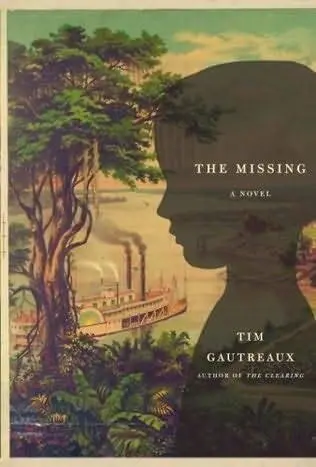
- Название:The Missing
- Автор:
- Жанр:
- Год:неизвестен
- ISBN:нет данных
- Рейтинг книги:4 / 5. Голосов: 1
-
Избранное:Добавить в избранное
- Отзывы:
-
Ваша оценка:
The Missing: краткое содержание, описание и аннотация
Предлагаем к чтению аннотацию, описание, краткое содержание или предисловие (зависит от того, что написал сам автор книги «The Missing»). Если вы не нашли необходимую информацию о книге — напишите в комментариях, мы постараемся отыскать её.
After World War I, Sam Simoneaux returns to New Orleans determined to leave mayhem and destruction behind, and to start anew with his wife years after losing a son to illness. But when a little girl disappears from the department store where he works, he has no recourse but to join her musician parents on a Mississippi excursion steamboat, hoping to unearth clues somewhere along the river. Though ill-prepared for this rough trade in hamlets where neither civilization nor law is familiar, he enforces tolerable behavior on board and ventures ashore to piece together what happened to the girl – making a discovery that not only endangers everyone involved but also sheds new light on the murder of his own family decades before.
Against this vivid evocation of a ragged frontier nation, a man fights to redeem himself, parents contend with horrific loss, and others consider kidnapping either another job or a dream come true. The suspense – and the web of violence linking Sam to complete strangers – is relentless, compelling, and moving, the finest demonstration yet of Gautreaux's understanding of landscape, history, and human travail and hope.
The Missing — читать онлайн бесплатно полную книгу (весь текст) целиком
Ниже представлен текст книги, разбитый по страницам. Система сохранения места последней прочитанной страницы, позволяет с удобством читать онлайн бесплатно книгу «The Missing», без необходимости каждый раз заново искать на чём Вы остановились. Поставьте закладку, и сможете в любой момент перейти на страницу, на которой закончили чтение.
Интервал:
Закладка:
He slowly reached for his wallet. “What you plan on doin’?”
“Goin’ back toward the mountains. Maybe over the hump into Virginia. No offense, but it’s like living in a croup tent down here, and these is the ugliest woods I ever been dragged through in my life. You got weeds that would poison a wild Indian to death and mosquitoes to carry off his corpse. And if Woodgulch is your example of a town, I seen better-lookin’ places drew with a burnt stick by an idiot child.”
He counted out the money into her red palm. “Like you say, I ain’t stayin’ here forever.”
She folded the bills and stuck them down her bodice. “I know you’re in the business of turnin’ things over for profit. You understand what things is worth in dollars and cents. For about six weeks up in Point Pleasant, West Virginia, I worked in a pawnshop addin’ up accounts in a ledger before the owner’s wife run me off ’cause I wasn’t ugly as she was. Lord, if that wasn’t a place that had a license to steal I don’t know what one looks like. You ever been in a pawnshop?”
“I sold to a few of ’em.”
“All you got to do is go somewhere there ain’t a warrant on you yet, maybe in east Tennessee or North Carolina, and rent a store. A feller walks in with a pistol worth two dollars and you loan him twenty cents on it. If he comes back to claim it you charge him twenty cents interest. If he don’t, then it’s yourn and you put it on sale for three dollars.”
He put his billfold back in his pocket. “I get run off from here, I’ll consider it.”
She reached out and put a forefinger in one of his belt loops and tugged it. He wobbled as if he suddenly were dizzy, and her voice softened. “Don’t you wait too long. I’ll start out in Bristol but there ain’t no tellin’ where I’ll be in six months.” She turned and went into the kitchen, where she’d sent the girl to cut out biscuits with the mouth of a jelly glass.
Ralph went into the house and stopped inside the door, letting his eyes adjust to the darkness. The walls showed flowering spills of mildew and cumulus blooms of lime dissolved out of the plaster by rainwater. The next room was a great hall hung with dangling leeches of paint. Billsy sat in a velour chair with the stuffing leaking out under his legs.
“You pop the question?”
“Shut up.”
“All right, bud. Let’s talk business. We goin’ into Woodgulch with the kid?”
“I said not, but now I don’t know.”
“We could take the skiff across the river.”
Ralph looked through the clouded glass over the broad gallery toward the fungus-haunted live oaks hiding the west. “Just who in hell was watchin’ us?”
THE TWO OF THEM ate breakfast at the Woodgulch Café, a plain-wood room painted from floor to ceiling the gray of a rainy dawn. Sam counted their money together and figured they could afford something for supper but not much else until they got back to New Orleans.
August thumbed his empty plate away. “Can we trust him?”
“Well, I’m as sure as I can be.” He knew that when outlanders passed through a community like Woodgulch they touched on old biases and blood alliances going back generations, considerations that were complex and far beyond right and wrong. “He said he’d show up at train time with some deputies.”
“I hope there’s no shooting.”
“Look, there’s no telling what’ll happen. Just try to stay in the clear. Get hold of Lily and stay in the clear.”
“What exactly do you want me to do?”
He took the last bite of egg and stared at his empty plate. “When you’re playing ‘Sweet Sue’ and the trombone gives it over to you to build the song, do you stop the band and ask what they want you to do?”
“No.”
“You just rip into her with that alto sax and play between the notes until it’s right with what the band’s doing. If everybody’s jumping and the dancers are springing the floorboards, you just cut up like crazy, you step all over the clarinet and make him wait for the next turn. On the other hand, if the band is tired and just plugging along, you take your turn and sort of match. It’s like that with everything.”
“Keep my ears open and watch the room.”
“That’s the ticket.”
THEY PASSED THE DAY wandering the aisles of the hardware, walking the town’s six gravel streets, sitting on the one public bench in front of the courthouse. They arrived at the bench about two o’clock, and after an hour of watching a few Fords, mule-drawn wagons, two delivery trucks, and one buggy with a rotted top come and go on their errands, the boy shook his head. “Not much to do, is there?”
“If you lived here you’d be working at something.”
He thought about this. “I’d be working at moving away.”
A man wearing a flannel shirt buttoned up wrong rode a little quarterhorse past them. Across the street a baker came out and, with floured hands, turned the crank that lowered an awning against the westering sun; he looked at them and dusted his hands one against the other, then turned inside. Behind them, the courthouse door rattled and they turned to see the sheriff come out into the heat and start toward them.
“How are you?” Sam called out.
Tabors walked up and put a foot on the bench. “I’ve been on the telephone finding out about your story. Called down to New Orleans and Baton Rouge, and everything checks out. I talked to a Muscarella at the French Quarter precinct and he read me the report.” He looked at August. “Called a lot of people. I hear you play on a big dance boat.”
“Yessir.”
“That jass music or what?”
“Yessir, we try to make people want to dance.”
The sheriff looked at both of them, as though trying to divine their characters. “If that little girl shows up tomorrow, I have to be satisfied about her identity. Do you have a photo?”
“I don’t.”
“No, sir, not on me.”
“Well, if we wind up with her, I’ll have to perform an interview before I can turn her over, you understand. I can’t just go around giving away children.” He put a hand on August’s shoulder for a moment, and Sam saw how large it was, thick in the palm. The sheriff was a big man, his size partially concealed by his suit, a mild gray pinstripe. He took off his fedora to wipe his forehead, revealing a big, straightsided head, the close-cropped blond hair free of gray. He was built of preventative muscle that would make those he dealt with think about the gravity of their actions and words, or else.
“You have things set up?” Sam asked him.
“Everything’s ready,” the sheriff said.
LATE THAT NIGHT in the hotel, they again talked across the dark, their voices boxy in the plank-walled room. One side of Sam’s bed was against a low window, and a wet breeze seeped through the screens but did little to allay the breathless heat.
“Lucky, you think we should’ve sold the shotgun? We could have traded it for a little pistol.”
Sam turned over on his side, the springs squalling under his weight. “Bud, a pistol in the pocket changes the way a man thinks. Without it, he might not take certain chances. With it, he goes where he shouldn’t or does something that’s not a good idea. He thinks it’s a free pass, but it isn’t.”
“But it’s kind of a life preserver, isn’t it? A safety device?”
“If you can’t swim, best not go near the water.”
“I can see how sometimes one might come in handy, though. Like when a robber comes at you.”
“Listen, unless you’re trained or some kind of natural-born killer, a criminal will get the best of you every time. You’re surprised, and he’s not, that’s all there is to it. He’ll shoot you through the heart before you get a finger on your pistol.”
Читать дальшеИнтервал:
Закладка:
Похожие книги на «The Missing»
Представляем Вашему вниманию похожие книги на «The Missing» списком для выбора. Мы отобрали схожую по названию и смыслу литературу в надежде предоставить читателям больше вариантов отыскать новые, интересные, ещё непрочитанные произведения.



Обсуждение, отзывы о книге «The Missing» и просто собственные мнения читателей. Оставьте ваши комментарии, напишите, что Вы думаете о произведении, его смысле или главных героях. Укажите что конкретно понравилось, а что нет, и почему Вы так считаете.