Tim Gautreaux - The Missing
Здесь есть возможность читать онлайн «Tim Gautreaux - The Missing» весь текст электронной книги совершенно бесплатно (целиком полную версию без сокращений). В некоторых случаях можно слушать аудио, скачать через торрент в формате fb2 и присутствует краткое содержание. Жанр: Современная проза, на английском языке. Описание произведения, (предисловие) а так же отзывы посетителей доступны на портале библиотеки ЛибКат.
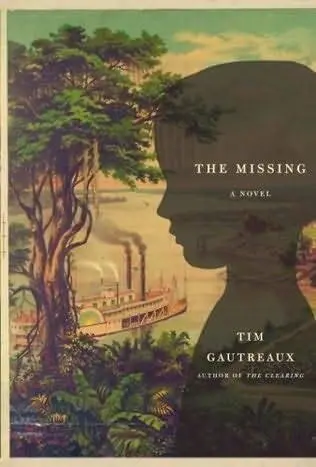
- Название:The Missing
- Автор:
- Жанр:
- Год:неизвестен
- ISBN:нет данных
- Рейтинг книги:4 / 5. Голосов: 1
-
Избранное:Добавить в избранное
- Отзывы:
-
Ваша оценка:
The Missing: краткое содержание, описание и аннотация
Предлагаем к чтению аннотацию, описание, краткое содержание или предисловие (зависит от того, что написал сам автор книги «The Missing»). Если вы не нашли необходимую информацию о книге — напишите в комментариях, мы постараемся отыскать её.
After World War I, Sam Simoneaux returns to New Orleans determined to leave mayhem and destruction behind, and to start anew with his wife years after losing a son to illness. But when a little girl disappears from the department store where he works, he has no recourse but to join her musician parents on a Mississippi excursion steamboat, hoping to unearth clues somewhere along the river. Though ill-prepared for this rough trade in hamlets where neither civilization nor law is familiar, he enforces tolerable behavior on board and ventures ashore to piece together what happened to the girl – making a discovery that not only endangers everyone involved but also sheds new light on the murder of his own family decades before.
Against this vivid evocation of a ragged frontier nation, a man fights to redeem himself, parents contend with horrific loss, and others consider kidnapping either another job or a dream come true. The suspense – and the web of violence linking Sam to complete strangers – is relentless, compelling, and moving, the finest demonstration yet of Gautreaux's understanding of landscape, history, and human travail and hope.
The Missing — читать онлайн бесплатно полную книгу (весь текст) целиком
Ниже представлен текст книги, разбитый по страницам. Система сохранения места последней прочитанной страницы, позволяет с удобством читать онлайн бесплатно книгу «The Missing», без необходимости каждый раз заново искать на чём Вы остановились. Поставьте закладку, и сможете в любой момент перейти на страницу, на которой закончили чтение.
Интервал:
Закладка:
They lay there in silence, the little town as quiet as a shadow. After a while, through the screen came the dull aeolian hum of a steamboat whistle several miles off.
“What about tomorrow?”
“It’ll get here, won’t it?”
“I mean, do you think everything will turn out all right?”
He knew August understood that in fact things were not that simple. Many things had recently not turned out all right. Sam guessed August wanted what every boy did-assurance, a good night’s sleep, someone on his side. “Everything’s going to be fine,” he said, turning his face to the window and looking down to where a black horse stood in the middle of the street, facing west, untethered and lost and asleep.
THE NEXT MORNING they could afford only toast and coffee for breakfast. They washed up and straightened their clothes as best they could, wiping down their shoes with the only cloth in the room. Walking to the edge of town they sold the mule for six dollars and fifty cents to a liveryman who spoke a little French and wanted him as a pet.
At two o’clock they walked through the sun to the station and waited inside on one of three varnished benches. The agent nodded as though he’d expected them. Fifteen minutes before train time the sheriff came in and sat next to the door, wearing a different suit than the day before, no badge visible. After him, a beefy man dressed like a farmer came in and sat by the other door to the platform, a pistol-shaped bulge in his overalls pocket. The sheriff nodded to him, and they both bent to stare across the street where a man sat on a doorstep looking back at them. After a while, he raised his arm, and the farmer waved back.
Sam stood up and walked out onto the platform, looked over at the dusty town, and read the train board. South of Woodgulch were three flag stops named Fault, Lacy Switch, and Stob Mill, then the main line interchange at Gashouse. The tri-weekly mixed train was the only one scheduled. He expected that the train was close and thought of the picture that still flashed in his mind, sometimes in his dreams, sometimes when he was trying to remember why he wasn’t with his wife and child in New Orleans. He wanted to fasten in his imagination the little girl’s face, and closing his eyes for a moment saw the familiar cameo and next to it the image of his new son, and then from out of nowhere the girl in France whose house he’d leveled with the errant artillery shell and next to her a dim painful image of his first child. He opened his eyes and tried to remember everything Elsie and August had told him about Lily, the pitch of her voice, the precise color of her hair, and then he heard the train whistle, hoarse and foreboding, and his heart stumbled. He walked inside, and the sheriff told him to stand in the back corner.
The locomotive was followed by one passenger car and five red, sun-dulled boxcars. The train stopped and the fireman cut off the locomotive and it pulled ahead past a switch, then backed into a siding and ran alongside the train, where it went through another switch and then came forward to pluck the five boxcars away from the coach, chuffing backwards through town to distribute them on sidings. The conductor opened the vestibule door and put down his stepstool, handing the passengers down to the platform. Twelve men got off, local men, the sheriff nodding to each in turn as they walked down the platform to be greeted by those picking them up in Fords or buggies. After the last man was off, the sheriff boarded and walked through the coach. When he came back into the station, he shook his head. “Maybe they’ll come Monday.”
“We shouldn’t have sold the mule,” August said, his voice cracking. “We’re stuck here.”
The man wearing overalls stood up. “Sheriff?”
“You can go back to the office. I know those hogwashers you’re wearing are hot.”
The man jerked a thumb over his shoulder. “What about Mike?”
“Bring him with you. Tell him we’ll try the same thing on Monday.”
Sam walked out on the platform and stared down the track. He could hear the locomotive huffing around in the yard of the window-frame factory. “I don’t know.”
Tabors looked in the same direction. “What do you think?”
“Once they start something, the Skadlocks don’t strike me as the kind that waste time.” Sam turned to the train board. “What’s Fault?”
“Just a flag stop right over the Louisiana line, though nobody seems to know exactly where that line is. There’s still two farmers that ship a few cans of milk, and a little shop that sends out a half-car of cypress shingles every week. Plus a little barrel operation. There’s just one road that runs through the area and crosses by the station.”
Sam looked down the crooked rails again. “Where’s the road go?”
The sheriff squinted an eye. “From the prison on one end to a gate five or six miles miles east of the railroad, where it reaches the highway.”
“I rode the mule across a straight gravel road when I went down to the Skadlocks’. Was that it?”
“Had to be.”
He stared at the board, then walked into the station, where the conductor was taking an order from the agent. “Excuse me, but did you let off two passengers at Fault?”
The conductor was an old man who arched a thick eyebrow. “And who might you be?”
“He’s all right, Sidney.” The agent shoved his orders at him under the window grate.
“As a matter of fact, we did. A gentleman and a lady.”
“Well dressed? Maybe thirty-five years old?”
“I’d say so. The lady was taking from a flask right on the aisle and I had to ask her to go to the restroom if she wanted a sip.”
Sam glanced at the sheriff and August walked up and stood between them.
“Is there an agent there or what?”
“Yeah,” the conductor said. “On the days the train comes.”
Sam shook his head. “Hell, they’re down there right now waiting for the train to come back.”
The sheriff crossed his arms and looked at his boots. “If they are, well, I’d like to help you, but I can’t. Not my jurisdiction.”
“Could you telegraph the Louisiana sheriff?”
“It wouldn’t do any good. I don’t like to talk about the man. Let’s just say he’s never been to Fault.”
Sam turned to the agent and paid two fares to Fault.
August watched the agent retrieve the tickets. “You think she’s down there, sure enough?”
“I can’t take a chance on thinking otherwise.”
The locomotive turned on the wye in the mill and drifted back to the station with three empty flatcars and coupled to the coach.
August boarded ahead of Sam and they chose the first seats on the left. “Well, we’ll find out soon enough, won’t we?” the boy said.
Then Sheriff Tabors stepped on and sat behind them. “Don’t look at me like that. I had the agent write me a pass.”
“How’ll you get back to town?”
“My brother-in-law lives at Gashouse. He can ride me up here in his Ford after supper.”
The whistle let out a growl and the train jerked into motion, swaying and rattling over the branch-line track toward Fault, six miles away. Sam counted telegraph poles and figured they were going twenty miles an hour. The train went past a pasture full of milk cows and plunged into a brake of old-growth pine for a mile or so.
August looked up at him. “How’s your shoulder?”
“I try not to think about it.”
“You won’t do much in a fight.”
“I don’t guess so.”
They passed a clearing and he saw a small barrel factory, nothing more than a shed covering an undulating machine and a mud yard stacked with blond-wood kegs bound with metal hoops. A switch ran into the yard, and two flatcars sat loaded in the sun. A mill hand waved and waved like he’d never seen a train before, but the little engine kept on puffing south, leaking steam and wobbling along the kinked rails.
Читать дальшеИнтервал:
Закладка:
Похожие книги на «The Missing»
Представляем Вашему вниманию похожие книги на «The Missing» списком для выбора. Мы отобрали схожую по названию и смыслу литературу в надежде предоставить читателям больше вариантов отыскать новые, интересные, ещё непрочитанные произведения.






Обсуждение, отзывы о книге «The Missing» и просто собственные мнения читателей. Оставьте ваши комментарии, напишите, что Вы думаете о произведении, его смысле или главных героях. Укажите что конкретно понравилось, а что нет, и почему Вы так считаете.