Tim Gautreaux - The Missing
Здесь есть возможность читать онлайн «Tim Gautreaux - The Missing» весь текст электронной книги совершенно бесплатно (целиком полную версию без сокращений). В некоторых случаях можно слушать аудио, скачать через торрент в формате fb2 и присутствует краткое содержание. Жанр: Современная проза, на английском языке. Описание произведения, (предисловие) а так же отзывы посетителей доступны на портале библиотеки ЛибКат.
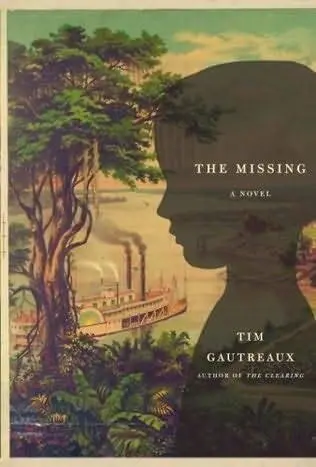
- Название:The Missing
- Автор:
- Жанр:
- Год:неизвестен
- ISBN:нет данных
- Рейтинг книги:4 / 5. Голосов: 1
-
Избранное:Добавить в избранное
- Отзывы:
-
Ваша оценка:
The Missing: краткое содержание, описание и аннотация
Предлагаем к чтению аннотацию, описание, краткое содержание или предисловие (зависит от того, что написал сам автор книги «The Missing»). Если вы не нашли необходимую информацию о книге — напишите в комментариях, мы постараемся отыскать её.
After World War I, Sam Simoneaux returns to New Orleans determined to leave mayhem and destruction behind, and to start anew with his wife years after losing a son to illness. But when a little girl disappears from the department store where he works, he has no recourse but to join her musician parents on a Mississippi excursion steamboat, hoping to unearth clues somewhere along the river. Though ill-prepared for this rough trade in hamlets where neither civilization nor law is familiar, he enforces tolerable behavior on board and ventures ashore to piece together what happened to the girl – making a discovery that not only endangers everyone involved but also sheds new light on the murder of his own family decades before.
Against this vivid evocation of a ragged frontier nation, a man fights to redeem himself, parents contend with horrific loss, and others consider kidnapping either another job or a dream come true. The suspense – and the web of violence linking Sam to complete strangers – is relentless, compelling, and moving, the finest demonstration yet of Gautreaux's understanding of landscape, history, and human travail and hope.
The Missing — читать онлайн бесплатно полную книгу (весь текст) целиком
Ниже представлен текст книги, разбитый по страницам. Система сохранения места последней прочитанной страницы, позволяет с удобством читать онлайн бесплатно книгу «The Missing», без необходимости каждый раз заново искать на чём Вы остановились. Поставьте закладку, и сможете в любой момент перейти на страницу, на которой закончили чтение.
Интервал:
Закладка:
“Is your name Lily?” The sheriff bent over her like a cloud of dark cloth, and she said nothing.
August seemed to show his panic. “Sure it is. Come on, Lil. Tell them who I am.” He stared at her, seemingly frightened by the blankness in her eyes.
The sheriff stood up and frowned. “If your name isn’t Lily, what is it?”
In a small voice she said, “Madeline.”
“I told you,” Willa White cried.
“Wait a minute.” Sam stepped up and put his hand on August’s neck. “Little girl, do you know what this fellow told me?”
The girl shook her head slowly, on the verge of tears.
“He said he taught you a tune from the Sinbad revue in New York and that you could sing the whole thing through.”
“This is ridiculous,” the wife said. “The child knows proper ballads and some hymns. Do you think she’s a little tramp?”
Sam held up a hand and backed the sheriff and August away a bit, creating a little stage in the aisle. “I told him I didn’t believe it one bit.”
“It’s true,” the child said, slowly raising her head.
“I don’t believe it. Bet you can’t sing a single word of ‘Cleopatra.’”
Her eyes flashed over at the Whites; then she held her right arm out, looked at the coach’s ceiling, and began singing in a schooled, vibratoless voice:
You’ve heard of Cleopatra
Who lived down along the Nile.
She made a “Mark” of Anthony
And won him with her smile.
Her feet began a matching dance step, and the other arm went out.
They say she was Egyptian
But I’ve reason to construe
She was Jewish and Hawaiian
With a dash of Irish too.
The sheriff was smiling broadly as if he’d heard the tune many times and thought it the best thing ever written. The child paced up the aisle and kept singing, stepping out of her captivity into her gift, no longer in the aisle of a sooty train but onstage in her mind, the one she’d been born to.
When she strolled with bold Mark Anthony
On Egypt’s yellow sands
You could see that she was Jewish
By the motion of her hands
She would shake her hands and shoulders off-
Lily gave her shoulders a shimmy, and an old farmer down the aisle guffawed and clapped his hands.
“All right, all right,” the sheriff said. “Who taught you that Jolson song, little girl?”
She stopped and pointed dramatically at August. “Gussie. My brother there.”
THE CONDUCTOR allowed the train to back the rest of the way to Woodgulch. The Whites were taken off the coach against their loud, wailing protests and threats, and many townspeople turned out to see the splendidly dressed couple led through the streets in handcuffs.
Before the train left again, a sheriff’s deputy boarded the coach and walked up to where the three of them were seated. “Sheriff said he’s calling for warrants in New Orleans and Kentucky both, that whoever wants ’em most can have ’em. After he gets through with ’em, of course. He’ll get in touch so’s y’all can be deposed down the line.”
Sam relaxed against a window and said, “Good news.”
The deputy leaned down, smelling of Old Spice and sweet chew. “Did that crazy woman really take a shot at our high sheriff?”
“That’s a fact, yeah.”
“Damn. That’ll be a lively trial.”
The whistle blasted a farewell to Woodgulch, and the deputy lumbered down to the vestibule. In seconds the coach jerked forward and Sam glanced over at August and then down at Lily, who was sitting between them eating a sandwich the agent had given her out of his lunchbox. He gazed out the window glad for each foot of travel the train was making toward home. The longer he looked, the more he imagined that he could see his wife and child, and past them Elsie Weller and, all the way downtown, Krine’s vast store. He relaxed for the first time in months, but as the engine pulled into the inter-change at Gashouse, where they would switch trains, Lily sat up straight, looked at August, and asked, “Why didn’t Father come to get me?”
Her brother turned his head toward the aisle, the finality of the gesture proof that the news would not come from him.
Sam bent over and said, “Your mother will explain that, darling.”
“But why did you come, and Gussie, but not my daddy?”
He gave her shoulder a squeeze, surprised by how small it was. He’d been looking for her for so long he expected her to be larger than life. She was just a baby. “Hey, we’ll travel down to New Orleans and your mother will tell you everything you need to know. We’ll go down to the Café du Monde and eat some of those square doughnuts buried in confection sugar. You’ll like that.” He kept talking to keep her mind on the future, but he and August had been so busy in the act of finding her that they’d forgotten what she didn’t know. He hoped she was too young to take it as hard as August had. He hoped she was like him, with no memory whatsoever of a father, but he knew that wasn’t true. Lily would see an empty chair at her mother’s table for the rest of her life, a space lacking words and songs that were her birthright.
They changed trains at the junction, riding to Baton Rouge, then catching another for New Orleans. It was dark on this last leg, and Sam slept with Lily in his lap, the smell of soft coal blowing through the windows and a scrim of cypresses sailing by. In his dream, he himself was in someone’s lap, a man, judging from the smell of kerosene and wood smoke and a little gale of beer breathed over his head; his stomach felt full, and a callused hand pressed down on it as though holding a jewel secure.
When he woke up, the conductor was walking the aisle announcing New Orleans. August looked at him closely.
“What is it?” Sam asked.
“Your eyes are wet. Smoke bother you that much?”
Chapter Thirty-two
THEY WALKED IN the heat down to the ferry landing, taking the boat to Algiers, where the Ambassador was having work done to the rudders. The three of them found Elsie, down on her knees, recoating the café floor, her hair half-unpinned, her washed-out blue dress wrinkled. She had the good sense not to charge at Lily all at once, but got up calmly, wiping her hands on a rag. Bending in front of the child, she hugged her, and Lily received her light kisses, but studied this tired woman wearing a dusty housedress sticky with varnish and smelling of turpentine. Sam could tell she was confused about who Elsie was.
Elsie stared into her eyes. “Lily, I love you.”
“I know.”
“Have you forgotten me?” Elsie’s voice faltered and her eyes grew wide, waiting for the answer, which was slow in coming.
“They told me you went to heaven. I didn’t know you could come back.”
“No, no, I didn’t go anywhere. I know you don’t understand, but you were stolen, and we’re so happy to have you back.”
“Did Father go anywhere?”
Elsie stood up and looked at August, who shook his head. She sighed. “You boys give me some time with her.”
The men sidestepped along a strip of unvarnished floor and got into the kitchen, where they fixed sandwiches. August seemed tired to the bone and worried, the kind of worry that tattoos the face.
“Well, she’s back,” Sam said.
August looked at him. “Is she?”
Sam took a bite and worked his brain along with his jaws, thinking of all the time that was lost to everybody, but especially to Lily. The life of a young child is compressed existence, and a month is like a year. He tried to call up one day from his own childhood and remembered a time when he was eight, after cane-grinding season, when his uncle Claude took him on his first rabbit hunt. He still knew every detail, from loading the little shotgun he was allowed to use, to his uncle’s hunting jokes in French, to the first shot and kill, to the opening with a pocketknife of the bright red world inside the animal as he was taught to clean it for the table and, that night, the rabbit stew itself. One day was intact and as long as a whole book in his recollection. If it was like that for Lily, then she’d been gone for years.
Читать дальшеИнтервал:
Закладка:
Похожие книги на «The Missing»
Представляем Вашему вниманию похожие книги на «The Missing» списком для выбора. Мы отобрали схожую по названию и смыслу литературу в надежде предоставить читателям больше вариантов отыскать новые, интересные, ещё непрочитанные произведения.







Обсуждение, отзывы о книге «The Missing» и просто собственные мнения читателей. Оставьте ваши комментарии, напишите, что Вы думаете о произведении, его смысле или главных героях. Укажите что конкретно понравилось, а что нет, и почему Вы так считаете.