Tim Gautreaux - The Missing
Здесь есть возможность читать онлайн «Tim Gautreaux - The Missing» весь текст электронной книги совершенно бесплатно (целиком полную версию без сокращений). В некоторых случаях можно слушать аудио, скачать через торрент в формате fb2 и присутствует краткое содержание. Жанр: Современная проза, на английском языке. Описание произведения, (предисловие) а так же отзывы посетителей доступны на портале библиотеки ЛибКат.
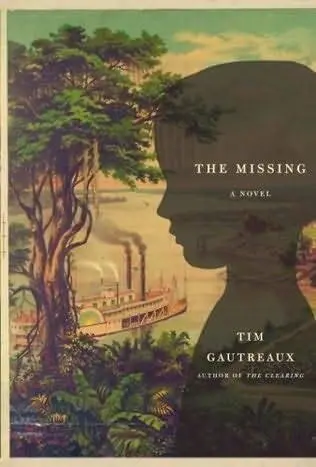
- Название:The Missing
- Автор:
- Жанр:
- Год:неизвестен
- ISBN:нет данных
- Рейтинг книги:4 / 5. Голосов: 1
-
Избранное:Добавить в избранное
- Отзывы:
-
Ваша оценка:
The Missing: краткое содержание, описание и аннотация
Предлагаем к чтению аннотацию, описание, краткое содержание или предисловие (зависит от того, что написал сам автор книги «The Missing»). Если вы не нашли необходимую информацию о книге — напишите в комментариях, мы постараемся отыскать её.
After World War I, Sam Simoneaux returns to New Orleans determined to leave mayhem and destruction behind, and to start anew with his wife years after losing a son to illness. But when a little girl disappears from the department store where he works, he has no recourse but to join her musician parents on a Mississippi excursion steamboat, hoping to unearth clues somewhere along the river. Though ill-prepared for this rough trade in hamlets where neither civilization nor law is familiar, he enforces tolerable behavior on board and ventures ashore to piece together what happened to the girl – making a discovery that not only endangers everyone involved but also sheds new light on the murder of his own family decades before.
Against this vivid evocation of a ragged frontier nation, a man fights to redeem himself, parents contend with horrific loss, and others consider kidnapping either another job or a dream come true. The suspense – and the web of violence linking Sam to complete strangers – is relentless, compelling, and moving, the finest demonstration yet of Gautreaux's understanding of landscape, history, and human travail and hope.
The Missing — читать онлайн бесплатно полную книгу (весь текст) целиком
Ниже представлен текст книги, разбитый по страницам. Система сохранения места последней прочитанной страницы, позволяет с удобством читать онлайн бесплатно книгу «The Missing», без необходимости каждый раз заново искать на чём Вы остановились. Поставьте закладку, и сможете в любой момент перейти на страницу, на которой закончили чтение.
Интервал:
Закладка:
THEY SMEARED themselves with citronella, Sam slapping it in his armpits and on the backs of his hands.
The boy watched, then took the offered bottle.
“Damned if I don’t smell like a sardine,” Sam said, climbing up on the third layer of bales on the broad front porch. He stretched out under the roof tin, listening to it pop in the cooling air.
August lay against the board wall down below. “They’ll take Lily right past here, won’t they, Lucky?”
“Only way to the rest of the world.”
“And meet the Whites in Woodgulch?”
“If I had to bet.”
“And we won’t be able to do a thing about it.”
He tried to focus on a red-wasp nest a few feet above his head, a dim copper disk promising pain. “Now you gonna kill the Whites?”
A single pained word-“Don’t”-drifted up from the darkness of the porch. It sounded like the last plea he would make as a child in this life.
“All right. It’s all right. I’ll try to figure something out.”
Sam tried to sleep, and did, but was awakened by a dim flash on the Louisiana side of the river followed a long time later by a low stumble of sound, a thunderstorm walking toward them on legs of lightning. He wondered how the girl was doing with her third set of caretakers and thought about when he was four, remembering nothing at all, neither face nor hurt or anything else, which maybe was a blessing. The next day they would go to Woodgulch and wait in sight of the little tall-windowed railroad station. Wait for what he wasn’t exactly sure, but maybe the Whites would show, arriving on the wobbly train and leaving on the return half an hour later. But what could he and the boy do to the Whites? Take the girl away and ride along with them back to Baton Rouge on the same train? Try to get the law to help? Woodgulch was a Mississippi county seat, where the high sheriff had his office, the man who probably let the Skadlocks sell whiskey and steal whatever they wanted, who hired Ralph Skadlock’s second cousin as the Zeneau deputy. There was no chance anyone there would believe two outlanders.
At daylight Sam woke and found the boy grim-faced and sitting with his arms crossed next to the locked door, his legs stretched out toward the west. When the storekeeper unlocked the building, he went in and sold the dew-rusted shotgun for a dollar less than he’d paid for it. Sam bought a tin of Vienna sausages and one of peaches in syrup. They went outside and sat on the porch like useless vagrants of a century before, hanging around to await some accident of good fortune. After he finished eating, Sam counted his money.
“You can sell the mule for something,” the boy told him.
“The old fellow told me he wouldn’t take him back. Said it cost money to hang on to it and that the ten-dollar bill I gave him didn’t eat. If I keep the animal, I’ll keep the tack.”
“Where’s that station you were talking about?”
“Woodgulch. Maybe ten miles.”
“We could ride there in two hours.”
“Let’s see.” He walked into the aromatic store and offered the animal and tack to the storekeeper, who laughed at him. Back out on the porch he looked down at August, who sat slumped against a post pulling apart a wad of cotton. “Let’s ride.”
They went out back and saddled Garde Ça and got on. The mule stood like a piano bench. They remained still on his back, waiting. Sam dropped the reins on the animal’s neck and crossed his arms. After five minutes, Garde Ça looked back at them, then began a drunken walk to the road, where he paused, looked both ways, and turned right toward Woodgulch. After a while, Sam picked up the reins and said, “Dépêchetoi, lambin,” and the mule evened its gait, his ears turning like ventilators on a ship’s deck.
They met five automobiles on the way to Woodgulch. Sam looked carefully at the faces in the machines, and some stared back at his rudeness. He watched the road in the distance as well, and suddenly he pulled the bit sharply to the right and they rode off a hundred yards into a stand of cypresses.
“Stay here,” he told August, sliding off. Stooping in a berry patch, he watched Billsy ride by on a small horse the color of axle grease. He was wearing a new tan fedora and glossy boots.
“What?” the boy asked, when Sam remounted.
“Skadlock’s brother. I’m not sure what that means.”
“He’s probably bringing news.”
“What kind of news?” He turned the animal’s head.
“I don’t know.”
When they got back on the road, he said, “News?”
Chapter Thirty-one
WOODGULCH WAS A TOWN of seventy buildings, the hub of small farms and two mills that made window frames and nail kegs. There was a brick courthouse surrounded by graded red lanes and the usual small businesses. They rode down the main street to the station, Sam feeling dumb and disconnected from the rest of the world as he tied the mule to a catalpa. It was three-thirty. He was nobody here.
August went in and used the restroom for a long time and came out and looked at him as if to say, “Now what?” His face and neck were red where he had scrubbed off the dirt and sweat. “You don’t know a soul around here, do you?”
“I’m thinking.”
“Nobody we can trust.”
“A connection,” he said. “We need a connection. Time to talk to the connection man.”
He found the station agent copying waybills, a youngish fellow with an untrimmed mustache who was quick with his pencil. “Can I help you?” he said.
“What’s the name of the local sheriff?”
He came over to the window and looked at Sam’s clothes and unshaven face. “Kyle Tabors.”
“I might need to talk with him about something.”
“You might?” The agent narrowed his eyes.
“Is he a pretty good fella?”
“Who are you, bud? I saw you come through the other day, but I ain’t seen you around here before.”
He told him his name and where he was from as patiently as he could stand to do it.
The agent looked him over again. “If you want to find out about the sheriff, I recommend you walk down the street and ask him.” He returned to his desk and sat amid the clutter of hand stamps and bundles of paper stuck on hooks.
“I just need a little information.”
“Sorry. I don’t know you.”
He walked out on the platform and the boy was laid out on the bench. He looked down the street to where the old idlers of the town sat on the low retaining wall at the edge of the courthouse lawn. He looked down the tracks lined by telegraph wire drooping between poles as if weighted with information and commerce. The lines made him remember the Greenville telegrapher, and he went back in.
“Hey.”
The agent looked up from a desk. “Sir?” The word was strained.
“Do you know Morris Hightower?”
He rolled back in his chair and returned to the window. “Yep. Do you?”
“I do. And he knows I’m looking for a little kidnapped girl, helping out her parents. You could telegraph him about me.”
“We get some Greenville freight back in here from time to time, and he contacts me about it. Sends Morse like a mouse runnin’ on tin. I used to take train orders from him in Jackson.” He put a pad and pencil on the little counter. “Write your name here and come back in a few minutes.” The agent opened his telegraph key and began sending an even stream of dots and dashes.
Outside, the mule was rolling the bit with his great tongue, so he sent the boy down the street with Garde Ça in tow to find water, telling him to wait at the station when he returned. By the time Sam went back inside, the agent was waiting at the window.
“You’re a pretty lucky man.”
Читать дальшеИнтервал:
Закладка:
Похожие книги на «The Missing»
Представляем Вашему вниманию похожие книги на «The Missing» списком для выбора. Мы отобрали схожую по названию и смыслу литературу в надежде предоставить читателям больше вариантов отыскать новые, интересные, ещё непрочитанные произведения.





Обсуждение, отзывы о книге «The Missing» и просто собственные мнения читателей. Оставьте ваши комментарии, напишите, что Вы думаете о произведении, его смысле или главных героях. Укажите что конкретно понравилось, а что нет, и почему Вы так считаете.