Adriana Trigiani - Very Valentine
Здесь есть возможность читать онлайн «Adriana Trigiani - Very Valentine» весь текст электронной книги совершенно бесплатно (целиком полную версию без сокращений). В некоторых случаях можно слушать аудио, скачать через торрент в формате fb2 и присутствует краткое содержание. Жанр: Современная проза, на английском языке. Описание произведения, (предисловие) а так же отзывы посетителей доступны на портале библиотеки ЛибКат.
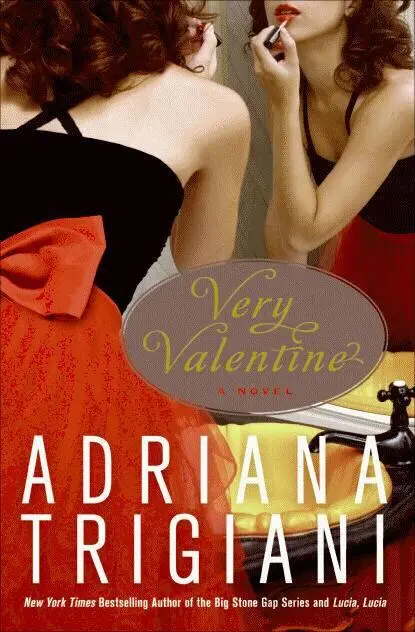
- Название:Very Valentine
- Автор:
- Жанр:
- Год:неизвестен
- ISBN:нет данных
- Рейтинг книги:3 / 5. Голосов: 1
-
Избранное:Добавить в избранное
- Отзывы:
-
Ваша оценка:
Very Valentine: краткое содержание, описание и аннотация
Предлагаем к чтению аннотацию, описание, краткое содержание или предисловие (зависит от того, что написал сам автор книги «Very Valentine»). Если вы не нашли необходимую информацию о книге — напишите в комментариях, мы постараемся отыскать её.
In this luscious, contemporary family saga, the Angelini Shoe Company, makers of exquisite wedding shoes since 1903, is one of the last family-owned businesses in Greenwich Village. The company is on the verge of financial collapse. It falls to thirty-three-year-old Valentine Roncalli, the talented and determined apprentice to her grandmother, the master artisan Teodora Angelini, to bring the family's old-world craftsmanship into the twenty-first century and save the company from ruin.
While juggling a budding romance with dashing chef Roman Falconi, her duty to her family, and a design challenge presented by a prestigious department store, Valentine returns to Italy with her grandmother to learn new techniques and seek one-of-a-kind materials for building a pair of glorious shoes to beat their rivals. There, in Tuscany, Naples, and on the Isle of Capri, a family secret is revealed as Valentine discovers her artistic voice and much more, turning her life and the family business upside down in ways she never expected. Very Valentine is a sumptuous treat, a journey of dreams fulfilled, a celebration of love and loss filled with Trigiani's trademark heart and humor.
Very Valentine — читать онлайн бесплатно полную книгу (весь текст) целиком
Ниже представлен текст книги, разбитый по страницам. Система сохранения места последней прочитанной страницы, позволяет с удобством читать онлайн бесплатно книгу «Very Valentine», без необходимости каждый раз заново искать на чём Вы остановились. Поставьте закладку, и сможете в любой момент перейти на страницу, на которой закончили чтение.
Интервал:
Закладка:
Sometimes it takes days of resaturating the leather with dye, letting it dry, then polishing and buffing for hours to acquire a shade that pleases the eye and is appropriate for the shoe. Then I give the leather a pearlized depth by manual brushing. I can see grades and tones in the surface that change in the light; deep veins in the fiber give a look of age, and the sheen provides a layer of energy for the final product. My grandmother has taught me that the palette for leather and suede is limitless, like musical notes. One persnickety bride wanted her shoes dyed Tiffany blue to match the box her engagement ring came in. It took me a month to get the right saturation of color, but I did it.
I place the second shoe on my left hand, guiding it under the brushes with my right. I hear a tapping on the front window of the shop. Bret waves to me and I motion for him to meet me at the entrance.
“You’re up early,” he says as I hold the door open and usher him in.
“That’s the shoemaker’s life. And evidently the same is true for the barons of Wall Street.” I check the clock. It’s 6:30 A.M. I’ve been working in the shop since 5:00.
“I’ve got some information for you.” Bret sits down on the rolling stool at the cutting table. I sit down next to him. He opens a file. “I’ve done some digging. Let me start out by saying that you’re in the worst possible profession to get investors.”
“Great.”
“Fashion is a wild card. Many more failures than successes. Completely dependent upon the whims of the marketplace and individual spending habits. Designers are artists, and therefore considered unreliable in the business world. In a word, handcrafted anything is on shaky ground for investment purposes.” I find it odd that anything as necessary to human beings as shoes could be viewed as risky, but Bret continues, “Unless you’re Prada, or some other venerable family company that the conglomerates are looking to buy.”
“Does it matter that the business has been here since 1903?” I ask.
“It helps. It shows a level of quality and craftsmanship. That’s good. But it also says rarified to the investor.”
“What do you mean?”
“It means that your name has exposure to a very small audience, and that wedding shoes are luxury items. Given the current economy, investors aren’t looking at luxury goods for a return on their money. Right now, in fashion, it’s all about trends and a low sticker price. That’s why you see so many celebrities with clothing lines. Target, H & M, even Wal-Mart, all have a stake in low-priced high fashion. They’re the guys financing the trend.”
“Well, we don’t do what they do.”
“What you could do, and what all major designers do eventually, is lease your name and your designs. You get them mass-produced and you get a portion of the revenue stream. But even then, somebody has to believe there’s a market for you.”
“All the major wedding designers have used us from time to time. Vera Wang used to send girls down here regularly until she started manufacturing shoes with her own name on them.”
“That proves my point exactly. Traditional designers are getting the portion of the business you should be getting when they start their own affordable secondary lines. Val, if we’re going to get Angelini Shoes back in the black by finding a team of investors to make you more liquid, then you need a product that is stylish but can be mass-produced for maximum sales and profit.”
“I don’t even know if Gram would let me sell our designs. I mean, they’re my great-grandfather’s.”
“Then you’ll have to design something new. Something that reflects the Angelini brand, but is your own creation. Then you wouldn’t even need Gram’s permission. The hard truth is that nobody is interested in a shoe shop that can produce three thousand pairs a year. The profit margin is too small. But your classic wedding shoes can become the flagship items in a broader portfolio. You can continue to make one-of-a-kind shoes. As a matter of fact, you have to-that’s the Angelini hook. But you also need a product that can be mass-merchandised to pay off your existing debt, meet your balloon mortgage payments, and allow you to maintain a living and working space in one of Manhattan’s fastest gentrifying neighborhoods. This is a tall order, Val, but if Angelini Shoes is going to make it in the twenty-first century, there’s no other way.”
Bret leaves a file behind, full of research about luxury goods made by long-standing family businesses and how they work in the new century. There are spreadsheets filled with figures, and columns with comparisons, and graphs showing the growth of certain products in the last twenty years, as well as a chronicle of failed ventures. Family-owned businesses like Hermès, Vuitton, and Prada are cited. There is a section about buyouts of small enterprises by conglomerates (which seems to be the way of the world in fashion). I look around our shop, with its machinery from the turn of the last century, and our hand-drawn patterns on butcher paper, and wonder if it’s even possible to make the Angelini Shoe Company a viable name in the age of mass-produced, machine-made goods. And even if it is, am I the one to do it?
The November sky over the Hudson River is a menacing lilac with a low row of Jasper Johns-style charcoal clouds threatening rain. Occasionally, the pumpkin-colored sun peeks through to throw light on the choppy river, its whitecaps showing teeth like the edge of a serrated knife. I pull the belt on my wool coat tight, yank the brim of my baseball cap down, and tuck my long chenille scarf inside my collar.
“Here.” Roman gives me a cup of hot coffee from the deli as he sits down on the park bench, propping his vintage black leather Doc Martens on the railing in front of us. He wears faded jeans and a chocolate brown leather motorcycle jacket that looks to be at least twenty years old, and on him, it’s twenty years of sexy. Roman leans back on the bench as a runner with a chapped pink face jogs by. Roman puts his arm around me.
“It was nice of you to call,” I tell him.
“Between your shoes and my gnocchi, I only see you about half as often as I would like to.”
Roman came over when I told him I was taking a coffee break on the river. He could tell something was bothering me when I went over to the restaurant and helped him prep a supply of eggplant, and today, while we were talking on the phone, I finally told him about my father’s diagnosis. I hadn’t wanted to tell him because there’s nothing worse than bad news when a romance is in full bloom. One of us (him) would wind up being in charge of cheering up the other one (me). Who needs that?
Roman sips his coffee. “What kind of man is your father?”
I look across the river as though the answer lies somewhere on the shores of lower Tenafly. Finally, I say, “He’s Tuscan leather.”
Roman laughs. “What does that mean?”
“Tough hide, soft underside. Not glamorous. Durable. But very versatile. A lot like me. When he learns a lesson, he learns it the hard way.”
“Give me an example.” Roman pulls me closer, partly for warmth and partly because when we’re together, we can’t hold each other enough.
“Dad was an urban park ranger in Queens and he went to a convention in upstate New York in the summer of 1986. When he was there, he met a woman named Mary from Pottsville, Pennsylvania.”
“Seriously?”
“I know. Pottsville . My mother would have much preferred he fool around with a woman from fancy Franklin Lakes or ultraglam Tuxedo Park, but when you’re the wife, you don’t get to choose. Anyhow, my dad came home from the convention and everything seemed normal, except he suddenly grew a mustache and got contact lenses. I was only a kid but I kept looking at him and thinking, ‘That mustache looks like a mask. What’s Dad hiding?’”
Читать дальшеИнтервал:
Закладка:
Похожие книги на «Very Valentine»
Представляем Вашему вниманию похожие книги на «Very Valentine» списком для выбора. Мы отобрали схожую по названию и смыслу литературу в надежде предоставить читателям больше вариантов отыскать новые, интересные, ещё непрочитанные произведения.


Обсуждение, отзывы о книге «Very Valentine» и просто собственные мнения читателей. Оставьте ваши комментарии, напишите, что Вы думаете о произведении, его смысле или главных героях. Укажите что конкретно понравилось, а что нет, и почему Вы так считаете.