Adriana Trigiani - Very Valentine
Здесь есть возможность читать онлайн «Adriana Trigiani - Very Valentine» весь текст электронной книги совершенно бесплатно (целиком полную версию без сокращений). В некоторых случаях можно слушать аудио, скачать через торрент в формате fb2 и присутствует краткое содержание. Жанр: Современная проза, на английском языке. Описание произведения, (предисловие) а так же отзывы посетителей доступны на портале библиотеки ЛибКат.
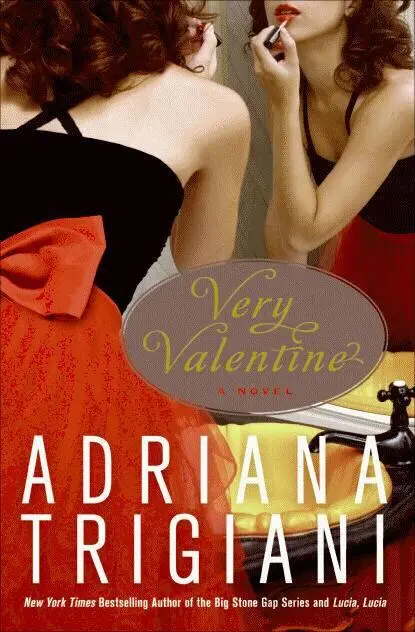
- Название:Very Valentine
- Автор:
- Жанр:
- Год:неизвестен
- ISBN:нет данных
- Рейтинг книги:3 / 5. Голосов: 1
-
Избранное:Добавить в избранное
- Отзывы:
-
Ваша оценка:
Very Valentine: краткое содержание, описание и аннотация
Предлагаем к чтению аннотацию, описание, краткое содержание или предисловие (зависит от того, что написал сам автор книги «Very Valentine»). Если вы не нашли необходимую информацию о книге — напишите в комментариях, мы постараемся отыскать её.
In this luscious, contemporary family saga, the Angelini Shoe Company, makers of exquisite wedding shoes since 1903, is one of the last family-owned businesses in Greenwich Village. The company is on the verge of financial collapse. It falls to thirty-three-year-old Valentine Roncalli, the talented and determined apprentice to her grandmother, the master artisan Teodora Angelini, to bring the family's old-world craftsmanship into the twenty-first century and save the company from ruin.
While juggling a budding romance with dashing chef Roman Falconi, her duty to her family, and a design challenge presented by a prestigious department store, Valentine returns to Italy with her grandmother to learn new techniques and seek one-of-a-kind materials for building a pair of glorious shoes to beat their rivals. There, in Tuscany, Naples, and on the Isle of Capri, a family secret is revealed as Valentine discovers her artistic voice and much more, turning her life and the family business upside down in ways she never expected. Very Valentine is a sumptuous treat, a journey of dreams fulfilled, a celebration of love and loss filled with Trigiani's trademark heart and humor.
Very Valentine — читать онлайн бесплатно полную книгу (весь текст) целиком
Ниже представлен текст книги, разбитый по страницам. Система сохранения места последней прочитанной страницы, позволяет с удобством читать онлайн бесплатно книгу «Very Valentine», без необходимости каждый раз заново искать на чём Вы остановились. Поставьте закладку, и сможете в любой момент перейти на страницу, на которой закончили чтение.
Интервал:
Закладка:
“Go right ahead,” she says.
“Let’s start on the roof.” Alfred leads Scott up the stairs.
I sit down on my work stool. “Well, the day I dreaded is here.”
“Now, don’t be this way,” Gram says softly.
“How should I be?” I pick up the laces for my boot and take them to the ironing board. I plug in the iron and bury my hands deep in my pockets as I wait for it to heat.
June puts down her shears and says, “I need a coffee. Can I bring you girls anything?”
“No thank you,” I tell her.
June slips on her coat and dashes out the door.
“June can smell a fight,” Gram says quietly.
“I’m not going to fight with you. I just wish you’d get your game on.”
“Bergdorf’s isn’t going to save us. The one thing I’m certain of is that there’s no magic solution in business. You’re climbing a mountain here, pick, step, pick, step.”
Suddenly, Gram’s old aphorisms sound ancient and irrelevant. Now I’m angry. “You don’t even know what the meeting is about. You didn’t ask. Why don’t we just put a Closed sign on the door and give up?”
“Look, I’ve been down every road with this business. We’ve been on the brink of closing more times than I can count. Your grandfather and I almost lost it after his father died in 1950. But we held on. We survived the sixties, when our sales dipped to nothing because the hippie brides went barefoot. We made it through the seventies, when manufacturing overseas quadrupled, and then we rode the wave of the Princess Di years in the eighties when everybody went formal with their weddings and required custom gowns and shoes. We brought the business out of debt, and went into profit-and I designed the ballet flat to hang on to the market share we were losing to Capezio.” She raises her voice. “Don’t you dare imply that I’m a quitter. I’ve fought and fought and fought. And I’m tired.”
“I get it!”
“No, you don’t. Until you’ve worked here every day for fifty years, you can’t possibly know how I feel!”
I raise my voice and say, “Let me buy the business.”
“With what?” Gram throws her hands in the air. “I pay your salary. I know what you make!”
“I’ll find the money!” I shout.
“How?”
“I need time to figure it out.”
“We don’t have time!” Gram counters.
“Maybe you could give me the same courtesy you show your grandson and give me time to counter-offer whatever he comes up with.”
Alfred comes into the shop. “What the hell is going on?” he says sharply as he motions toward the hallway where Hatcher is inspecting the stairs.
“I want to buy the business and the building,” I tell my brother.
He laughs.
The sound of his cruel laughter goes through me, devastating my self-confidence, as it has all my life. Then he says, “With what? You’re dreaming!” He waves his arms around like he already owns the Angelini Shoe Company and 166 Perry Street. “How could you possibly afford-this? You couldn’t even buy the iron.”
I close my eyes and fight back the tears. I will not cry in front of my brother. I won’t. I open my eyes. Instead of buckling, as I always do, I find the deepest register of my voice and say definitively, “I am working on it.”
Scott Hatcher appears in the entry, puts his hands in his pockets, and looks at Gram. “I’m prepared to make you an offer. A cash offer. I’d like to buy 166 Perry Street, Mrs. Angelini.”
I pull my knit hat down tightly over my ears, which sting from the cold. As I walk through Little Italy on this Tuesday night, the streets are empty, and the twinkling arbor over Grand Street looks like the last tent pole left to strike before the traveling circus leaves town. I turn onto Mott Street. I push the door to Ca’ d’Oro open. The restaurant is about half full. I wave to Celeste, behind the bar, and go back to the kitchen.
“Hi,” I say, standing in the doorway.
Roman is garnishing two dishes of osso buco with fresh parsley. The waiter picks them up and pushes past me to go into the dining room. Roman smiles and comes over to me, kissing me on both cheeks before pulling the hat off my head. “You’re frozen.”
“It’s gonna get worse when I’m jobless and homeless.”
“What happened?”
“Gram got an offer on the building.”
“Want to come and work with me?”
“My gnocchi is like Play-Doh and you can’t count on my veal. It’s rubbery.”
“I take back my offer then.”
“How do you do it, Roman? How do you buy a building?”
“You need a banker.”
“I have one. My ex-boyfriend.”
“I hope you ended it nicely.”
“I did. I’m not one for drama in my personal life. Which is a good thing given how much drama there is in my professional life.”
“What did your grandmother say?”
“Nothing. She heard the offer, put down her work, went upstairs, got dressed, and went to the theater.”
“Did she actually tell the guy she’d sell him the building?”
“No.”
“So maybe she’s not going to do it.”
“You don’t know my grandmother. She never gambles. She goes with the sure thing.”
Roman kisses me. My face warms from his touch, it’s as though the warm Italian sun has come out on this bitter-cold night. I feel a draft from the back door, propped open with an industrial-size can of San Marzano crushed and peeled tomatoes. I put my arms around him.
“Have you noticed that since our first date, I’ve brought nothing to the table but bad news? My father got cancer and I have business problems?”
“What does that have to do with us?”
“It doesn’t seem to you like I’m walking bad luck?”
“No.”
“I’m just standing here braced for more bad news. Come on. Lay it on me. Maybe you’re married and have seven screaming kids in Tenafly.”
He laughs. “I don’t.”
“I hope you’re careful when you cross the street.”
“I am very careful.”
The waiter enters the kitchen. “Table two. Truffle ravioli.” He looks right through me, and then, impatiently, at his boss.
“I should go,” I say, taking a step back.
“No, no, just sit while I work.”
I look around the kitchen. “I’m good at dishes.”
“Well, get to it then.” He grins and turns back to the stove. I take off my coat and hang it on the hook. I pull a clean apron from the back of the door and slip it over my head, tying it around my waist. “I might like you more than Bruna,” he says.
I catch my reflection in the chrome of the refrigerator; for the first time today, I smile.
6. The Carlyle Hotel
GRAM AND I ARE RIGHT ON TIME for our meeting with Rhedd Lewis at Bergdorf Goodman. Gram gets out of the cab and waits for me on the corner as I pay the driver. I scoot across the seat and join her on the corner of Fifty-eighth Street and Fifth Avenue.
Gram wears a simple black pantsuit with a chic, oversize sunburst pendant on a thick gold chain around her neck. The hem of her pants breaks in a soft cuff on the vamp of her gold-trimmed black pumps. She holds her black leather shoulder bag close to her. Her posture is straight and tall, like the mannequin posing in a Christian Lacroix herringbone coat directly behind her in the department store window.
The exterior of Bergdorf’s is stately; it was once a private home, built in the 1920s, with a soft gray sandstone exterior accented with lead-glass windows. It was one of several grand residences built in Manhattan by the Vanderbilt family. This corner lot is one of the most prestigious in all of New York City, as it overlooks the grand piazza of the Plaza Hotel to the north, while it faces Fifth Avenue to the east.
Читать дальшеИнтервал:
Закладка:
Похожие книги на «Very Valentine»
Представляем Вашему вниманию похожие книги на «Very Valentine» списком для выбора. Мы отобрали схожую по названию и смыслу литературу в надежде предоставить читателям больше вариантов отыскать новые, интересные, ещё непрочитанные произведения.







Обсуждение, отзывы о книге «Very Valentine» и просто собственные мнения читателей. Оставьте ваши комментарии, напишите, что Вы думаете о произведении, его смысле или главных героях. Укажите что конкретно понравилось, а что нет, и почему Вы так считаете.