Adriana Trigiani - Very Valentine
Здесь есть возможность читать онлайн «Adriana Trigiani - Very Valentine» весь текст электронной книги совершенно бесплатно (целиком полную версию без сокращений). В некоторых случаях можно слушать аудио, скачать через торрент в формате fb2 и присутствует краткое содержание. Жанр: Современная проза, на английском языке. Описание произведения, (предисловие) а так же отзывы посетителей доступны на портале библиотеки ЛибКат.
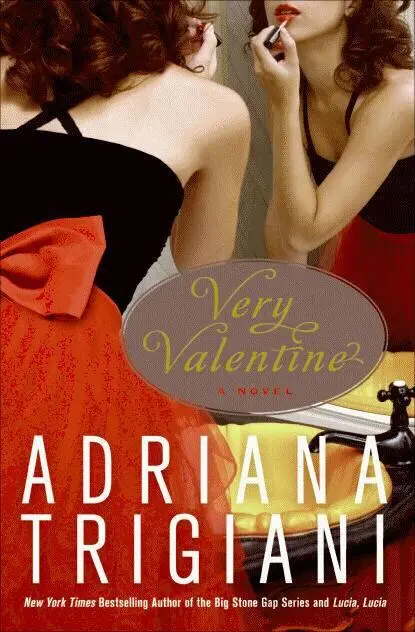
- Название:Very Valentine
- Автор:
- Жанр:
- Год:неизвестен
- ISBN:нет данных
- Рейтинг книги:3 / 5. Голосов: 1
-
Избранное:Добавить в избранное
- Отзывы:
-
Ваша оценка:
Very Valentine: краткое содержание, описание и аннотация
Предлагаем к чтению аннотацию, описание, краткое содержание или предисловие (зависит от того, что написал сам автор книги «Very Valentine»). Если вы не нашли необходимую информацию о книге — напишите в комментариях, мы постараемся отыскать её.
In this luscious, contemporary family saga, the Angelini Shoe Company, makers of exquisite wedding shoes since 1903, is one of the last family-owned businesses in Greenwich Village. The company is on the verge of financial collapse. It falls to thirty-three-year-old Valentine Roncalli, the talented and determined apprentice to her grandmother, the master artisan Teodora Angelini, to bring the family's old-world craftsmanship into the twenty-first century and save the company from ruin.
While juggling a budding romance with dashing chef Roman Falconi, her duty to her family, and a design challenge presented by a prestigious department store, Valentine returns to Italy with her grandmother to learn new techniques and seek one-of-a-kind materials for building a pair of glorious shoes to beat their rivals. There, in Tuscany, Naples, and on the Isle of Capri, a family secret is revealed as Valentine discovers her artistic voice and much more, turning her life and the family business upside down in ways she never expected. Very Valentine is a sumptuous treat, a journey of dreams fulfilled, a celebration of love and loss filled with Trigiani's trademark heart and humor.
Very Valentine — читать онлайн бесплатно полную книгу (весь текст) целиком
Ниже представлен текст книги, разбитый по страницам. Система сохранения места последней прочитанной страницы, позволяет с удобством читать онлайн бесплатно книгу «Very Valentine», без необходимости каждый раз заново искать на чём Вы остановились. Поставьте закладку, и сможете в любой момент перейти на страницу, на которой закончили чтение.
Интервал:
Закладка:
Gram smiles at me, her bright red lipstick applied beautifully. “I love your suit.”
I’m wearing a b michael, a navy silk-wool cropped jacket with a generous pilgrim collar and matching wide-leg trousers. I made the designer a pair of shoes for his mother, so this suit is a barter deal. “You look great, Gram.”
We enter the store through the revolving door at the side entrance. This part of the store resembles a solarium except that the glass cases are filled with designer handbags rather than exotic plants. The blond wood-parquet floor is lit by a chandelier drenched in honey-colored prisms. Gram and I head straight for the elevators and our meeting. I have high hopes, and Gram has done her best to temper my expectations.
As we get off the elevator on the eighth floor, it’s quiet, even the phones ringing on a soft pulse. There is no hint of the shopping bustle happening below us, in fact, it feels like we’re in a tony Upper East Side apartment building rather than a suite of offices. The tasteful décor is a wash of neutrals, with the occasional pop of color in the furniture and artwork.
I check in with the receptionist. She asks us to wait on the love seat, covered in apple green moiré and trimmed in navy blue. The coffee table is a low, modern Lucite circle, with copies of the Bergdorf winter catalog featuring resort wear fanned across its surface. I’m about to pick it up and peruse it when a young woman appears in the doorway. “Ms. Lewis will see you now. Please follow me.”
The young woman leads us into Rhedd Lewis’s office, which has the subtle fragrance of green tea and pink peonies. The desk is a large, simple, modern rectangle covered in turquoise leather. The sisal carpet gives the room the fresh feel of a Greek villa by way of Fifth Avenue. The lacquered bamboo desk chair is empty. Gram and I take our seats on Fornasetti chairs, two sleek modern thrones with caramel brown cushions. Gram points to the park, beyond the windows. “What a view.”
I rise up out of my chair. With the last of the autumn leaves gone, the bare treetops in Central Park look like an endless expanse of Cy Twombly gray scribbles.
“It must’ve been a dream to live in this grand house,” a woman’s deep voice says from behind us. I turn around to see Rhedd Lewis in the doorway. I recognize her from her profile on Wikipedia. She’s tall and willowy, wears red cigarette pants with a black cashmere tunic and a necklace that could only be described as a macramé plant hanger from the seventies. Somehow, the strange piece works. On her feet, she sticks with the classics, black leather flats by Capezio. She walks to the front of her desk, practically on tiptoe.
Rhedd Lewis is around my mother’s age, and her upright posture and grand carriage are the tip-off that she was a dancer in a former life. Her honey blond hair is cropped short in wispy layers, with a fringe of long bangs that sweeps across her face like drapery. “Thank you for slumming uptown.” She smiles, extending her hand to Gram. “I’m Rhedd Lewis.”
“I’m Teodora Angelini and this is my partner, Valentine Roncalli,” Gram says. “She’s also my granddaughter.”
I hide my delight at Gram’s announcement that I’m her partner (this is the first time she has ever said it!) by thrusting my hand toward Rhedd as if I’m handing her a flier for a sofa sale at Big Al’s in the East Village.
“I love a family business. And when a young woman takes up the mantle, it thrills me. The best designers inherit the skill set. But don’t tell anyone I said that.”
“Your secret is safe with us,” I tell her.
“And here’s another one. When it comes to craftsmanship, there’s nothing like the Italians.”
“We agree,” Gram says.
“Tell me about your business.” Rhedd leans against her desk, crosses her arms, and stands before us like a professor posing a challenge to her class.
“I’m an old-fashioned cobbler, Miss Lewis. I trust the old ways. I learned how to make shoes from my husband, who learned the trade from his father. I’ve been making wedding shoes for over fifty years.”
“How would you describe your line?”
“Elegant simplicity. I was born in December 1928, and my work is influenced by the times I grew up in. In the world of design, I like traditional trendsetters. I’m a fan of Claire McCardell. I admire the whimsy of Jacques Fath. When I was a girl in the city, my mother took me to the salons of designers like Hattie Carnegie and Nettie Rosenstein. It was a thrill to actually meet them. I didn’t end up making hats or dresses, but what I observed became important when I set out to make shoes. Line, proportion, comfort, all these things matter when you’re an artist making clothes.”
“I agree,” Rhedd says, listening intently. “Who do you like now?”
Gram nods. “In the shoe business, you can’t beat the Ferragamo family. They get it right every time.”
“And your inspiration?” Rhedd smooths the necklace around her neck.
“Oh, I’d say-my girls.” Gram smiles.
“And who would they be?”
“Let’s see. Jacqueline Kennedy Onassis, Audrey Hepburn, and Grace Kelly.”
“Simplicity and style,” Rhedd agrees.
“Exactly,” Gram says.
Whenever Gram makes cultural references, she refers to her holy trinity of style for women of a certain age: the First Lady, the movie star, and the princess. Born around the same time as Gram, their lives, while they didn’t mirror her own, gave a context to her work. Jacqueline Onassis was all about cut and line, built from the finest fabrics; Audrey Hepburn was a waif, her style influenced by dance, then exalted in theatrical evening wear that was embroidered and beaded; Grace Kelly had the cool classicism of the debutante turned working girl, gloves, hats, A-line dresses, tweed coats.
Gram points out that her muses wore the fashions, the fashions didn’t wear them. Gram believes a woman should invest wisely and prudently in her wardrobe. Her philosophy is that you should own one gorgeous coat, one great pair of evening shoes, one good pair for day. She can’t understand why women my age power-shop, as she, Gram, believes in quality over quantity. However, in other ways, my generation is a lot more like hers than she knows.
Gram’s peers were born at the end of the Jazz Age. They had a certain inborn confidence in their abilities that my mother’s generation had to struggle to find. Even though my mom’s generation of women were rowdy feminists, Gram’s group really blazed the path for them in the workplace; of course they would say that they had to. Gram’s group included the young women who went to work in mills, factories, and shops when the men went off to fight in World War II. The jobs they held during the war went back to the men when they returned. Gram says that’s how women ended up back in the kitchen in the 1950s. She went back to the kitchen, too, but it was up a flight of stairs after a full day of work in the shoe shop. Gram was a working mother before that was a label. In her day, she said, she “helped her husband,” but in fact, we know the truth-she was his full partner.
Rhedd circles around her desk, sits down, and leans forward. She adjusts the Tiffany clock and the ceramic pencil cup before her. Her computer screen is recessed into the wall next to her desk. Her screen saver is a black and white 1950s photo of the great model Lisa Fonssagrives, smoking a cigarette in a New Look gown at the intersection where Gram and I got out of the cab a few minutes ago.
“Ladies, my good friend Debra McGuire told me about you. Debra has a great eye. She brought me the shoes you gave her for the movie. I was very impressed.”
“Thank you,” Gram and I say at once.
“And it gave me an idea.” Rhedd gets up and goes to a tea cart under the windows. She pours herself a glass of water, and then two more, one for me and one for Gram. As she serves us, she says, “We work about a year in advance on our holiday windows. And when I saw the shoe you made, it gave me an idea for the 2008 windows. I want to do brides. And a Russian theme.”
Читать дальшеИнтервал:
Закладка:
Похожие книги на «Very Valentine»
Представляем Вашему вниманию похожие книги на «Very Valentine» списком для выбора. Мы отобрали схожую по названию и смыслу литературу в надежде предоставить читателям больше вариантов отыскать новые, интересные, ещё непрочитанные произведения.







Обсуждение, отзывы о книге «Very Valentine» и просто собственные мнения читателей. Оставьте ваши комментарии, напишите, что Вы думаете о произведении, его смысле или главных героях. Укажите что конкретно понравилось, а что нет, и почему Вы так считаете.