Adriana Trigiani - Very Valentine
Здесь есть возможность читать онлайн «Adriana Trigiani - Very Valentine» весь текст электронной книги совершенно бесплатно (целиком полную версию без сокращений). В некоторых случаях можно слушать аудио, скачать через торрент в формате fb2 и присутствует краткое содержание. Жанр: Современная проза, на английском языке. Описание произведения, (предисловие) а так же отзывы посетителей доступны на портале библиотеки ЛибКат.
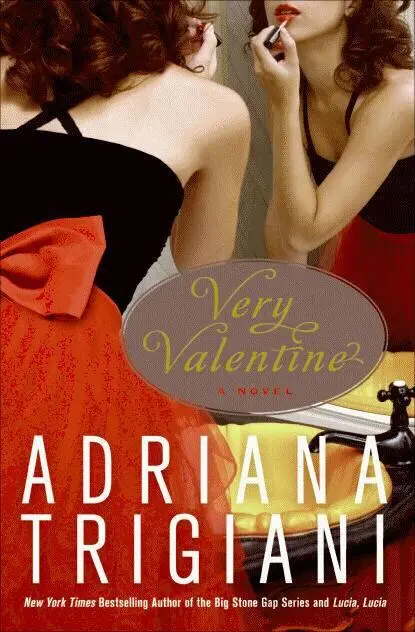
- Название:Very Valentine
- Автор:
- Жанр:
- Год:неизвестен
- ISBN:нет данных
- Рейтинг книги:3 / 5. Голосов: 1
-
Избранное:Добавить в избранное
- Отзывы:
-
Ваша оценка:
Very Valentine: краткое содержание, описание и аннотация
Предлагаем к чтению аннотацию, описание, краткое содержание или предисловие (зависит от того, что написал сам автор книги «Very Valentine»). Если вы не нашли необходимую информацию о книге — напишите в комментариях, мы постараемся отыскать её.
In this luscious, contemporary family saga, the Angelini Shoe Company, makers of exquisite wedding shoes since 1903, is one of the last family-owned businesses in Greenwich Village. The company is on the verge of financial collapse. It falls to thirty-three-year-old Valentine Roncalli, the talented and determined apprentice to her grandmother, the master artisan Teodora Angelini, to bring the family's old-world craftsmanship into the twenty-first century and save the company from ruin.
While juggling a budding romance with dashing chef Roman Falconi, her duty to her family, and a design challenge presented by a prestigious department store, Valentine returns to Italy with her grandmother to learn new techniques and seek one-of-a-kind materials for building a pair of glorious shoes to beat their rivals. There, in Tuscany, Naples, and on the Isle of Capri, a family secret is revealed as Valentine discovers her artistic voice and much more, turning her life and the family business upside down in ways she never expected. Very Valentine is a sumptuous treat, a journey of dreams fulfilled, a celebration of love and loss filled with Trigiani's trademark heart and humor.
Very Valentine — читать онлайн бесплатно полную книгу (весь текст) целиком
Ниже представлен текст книги, разбитый по страницам. Система сохранения места последней прочитанной страницы, позволяет с удобством читать онлайн бесплатно книгу «Very Valentine», без необходимости каждый раз заново искать на чём Вы остановились. Поставьте закладку, и сможете в любой момент перейти на страницу, на которой закончили чтение.
Интервал:
Закладка:
“Well, I’m glad to see you have a positive attitude.”
“Besides, I haven’t been a saint, Val. I probably had this coming.”
“What?” I turn and face my father, which, on this Barbie dream house of a love seat is not easy.
“Mezzo-mezzo.” He makes his hand into a flat wing and tips it. “I mean I’ve tried to be a good father and a decent husband. But I’m human and sometimes I failed.”
“You’re a good man, Dad. You failed very little.”
“Ah…enough for the marker to come due.”
“You didn’t get cancer because you made mistakes in your life.”
“Of course I did. Look at the evidence. I didn’t get lung cancer because God was mad I smoked. I get the cancer down below because I…you know.”
The mention of you know leaves us to our separate silences and memories. My dad remembers 1986 one way, and I remember it as a time when the very core of our family was shaken by my father’s midlife crisis, and my mother’s ability to negotiate it.
“I don’t believe in a vengeful God,” I tell him.
“I do. I’m an old-fashioned Catholic. I believed everything the nuns taught me. They said that God was watching me every second of every day, and that I’d better examine my conscience and beg God to forgive my sins before I went to sleep because if I accidentally suffocated during the night, without cleansing my soul, I’d go straight to hell. Then, when I became a teenager, they told me if I was even going to think about sex, I’d better marry her. And I did. But somewhere along the way, I started to think about God, and who He really is, and I came to the conclusion that He wasn’t watching me, day in and day out, like the nuns said.”
“So what was He doing?”
“I figured He gave me life and then waved sayonara, saying, ‘You’re on your own, Dutch.’ The rest was up to me. It was my job to live a good life and do the right thing. A soul is like an Etch A Sketch. When you screw up, it’s like you’re writing on it. But you have a chance to say you’re sorry, turn it over, and shake it until the bad thing disappears. That’s the notion of confession in a nutshell. The trick is to hit the finish line without a mark on your soul. I mean, you could say cancer is a good thing because it’s giving me a chance to prepare. At least I’m being given the gift of a set time period. Most people get a lot less.”
My eyes fill with tears. “I never want you to die, Dad.”
“But I’m gonna.”
“But not now. It’s too soon.”
“I want to be ready, though. Then, if there’s actually a judgment day like the nuns promised, I’ll have minded my p’s and q’s. God will show up at the end as He did in the beginning, and check to see if I’ve done okay. What more can a man ask for? I wouldn’t mind seeing the face of God. What the hell.”
“Dad, I think you’re a Buddhist.”
My father has never been eloquent, especially where his feelings are concerned. But no matter what he didn’t say, I knew he loved us, and he loved us deeply. But I never knew that he had a spiritual philosophy. I figured he didn’t need one because he didn’t have a bad bone in his body. “Dad, you’ve never talked about God to me.”
“I left that up to the church. We hauled you to mass every week for a reason. Those people are in the redemption business. Let’s face it,” he says, crossing his hands on his lap and continuing, “I’m not a holy man by a long shot, but I did have to ask myself the big question: What about me, Dutch Roncalli, is eternal?”
“And what’s the answer?”
“The acre forest at park 134. When I was made an urban park ranger in 1977, I was given the responsibility of planting and maintaining a two-acre green space in the center of the park with a natural pond and a surrounding grove of fir trees. It can never be sold, just like the land in Central Park. By law, the natural habitat must be maintained in perpetuity. So, it’s my little gift to the future generations of the borough of Queens. Small stuff, but to me, eternal.”
“That’s great, Dad.” I take a deep breath. “But don’t you think your children are your legacy?”
“I can’t take credit for what you and Tess and Jaclyn and Alfred have become. You kids are like those hamsters you had to raise in the second grade. You’re strictly loaners. I just took care of you until you could take care of yourselves.”
“But you loved us, too.”
“Absolutely. And, as fathers go, I look damn good on paper. None of you on drugs, none of you gamblers or bookies. Nobody with a tic. But that’s to your mother’s credit. All of you are successful in your fields. And you, taking up the shoemaking and taking care of your grandmother. That says a lot about you. You will be repaid, Valentina.”
My father is the only person in my life who puts an a on the end of my name, and to hear him say it brings me great comfort.
Then he says, “Somebody’s gonna take care of you when you’re old. Payback.”
“I hope you’re right.”
“Some guy would do the Watusi for a shot at such a good wife.”
“Me?”
“You. You’ve got a big heart. Of all the kids, you’re the most like me. You didn’t spring out of the womb knowing all the answers, like Alfred. You didn’t have a master plan, like Tess. And you never relied on your pretty face, like Jaclyn. You’ve worked hard for everything you’ve ever gotten. That’s why you’re funny. You needed a sense of humor when things didn’t work out the way you hoped. And the same is true for me. Things didn’t always go my way. But I never gave up. And I don’t want you to give up.”
“I won’t.” I squeeze my dad’s hand.
“I want you to find a nice guy.”
“Know anybody?”
Dad puts his hands in the air. “That’s up to you. I don’t get involved in those matters.”
“To tell you the truth, I’ve met somebody.”
“Really?” Now it’s Dad’s turn to shift in the tiny seat and get a jab in the hips. I adjust to make room for his 360 degrees. “What does he do?”
“He’s a chef. Italian.”
“Real Italian? Or is he Albanian or Czech? You know, nowadays they come over here with an accent and open pizza parlors like they’re authentic sons of Mama Leone when us real Italians know the truth.”
“No, no, he’s real Italian, Pop, from Chicago.”
“So, what do you think about this paisano?”
“I don’t know, Dad.”
“You know what? You don’t have to know everything. Sometimes, it’s better not to.”
A Forest Hills Sunday-afternoon quiet descends on the garden, like old fog. The arm of the love seat pinches my thigh, but I don’t shift. I want to sit next to my father as long as I can, just the two of us, he with his theories of religion, love, and the eternal nature of trees, and me, hoping that he’ll be around for the turns my story will take.
I reach out for my father’s hand, something I haven’t done since I was ten years old. He grips it tightly, as though he will never let go. Dad looks off into the Buzzacaccos’ yard, with its fire engine red picnic table, shriveled hedges, and crumbling statue of the Venus de Milo (with arms). I look up at the house. My mother stands in the kitchen window watching us with a face so sad, now she’s the Modigliani.
The wheels on the brush machine whirl as I crank the pedal. I put my hand in a cotton mitt and then place a soft pink leather pump over the mitt. I brace the heel with my free hand and place the shoe between the round brushes. I buff the vamp of the shoe until the leather looks like an iridescent pink seashell.
One of the joys of working with leather is finding the patina. Sheets of new leather from the tanners are lovely, but new leather without a cobbler’s expertise is just a hide. In the hands of a craftsman, the same animal flank becomes art. Hand-tooled leather develops its own personality; etching and embossing give it a pattern, while buffing gives it character. And character makes it one of a kind.
Читать дальшеИнтервал:
Закладка:
Похожие книги на «Very Valentine»
Представляем Вашему вниманию похожие книги на «Very Valentine» списком для выбора. Мы отобрали схожую по названию и смыслу литературу в надежде предоставить читателям больше вариантов отыскать новые, интересные, ещё непрочитанные произведения.


Обсуждение, отзывы о книге «Very Valentine» и просто собственные мнения читателей. Оставьте ваши комментарии, напишите, что Вы думаете о произведении, его смысле или главных героях. Укажите что конкретно понравилось, а что нет, и почему Вы так считаете.