Emily Winslow - The Whole World
Здесь есть возможность читать онлайн «Emily Winslow - The Whole World» весь текст электронной книги совершенно бесплатно (целиком полную версию без сокращений). В некоторых случаях можно слушать аудио, скачать через торрент в формате fb2 и присутствует краткое содержание. Жанр: Современная проза, на английском языке. Описание произведения, (предисловие) а так же отзывы посетителей доступны на портале библиотеки ЛибКат.
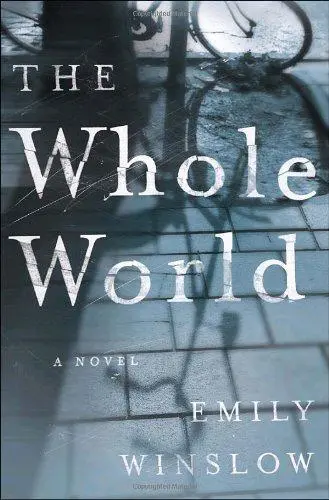
- Название:The Whole World
- Автор:
- Жанр:
- Год:неизвестен
- ISBN:нет данных
- Рейтинг книги:5 / 5. Голосов: 1
-
Избранное:Добавить в избранное
- Отзывы:
-
Ваша оценка:
The Whole World: краткое содержание, описание и аннотация
Предлагаем к чтению аннотацию, описание, краткое содержание или предисловие (зависит от того, что написал сам автор книги «The Whole World»). Если вы не нашли необходимую информацию о книге — напишите в комментариях, мы постараемся отыскать её.
Set in the richly evoked pathways and environs of Cambridge, England, The Whole World unearths the desperate secrets kept by its many complex characters – students, professors, detectives, husbands, mothers – secrets that lead to explosive consequences.
Two Americans studying at Cambridge University, Polly and Liv, both strangers to their new home, both survivors of past mistakes, become quick friends. They find a common interest in Nick, a handsome, charming, seemingly guileless graduate student. For a time, the three engage in harmless flirtation, growing closer while doing research for professor Gretchen Paul, the blind daughter of a famed novelist. But a betrayal, followed by Nick's inexplicable disappearance, brings long-buried histories to the surface.
The investigation raises countless questions, and the newspapers report all the most salacious details – from the crime that scars Polly's past to the searing truths concealed in photographs Gretchen cannot see. Soon the three young lovers will discover how little they know about one another, and how devastating the ripples of long-ago actions can be.
The Whole World — читать онлайн бесплатно полную книгу (весь текст) целиком
Ниже представлен текст книги, разбитый по страницам. Система сохранения места последней прочитанной страницы, позволяет с удобством читать онлайн бесплатно книгу «The Whole World», без необходимости каждый раз заново искать на чём Вы остановились. Поставьте закладку, и сможете в любой момент перейти на страницу, на которой закончили чтение.
Интервал:
Закладка:
“If you really want to switch with me you can pull in at the pub in Fowlmere. It’s not far.” She sounded tired, and her willingness to accept my surrender made me change my mind.
Driving was all right. I said it to myself over and over: It was all right. It all hummed along, between occasional dire gear changes. I even enjoyed it. We were almost to Newton, which sounded familiar, but most of them do. The road here was unusually long and straight. I looked over at Lesley, proud to be managing the car, to have accomplished something in this mess I’d made. She was fast asleep.
This is where things went wrong.
All along the way I’d been reassured by the signs pointing the direction toward nearby towns. I meant to be heading toward Harston. A sign in Newton assured me I was. Then a sign in Harston assured me I was heading for Haslingfield. This was all good. It was where I was supposed to be.
On the Haslingfield High Street, a sign for Harston pointed me up New Road. I couldn’t remember if I’d been through Harston yet. All the place names had become a jumble. Was New Road somewhere I’d meant to go? It was too common a name for its familiarity to warrant confidence.
I took it anyway, and then a singular name stood out to me in the light of New Road ’s yellow streetlamps: Cantelupe Road. Like cantaloupes. Surely this street must be part of the route we’d sketched out. Why else would I remember it?
I turned. It was unlit, single track, and unpromising as a route to the distant ambient glow that was Cambridge. There wasn’t room to turn around. I had no idea how to reverse without stalling the car.
Still moving forward, I reached for the map in Lesley’s lap.
I never saw it, not even in the headlamps. I must have been looking at the map at just that moment. There was just a horrible thud and then a bump-bump, a lump in the road under the left side of the car. Both left wheels went over it, and the car tilted to the right. It almost went over; I felt like it was going to; I pulled the wheel far to the left to compensate. We ended up sideways to the road, across the middle of it. The headlamps faced directly onto a house, Tudor-looking, very English, with a sign instead of a number: Rose Cottage. Our headlamps shone rudely into the front windows, but I dared not turn them off. We had to see. I wanted to move the car, but I’d become disoriented. I didn’t want to run over whatever it was again.
“A dog?” Lesley asked. She was awake, already exiting the car, taking things in hand. She grabbed a torch from the glovebox and swept its beam over the road. I scrambled out myself, following the torch beam with my eyes.
It was a person. The mid-body had been crushed. The limbs were stretched apart at surprising angles like they were running away from each other. Lesley swept the beam over to the face.
I jumped backwards. I pointed. Lesley turned the beam onto me. I gibbered at her.
The face was Gretchen’s. She’d been pushed almost in two by the weight of my driving over her abdomen.
I did something terrible: Instead of wishing for it to not be real, I wished that I wasn’t crazy. I wanted Lesley to see her too. I didn’t want to be losing my mind.
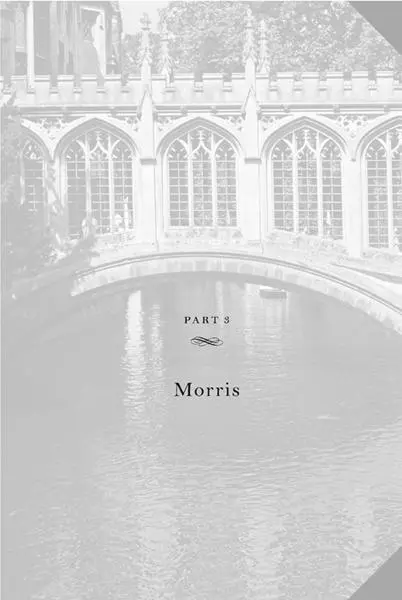
Part 3. Morris
CHAPTER 6

I had two opportunities to shove Richard into the river, and didn’t act on even one.
Do you see the kind of restraint I put on around our family?
The first chance to push him was as everyone boarded their punts. It was darkish already, and the boats were lit by candles in glass lanterns. Thank goodness the driving rains of the past week had stopped.
This time of year, Scudamore’s doesn’t do daily business, so there isn’t any crowding. We were our own crowd, though, around the weir of the Mill Pond. The women had high heels on, and narrow or short dresses, so boarding was a comedy. I got Gwen and Dora in, and then leapt up to Alice ’s other side. Gwen and Dora are my responsibility, and Alice is Richard’s, but this was their day, so I helped. They’d just been married at a church in the city centre. Richard was in his only suit. How did my brother get to forty-two with only one suit? And a casual scarf that must have come from Alice, or from our mother. And a coat because it was bloody cold.
As Alice stepped in, dozens of cameras clicked like popcorn.
Richard leaned over, to hand champagne bottles into the punts, to pass out hot water bottles for guests’ laps, to tuck a blue plaid blanket up over Alice ’s skirt. I could have turned around to hand him something and knocked him off the end of the dock into the water. He would have been fine. There would have been shrieks, then everyone would have laughed. He would have changed into something unsuitable, which would have ended up being funny. Ruining the groom’s clothes is nothing like ruining the bride’s.
Of course I didn’t do it. I didn’t do it in the middle of the river either, when we were trading places. That was my second missed opportunity. We had chauffeurs, but everyone goaded Richard to punt, and me too. I stood at the back, pushing us through the water, and then it was his turn. For half a minute we both stood at the end together, and the front of the boat sat up and begged like a dog. I had to get the pole into his hands and get myself back crouched into the body of the punt again. And it all went without a wobble because I don’t take out petty frustrations by bullying my brother.
I take them out passive-aggressively on Gwen. She loves psychology! She’d say that admitting it is the first step!
In a normal family, I would have been the child who had grown up and done everything right. It’s not normal to want your kids to be all in their heads forever, right? Because all I want is for Dora to not make any permanent mistakes in her teens, and then for her to get an education, and have a good job, and choose a man who has sense and kindness. This is pretty basic stuff. For some reason, in our family it’s a good thing to still be living at university as a grown man, theorising. In a normal family, actually doing something would be expected and appreciated. But in this family, we applaud thinking. Thinking about thinking.
I went to university. I thought. I was good at it too. But when I hit statistics, I just couldn’t fake it anymore. I managed the calculations, I understood why the numbers worked. I just couldn’t get past the meaninglessness. One thing being more likely than another is irrelevant to what actually is. Someone is dead or alive. Someone is here or gone. Statistically, the truth may be unlikely, but that doesn’t make it any less true. Potential life has statistics; real life is binary. Things are or aren’t. That something shouldn’t have happened doesn’t change that it did.
I finished my exams, but I did something practical with them. I have a real job and I do real things. Richard thinks about potentials. He theorises the origins of life, he lets his religion interfere, and he qualifies everything he proposes, citing “scientific humility.” Atheists hate him, and so do fundamentalists. The people who like him mostly misunderstand. Students take his advice, which baffles me. Two women have married him.
My family should have seen it coming. Me, I mean. Even choosing Churchill instead of Magdalene-Dad had been at Magdalene-had been a rebellion. I chose a Cambridge college with no history or architectural significance. Ha! Take that, family!
They acted like it didn’t matter.
Читать дальшеИнтервал:
Закладка:
Похожие книги на «The Whole World»
Представляем Вашему вниманию похожие книги на «The Whole World» списком для выбора. Мы отобрали схожую по названию и смыслу литературу в надежде предоставить читателям больше вариантов отыскать новые, интересные, ещё непрочитанные произведения.








Обсуждение, отзывы о книге «The Whole World» и просто собственные мнения читателей. Оставьте ваши комментарии, напишите, что Вы думаете о произведении, его смысле или главных героях. Укажите что конкретно понравилось, а что нет, и почему Вы так считаете.