Emily Winslow - The Whole World
Здесь есть возможность читать онлайн «Emily Winslow - The Whole World» весь текст электронной книги совершенно бесплатно (целиком полную версию без сокращений). В некоторых случаях можно слушать аудио, скачать через торрент в формате fb2 и присутствует краткое содержание. Жанр: Современная проза, на английском языке. Описание произведения, (предисловие) а так же отзывы посетителей доступны на портале библиотеки ЛибКат.
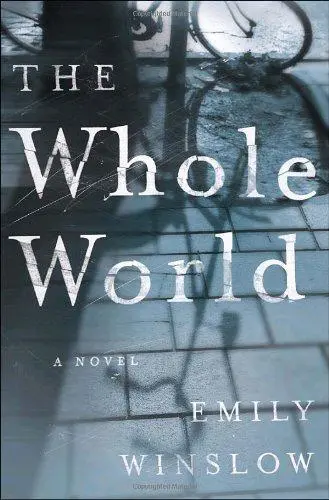
- Название:The Whole World
- Автор:
- Жанр:
- Год:неизвестен
- ISBN:нет данных
- Рейтинг книги:5 / 5. Голосов: 1
-
Избранное:Добавить в избранное
- Отзывы:
-
Ваша оценка:
The Whole World: краткое содержание, описание и аннотация
Предлагаем к чтению аннотацию, описание, краткое содержание или предисловие (зависит от того, что написал сам автор книги «The Whole World»). Если вы не нашли необходимую информацию о книге — напишите в комментариях, мы постараемся отыскать её.
Set in the richly evoked pathways and environs of Cambridge, England, The Whole World unearths the desperate secrets kept by its many complex characters – students, professors, detectives, husbands, mothers – secrets that lead to explosive consequences.
Two Americans studying at Cambridge University, Polly and Liv, both strangers to their new home, both survivors of past mistakes, become quick friends. They find a common interest in Nick, a handsome, charming, seemingly guileless graduate student. For a time, the three engage in harmless flirtation, growing closer while doing research for professor Gretchen Paul, the blind daughter of a famed novelist. But a betrayal, followed by Nick's inexplicable disappearance, brings long-buried histories to the surface.
The investigation raises countless questions, and the newspapers report all the most salacious details – from the crime that scars Polly's past to the searing truths concealed in photographs Gretchen cannot see. Soon the three young lovers will discover how little they know about one another, and how devastating the ripples of long-ago actions can be.
The Whole World — читать онлайн бесплатно полную книгу (весь текст) целиком
Ниже представлен текст книги, разбитый по страницам. Система сохранения места последней прочитанной страницы, позволяет с удобством читать онлайн бесплатно книгу «The Whole World», без необходимости каждый раз заново искать на чём Вы остановились. Поставьте закладку, и сможете в любой момент перейти на страницу, на которой закончили чтение.
Интервал:
Закладка:
I looked back at the page. Susan Maud juggled two conversations, one as herself and one as the famous author. Double-meanings and misunderstandings were tossed and caught and balanced.
The words leapt again. I looked up at the wall; the print was steady. My hands were shaking, that’s all, out of cold or exhaustion. I closed the book.
I checked the print regularly. If the horse in the picture stayed serene, I was well enough. It was only my body that shivered; my eyes, and by extension my head, were fine. I was fine. The horse never moved even one leg or flicked its tail. I know because I checked over and over to be sure.
The rain kept on. Not constantly, but enough to ensure that mud stayed mud. Builders failed to appear. I reread half a dozen Discworld books. The throbbing in my ankle dulled somewhat, though it still couldn’t bear much pressure. Solitude and inaction squeezed me from all sides; after three days I popped out of Dovecote like a cork.
I thought the drive would be the safest and most direct route out. That’s what comes from not paying attention.
Unlike in the house, where I held on to the golf club’s flat metal head and used the rubber handgrip against the smooth wood floor, outside it worked better right-way-around: with the head of the iron slicing into the thick mud. It hit hard-packed earth not far down. My progress achieved a nearly jaunty rhythm. How high was the fence, really? How long was the holly hedge? I was sure there would be someplace to burst through. There had to be.
When I’d come to Dovecote, it had been dark. But that was no excuse for not having noticed the brief change that had happened under my feet, a sudden switch from pounding dirt to thumping across planks, then pounding dirt again. The planks covered a ford across the drive, a ford which had been a ditch when I came and was now a rain-filled brook. The planks now just underwater kept cars from getting mired. Wheels would just splash through and ride them.
In my state, mud would have been preferable to wood. I plunged my golf club cane into the shallow, flowing water, expecting to work it deep into sludge until it was a secure hold to help me through.
Instead, it hit plank and slithered forward, splashing me facedown into the wet. I hit the front of my head on the far side. It was all I could do to pull my face up out of the water. The brook wasn’t running hard, but it was enough to nearly roll me. It prowled over me, an endless glide of cold. My forehead bled. I couldn’t see where the golf club was.
I sputtered. It wasn’t worth the energy to yell.
I propped myself up on my hands and knees. I didn’t know if I could make it over the fence now. If I couldn’t, but tried, I might not be able to get back to the house either. I backed out of the water on my hands and knees.
I looked back at the house. This time, the light in the window was true: my light, my little lounge, a real haven, not a trick of the moon.
I turned around and crawled back.
The fever lasted days.
The house, which had seemed so big, shrank down to the room around me. The patterned wallpaper hemmed me in. The fence and holly hedge around the grounds seemed hardly necessary.
I don’t usually dream. People don’t believe that. Or, I should clarify, women don’t usually believe that. It’s been insisted to me over and over that I must dream, and that my denial of it is some sort of a “repression.”
An old girlfriend used to ask me first thing, before I was properly awake, what I had dreamed. Not if, what. I never had the answer she wanted.
But, in this fever, I dreamed.
I was back at school during a half-term, as I’d once fantasised. I had the buildings all to myself. I scrawled on blackboards; I ran in the corridors.
Then the holiday ended. I waited, but no one came back.
I rationed the food. When I was ready to try escape again, I went better prepared.
I had no cane anymore. My right foot had improved, but the left still required some coddling. I didn’t want to crawl through the ford. It was too cold to get wet again. I tested the red wagon by the fireplace for my weight. It bowed a little but held. I could ride it over the planks.
I’d found secateurs in the kitchen. I could try cutting through the hedge, or even attempt cutting the wires of the fence. I tossed them in the little wagon and dragged it outside.
There was no rain, just a damp haze in the air. I shuffled forward on my knees, pulling the wagon behind. I looked like an actor playing at being a little boy.
I think it was that ridiculousness that made me first angry at rescue. That, and the single-mindedness that comes from desperation. I’d planned to go down the drive. This car blocked my plan.
Lesley had come back.
She didn’t ask me anything, just helped me to get upright and back into the house. She had hot Indian takeout for herself in the car, which she brought to me. She put a blanket over my shoulders. I assume she eventually remembered giving me the key. It had been five years.
She took everything in without visible shock until she realised her part in what had happened. “You stepped on the plates! Oh, God, Nick, I’m sorry…” She put her hands on mine. She tried to laugh at how pitiful I looked, but tightened her grip. “God… I hadn’t thought… I hadn’t thought you’d ever really need to come. Nick, what happened?”
Lesley must have been over thirty. But she’d always looked “grown-up” to me, so the changes were… appropriate. She was still in the right proportion to me, always older and wiser, always beautiful. She was as beautiful as a person could ever be.
“I made some poor decisions,” I said. “I didn’t want to hurt anyone.” She looked alarmed so I quickly explained: “I haven’t done anything bad, not like that. I just… I had to leave.” It had seemed so urgent at the time.
I put more chicken tikka into my mouth. I didn’t want to explain.
“Does anyone know you’re here?”
I shook my head.
“God, Nick. Did you tell someone you were going?”
“I know,” I said, putting both fists against my head. “I know.”
She looked at her phone. “My mobile’s out of charge.” She put it back in her bag. “You should see a doctor.”
I think she meant for my ankles but, given my demeanour, she could have meant anything.
“I was worried about slipping in the shower, and getting in and out of a bath,” I explained, justifying my Robinson Crusoe look. Hitting my head crossing the ford had frightened me. “I’ve been brushing my teeth and washing my hands; I’ve done that much,” I asserted, suddenly almost in tears.
She told me about her recent trip to Kosovo, from which she’d just returned. She was on the board of several charitable groups and had gone to inspect a children’s home they’d funded.
I felt small, which was wonderful. I felt like nothing in comparison to attempted genocide and potential independence. I felt like no one was looking in my direction, and I could finally relax.
“What have you been up to?” she asked, as if this were a normal conversation.
“I’ve almost completed my thesis. I’d like to get a Fellowship.”
“You want to be one of those eccentric old men who live in college rooms as lifelong bachelors?” she teased.
I shook my head, smiling. “You know it’s not like that,” I corrected her.
And it’s not. It’s just normal, a more peaceful version of normal. As a child I’d been treated as a prodigy. The truth is, I liked lecture halls because the seats were set out and the focal point was obvious. People had been impressed, thinking me clever. Really, I’d just been suited to the atmosphere.
“We’ll go now,” she said, standing up when I’d eaten everything. “Or would you like to shower first?” she added, reminding me what a mess I’d made of myself.
Читать дальшеИнтервал:
Закладка:
Похожие книги на «The Whole World»
Представляем Вашему вниманию похожие книги на «The Whole World» списком для выбора. Мы отобрали схожую по названию и смыслу литературу в надежде предоставить читателям больше вариантов отыскать новые, интересные, ещё непрочитанные произведения.









Обсуждение, отзывы о книге «The Whole World» и просто собственные мнения читателей. Оставьте ваши комментарии, напишите, что Вы думаете о произведении, его смысле или главных героях. Укажите что конкретно понравилось, а что нет, и почему Вы так считаете.