Emily Winslow - The Whole World
Здесь есть возможность читать онлайн «Emily Winslow - The Whole World» весь текст электронной книги совершенно бесплатно (целиком полную версию без сокращений). В некоторых случаях можно слушать аудио, скачать через торрент в формате fb2 и присутствует краткое содержание. Жанр: Современная проза, на английском языке. Описание произведения, (предисловие) а так же отзывы посетителей доступны на портале библиотеки ЛибКат.
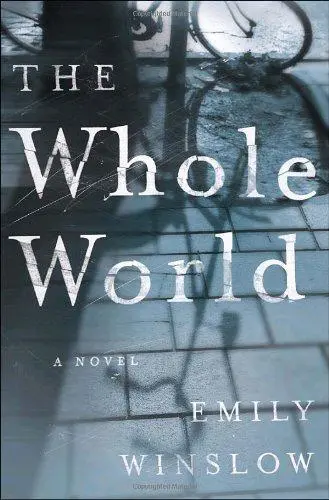
- Название:The Whole World
- Автор:
- Жанр:
- Год:неизвестен
- ISBN:нет данных
- Рейтинг книги:5 / 5. Голосов: 1
-
Избранное:Добавить в избранное
- Отзывы:
-
Ваша оценка:
The Whole World: краткое содержание, описание и аннотация
Предлагаем к чтению аннотацию, описание, краткое содержание или предисловие (зависит от того, что написал сам автор книги «The Whole World»). Если вы не нашли необходимую информацию о книге — напишите в комментариях, мы постараемся отыскать её.
Set in the richly evoked pathways and environs of Cambridge, England, The Whole World unearths the desperate secrets kept by its many complex characters – students, professors, detectives, husbands, mothers – secrets that lead to explosive consequences.
Two Americans studying at Cambridge University, Polly and Liv, both strangers to their new home, both survivors of past mistakes, become quick friends. They find a common interest in Nick, a handsome, charming, seemingly guileless graduate student. For a time, the three engage in harmless flirtation, growing closer while doing research for professor Gretchen Paul, the blind daughter of a famed novelist. But a betrayal, followed by Nick's inexplicable disappearance, brings long-buried histories to the surface.
The investigation raises countless questions, and the newspapers report all the most salacious details – from the crime that scars Polly's past to the searing truths concealed in photographs Gretchen cannot see. Soon the three young lovers will discover how little they know about one another, and how devastating the ripples of long-ago actions can be.
The Whole World — читать онлайн бесплатно полную книгу (весь текст) целиком
Ниже представлен текст книги, разбитый по страницам. Система сохранения места последней прочитанной страницы, позволяет с удобством читать онлайн бесплатно книгу «The Whole World», без необходимости каждый раз заново искать на чём Вы остановились. Поставьте закладку, и сможете в любой момент перейти на страницу, на которой закончили чтение.
Интервал:
Закладка:
I tested my legs. Useless. I couldn’t scale the fence now. I couldn’t ride my bike.
I waited.
No one came. Even if the wet weather stopped, there was a good chance it would be too muddy for the builders to come the next day either, and then there was the weekend.
I crawled back to the kitchen and punched in the security code to set the alarm. Then I opened the door.
The siren sang at an unbearable volume. Its source was in the kitchen, twinned with another I could hear whining on the other side of the house. Sticking my head out the door, I could tell there was also an exterior siren. But in the wind it wasn’t nearly as loud as I’d hoped.
I huddled on the step and covered my ears. After about twenty minutes, it all stopped.
Without phone service, there would be no connection to the police.
The driveway was a half-mile long, putting the road beyond the sound.
There were gardens and fields behind the house-perhaps she let someone graze their animals there?
I waited an hour. I ate Weetabix out of the box. No one came.
At first I resisted making any kind of settlement. That would be too much an admission of failure. I explored, using a lone golf club upside down as a cane. I’d found it in the pantry miscellany.
Most of the rooms were empty, punctuated only by occasional swatches and colour samples. One held rolled-up rugs stacked like a log pile.
Some doors were open and some I had to push. I did so with little expectation, just dogged thoroughness. I was mentally cataloguing the place: the rug room, the green room, the room with the ugly lamp. The wonder behind this panelled door rocked me back.
The fabric wallpaper, long tasselled curtains, and upholstery were all dizzyingly patterned, and accented with shiny gold thread. Framed prints of horses leaned against the skirting boards, presumably testing where Lesley wanted to hang them. Several were already up, and the idea that she’d add the dozen more of them cracked a smile in my face. She was poking sly fun at her own house.
This must be where she spent her time here.
The down-filled cushions got flat underneath me in no time; I fell into a light sleep that must have filled hours. When I woke up, it was getting darkish outside. I thought I was hallucinating. The old-fashioned room, its colour faded in the dim light… I thought I’d woken up in Gretchen’s eyes.
I shot up, startled.
I had to prepare for another night, or more. It was time to set up camp.
A red wagon was parked next to the fireplace. It held a box of matches and bits of wood chip, but no logs. I used it to drag in a cache of food from the pantry. A wheel caught on the threshold of the lounge as I reentered, and I stumbled to the floor. I tried using the golf club to help me get up, but my hand was too stiff to hold on to it anymore. I set it alongside the couch, for later when my hand had rested.
I shuffled on my knees back to the kitchen, to fill a couple of large empty Coke bottles with water. I briefly considered dragging back a large cooking pot too, but I swore to myself that it wouldn’t come to that. There was a toilet near enough, just down the corridor.
Reentering the lounge, my left ankle smacked into the doorframe. I lay flat-out down on the floor, biting my sleeve, until the blast of pain subsided.
When I opened my eyes, the view from the floor revealed boxes lined up behind the couch. I retrieved the water bottles from where they’d rolled, and crawled over to look inside the cartons.
Books.
For a moment I revelled. Books and privacy and time are a heady mix. I rummaged through, pulling them out and scanning the titles, separating them into two stacks. I piled the Terry Pratchetts and Feynman lectures within reach from the couch.
Then my situation came back to me. I pulled the box with the rest of its contents over to the fireplace.
I picked up two paperbacks I didn’t recognise. The pages resisted, but they were not in charge. I tore and crumpled, and tossed them in on top of the ashes that were already there. I opened the flue, and set the pages alight using the matches from the red wagon.
Maybe someone would see the smoke and worry about squatters. Even if Lesley’s unpredictability would comfort any observers into assuming it was she herself randomly come home, at least I’d be warm. Briefly.
I grabbed more books and got into a tearing rhythm. I didn’t burn the covers. I started a deck of them, facedown, as a little book graveyard by the hearth. A batch of thick romances added lurid embraces to the pile. I stopped short at a blonde holding a champagne glass. I knew her: Linda Paul’s Susan Maud Madison. I set that one aside, on top of the Pratchetts. I continued to tear and crumple and aimed paper snowballs between the andirons.
Polly and Liv’s paper blizzard. I rubbed my hair as if little scraps still clung there.
The fire didn’t last. I upended the box and pulled it apart. The cardboard burned only a little longer. The cold coming in more than outdid any warmth from the brief flames. I put out the embers and closed the flue.
I stretched out on the couch, and put my feet up on the far armrest. If I rested, in a few days I’d be ready to climb the fence, or at least to troll the edge of the property, looking for a break in the hedge.
I tried to read. I chose the Linda Paul book because it was on top. It was described on the back as a “romp”: Susan Maud gets into “hot water” pretending to be a famous reclusive novelist who has failed to show up for a party.
Most of the scenes take place in a borrowed manor house, so my imagination had little work to do. Despite the cover illustration, for the heroine I pictured Gretchen’s nanny. She was blond and from the correct era; why not? When, later in the book, contradictory features were specified, the nanny persisted in my mind.
I thought again of Wesley from cricket camp. Some of the other boys had played a stupid trick. They told Wesley false descriptions of people: ginger hair, fat, even a limp, more and more exaggerated lies to see what they could get away with. Wesley finally caught on. It was horrible. He’d been betrayed in a way we couldn’t comprehend. Despite learning the truth, he couldn’t shake the false images out of his head.
I sat up. Perhaps neither could Gretchen.
The handwritings were intolerably contradictory. Something in our assumptions or her memory wasn’t right. Ginny’s death date? A misprinted year on the newspaper poem? Perhaps there was a third sibling who wrote “Mother” and “Father”; perhaps those older photographs weren’t of relatives at all. What if the whole box had nothing to do with Gretchen? What if a former resident of her mother’s house had left their own family mementoes behind?
No, that was too far. Too many of the photos matched her expectations for the whole to be entirely random. But an idea just as huge loomed up in my mind.
What if the “nanny” was Gretchen’s mother?
Her mother, and perhaps a hanger-on who’d joined Linda Paul for a few adventures, then been cut off? Who then pretended to actually be her idol?
It all made sense. She called herself Linda Paul. She gave Gretchen a set of books upon completing sixth form, and signed them herself. She took photos of Gretchen and her teenaged friends, and labelled them. Everything else, which perhaps she’d stolen, had been written by Linda-the real Linda-and her sister, Ginny. This fit. This justified the contradictions between the handwritings in the same way that ellipses had explained retrograde. Gretchen had been uniquely vulnerable to such a ruse: a small child, just losing her sight…
Words jumped around on the page in front of me; either my hands shook or I wasn’t focusing. I looked at a print on the wall to test my eyes: It was still.
Читать дальшеИнтервал:
Закладка:
Похожие книги на «The Whole World»
Представляем Вашему вниманию похожие книги на «The Whole World» списком для выбора. Мы отобрали схожую по названию и смыслу литературу в надежде предоставить читателям больше вариантов отыскать новые, интересные, ещё непрочитанные произведения.










Обсуждение, отзывы о книге «The Whole World» и просто собственные мнения читателей. Оставьте ваши комментарии, напишите, что Вы думаете о произведении, его смысле или главных героях. Укажите что конкретно понравилось, а что нет, и почему Вы так считаете.