Emily Winslow - The Whole World
Здесь есть возможность читать онлайн «Emily Winslow - The Whole World» весь текст электронной книги совершенно бесплатно (целиком полную версию без сокращений). В некоторых случаях можно слушать аудио, скачать через торрент в формате fb2 и присутствует краткое содержание. Жанр: Современная проза, на английском языке. Описание произведения, (предисловие) а так же отзывы посетителей доступны на портале библиотеки ЛибКат.
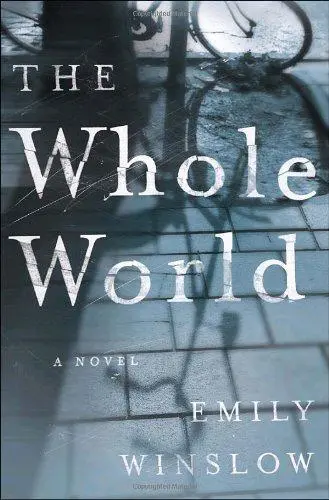
- Название:The Whole World
- Автор:
- Жанр:
- Год:неизвестен
- ISBN:нет данных
- Рейтинг книги:5 / 5. Голосов: 1
-
Избранное:Добавить в избранное
- Отзывы:
-
Ваша оценка:
The Whole World: краткое содержание, описание и аннотация
Предлагаем к чтению аннотацию, описание, краткое содержание или предисловие (зависит от того, что написал сам автор книги «The Whole World»). Если вы не нашли необходимую информацию о книге — напишите в комментариях, мы постараемся отыскать её.
Set in the richly evoked pathways and environs of Cambridge, England, The Whole World unearths the desperate secrets kept by its many complex characters – students, professors, detectives, husbands, mothers – secrets that lead to explosive consequences.
Two Americans studying at Cambridge University, Polly and Liv, both strangers to their new home, both survivors of past mistakes, become quick friends. They find a common interest in Nick, a handsome, charming, seemingly guileless graduate student. For a time, the three engage in harmless flirtation, growing closer while doing research for professor Gretchen Paul, the blind daughter of a famed novelist. But a betrayal, followed by Nick's inexplicable disappearance, brings long-buried histories to the surface.
The investigation raises countless questions, and the newspapers report all the most salacious details – from the crime that scars Polly's past to the searing truths concealed in photographs Gretchen cannot see. Soon the three young lovers will discover how little they know about one another, and how devastating the ripples of long-ago actions can be.
The Whole World — читать онлайн бесплатно полную книгу (весь текст) целиком
Ниже представлен текст книги, разбитый по страницам. Система сохранения места последней прочитанной страницы, позволяет с удобством читать онлайн бесплатно книгу «The Whole World», без необходимости каждый раз заново искать на чём Вы остановились. Поставьте закладку, и сможете в любой момент перейти на страницу, на которой закончили чтение.
Интервал:
Закладка:
She released me and wagged a finger. She was still smiling when our mother emerged.
“Oh!” Mum said, flustered for a moment to be confronted right out of the toilet, as if she’d been caught coming out of a stranger’s hotel room. Her hands travelled over her dress, patting it to ensure everything was secure. “I despise public toilets,” she announced. Then, suddenly, “I’m glad you see I was right, Carmen. You look like an adult. A lovely adult.”
“Cheers, Mum,” said Carmen, smiling fake-brightly, and I had to give her credit for not saying more.
“Really,” I asked, after Mother had walked past, “why now? You’ve been defying her with your hair for a good thirty years. What makes this time different?”
“You don’t even notice, do you? This is hard on Richard. His friend is missing. You’re supposed to be finding him. He almost delayed the wedding, out of respect, but I persuaded him not to. You dredged the river, Morris… He was a wreck.”
She expounded further but I’d stopped listening at “You’re supposed to be finding him.” I’d released Miranda Bailey that morning. A regular had been hauled in the night before with Nick’s credit card who swore he’d mugged Nick near East Road after Miranda was already back at her hotel. We were at a dead end.
“Would it be better if I hadn’t come? Do you think the trail’s going cold because I took a day off? Do you think finding someone is just a matter of persistence? Is that what you think? It’s not. Some people don’t get found. Some people…” I grappled for a metaphor my family would understand. “… Some people… there isn’t the data available. With incomplete data, the conclusions are necessarily conjecture…” I stopped because it was absurd.
“No one is blaming you,” she said in an awful, placating tone. But everyone was. I was.
The band was on again. Richard and Alice danced together, finally. Everyone else had joined in too. Gwen danced with Uncle Max. Her head swivelled. She was looking for me.
I pushed right through the swirling crowd. My shoulders and elbows made a way. I walked right through them up onto the stage.
The band stopped playing. The caller tried to usher me off, but I put up my hand. It wasn’t a threatening hand, more of a “calm down” hand. I don’t know if it was because I was the groom’s brother, or have that cop way about me, or because it was crazy and it’s best not to argue with crazy. I pointed to the fiddle. “Let me,” I said. The fiddle player didn’t move at first. Then he handed the instrument over. It felt like home picking it up. Almost home, because it wasn’t my fiddle, but it was good.
I hadn’t played in a long time. My group had broken up shortly after Alice had converted. The bass player moved, and what were Mick and I supposed to do, just the two of us? I’d got promoted and there was Gwen. I didn’t play anymore.
I faced the crowd but didn’t look at anybody. I was just into myself. The bow touched down on the string and I rode away with it. I pushed the instrument and it pushed back. That relationship, that push and response, is the whole thing. Sound doesn’t fly or leap; it can only bump, from something to something, from one air molecule to the next. That’s how it travels, by contact. That’s what I learned at uni. There’s no sound without relationship. There’s no sound without touch. Something has to touch something, even just a molecule of air, or else there’s no sound at all. That proves it: Sound doesn’t have to be music to be profound. But when it is music, this is it. This is the stuff. I didn’t even know who was looking or who cared. This was contact, this was action, this was making something happen. I might be alone and I might be stymied and I might be useless, but, by God, at the molecular level I was shaking the world.
Something else shook. The inside pocket of my suit jacket rumbled against my chest. God, not now. My mobile. Not, not, not now. I pushed again and again at the repetition leading toward the end. Not now, not now, I chanted in my head along with the persistent rhythm.
I brought it down to Earth when I was ready. I slowed it when it was time. Everything up till then had been wild and delicate and “How did he do that?” fast. But the end was something else, just the melody, nothing tricky. Three notes, the same three that had persistently underwritten the wildness before. One, two, three. Done.
The room didn’t have sound in it any longer. The phone in my pocket had stopped as well. All held still for a moment, all held blessedly still. Then-crack!
Someone outside rammed the patio doors with his shoulder, and they flew back to smack against the wall. Everyone turned around to see. It was that boy, the tall boy, wet and shivering. He had Dora in his arms; she was wet too. She was soaked. It wasn’t raining, but it was cold. “She fell in the river,” he said. The whole crowd surged toward them and I pushed through them all.
I would have hauled her up in my arms, but the fiddle and bow were still in my hands. I stood useless for only a moment, but in that moment Gwen took charge: She sent someone for warm coats, someone for hot tea. Dora had to be breathing. She had to be. The river can be cold enough to give someone a heart attack. But the weather had been warm lately, warm and wet. It hadn’t been frosty. I’d only been joking about pushing Richard in. I’d never have done it. Jesus Christ. I’d never have done it.
Someone laid two coats over her, two big wool coats. I wanted to do something, but Gwen was already there, cradling her. Dora snuggled, and tugged at the wet hair sticking to her neck. It had fallen from some fancy style, and I think she was trying to put it back up. Or tear it all the way down. She was trying to fix herself. She suddenly reminded me of Alice, the first Alice, back at the Folk Festival. How is it that women don’t know how beautiful they are?
“Dora…” I said. Gwen looked at me, looked hard. This was a test of some kind. There was some right thing I could say that would make me a good husband, a good father. I didn’t know what it was. The fiddle was still in my hand.
I waited too long again. Gwen looked away, exasperated.
Mother pushed past me with the tea. Dora said, “It’s too hot.” Gwen told her it wasn’t and to just drink it. The boy was in the midst of his own family swarm. Alice, a doctor, had quickly checked him, and then came to Dora. She knelt in front of her.
There would be no breaking through this wall of women. And I still had the fiddle in my hand.
I returned it to the stage. Then I checked my phone messages.
Bloody hell. Nick Frey and a dead professor.
Richard knew. Somehow he knew.
“Duty calls,” I said lightly, snapping the phone shut.
I found where Gwen had put my coat. Richard didn’t say anything. But he knew. I could tell by the way he stuck to me.
“Please,” he said quietly.
I had no right to tell him, certainly not before telling the parents. Really, I shouldn’t tell anyone until I was certain for myself. Mistakes get made. There was no room for that here.
But he followed me outside. I asked him to tell Gwen I had to work. “And congratulations,” I said. He turned my intended handshake into a pleading grip.
“Please tell me,” he said.
I shook my head. “Can’t do that.” It took shaking my fingers to get the blood back. I repeated the message: “You know I can’t tell you.”
He didn’t fight. He only hoped.
That’s what really puts me over the edge with him. He doesn’t push for anything. He just-stands, and people join him. He’d take a beating if anyone ever bothered to hate him. He’d take it. He took what had happened to the first Alice. I couldn’t believe how he took it.
Читать дальшеИнтервал:
Закладка:
Похожие книги на «The Whole World»
Представляем Вашему вниманию похожие книги на «The Whole World» списком для выбора. Мы отобрали схожую по названию и смыслу литературу в надежде предоставить читателям больше вариантов отыскать новые, интересные, ещё непрочитанные произведения.








Обсуждение, отзывы о книге «The Whole World» и просто собственные мнения читателей. Оставьте ваши комментарии, напишите, что Вы думаете о произведении, его смысле или главных героях. Укажите что конкретно понравилось, а что нет, и почему Вы так считаете.