Emily Winslow - The Whole World
Здесь есть возможность читать онлайн «Emily Winslow - The Whole World» весь текст электронной книги совершенно бесплатно (целиком полную версию без сокращений). В некоторых случаях можно слушать аудио, скачать через торрент в формате fb2 и присутствует краткое содержание. Жанр: Современная проза, на английском языке. Описание произведения, (предисловие) а так же отзывы посетителей доступны на портале библиотеки ЛибКат.
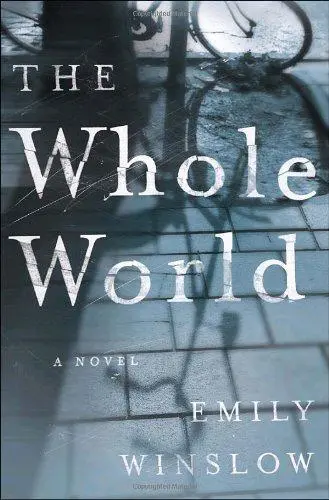
- Название:The Whole World
- Автор:
- Жанр:
- Год:неизвестен
- ISBN:нет данных
- Рейтинг книги:5 / 5. Голосов: 1
-
Избранное:Добавить в избранное
- Отзывы:
-
Ваша оценка:
The Whole World: краткое содержание, описание и аннотация
Предлагаем к чтению аннотацию, описание, краткое содержание или предисловие (зависит от того, что написал сам автор книги «The Whole World»). Если вы не нашли необходимую информацию о книге — напишите в комментариях, мы постараемся отыскать её.
Set in the richly evoked pathways and environs of Cambridge, England, The Whole World unearths the desperate secrets kept by its many complex characters – students, professors, detectives, husbands, mothers – secrets that lead to explosive consequences.
Two Americans studying at Cambridge University, Polly and Liv, both strangers to their new home, both survivors of past mistakes, become quick friends. They find a common interest in Nick, a handsome, charming, seemingly guileless graduate student. For a time, the three engage in harmless flirtation, growing closer while doing research for professor Gretchen Paul, the blind daughter of a famed novelist. But a betrayal, followed by Nick's inexplicable disappearance, brings long-buried histories to the surface.
The investigation raises countless questions, and the newspapers report all the most salacious details – from the crime that scars Polly's past to the searing truths concealed in photographs Gretchen cannot see. Soon the three young lovers will discover how little they know about one another, and how devastating the ripples of long-ago actions can be.
The Whole World — читать онлайн бесплатно полную книгу (весь текст) целиком
Ниже представлен текст книги, разбитый по страницам. Система сохранения места последней прочитанной страницы, позволяет с удобством читать онлайн бесплатно книгу «The Whole World», без необходимости каждый раз заново искать на чём Вы остановились. Поставьте закладку, и сможете в любой момент перейти на страницу, на которой закончили чтение.
Интервал:
Закладка:
“I didn’t know,” Liv said. “You asked me to read it and I read it.”
“You have eyes!” Gretchen railed. “I pay you to look at things for me. If you think you’re here to do the minimum, only to read or only to sort, then I don’t know how I can trust any of what you’ve done.”
The look on Liv’s face was awful. I’d seen other undergraduate girls hit this wall. They admire Gretchen so much. But Gretchen’s not really the mentor type.
“Gretchen, it’s my fault,” I said. “If I hadn’t interrupted just now, I’m sure Liv would have noticed and called it to your-”
“What neither of you seem to appreciate is that this is all that’s left of a woman’s life, a significant woman’s life!”
“Does it really matter,” Liv said, “that Ginny signed a book for her sister?”
I flinched in advance. Gretchen wasn’t going to take that well.
“Now that you’ve revealed your fundamental laziness, I think we can all agree that your work is worthless to me.”
Liv’s eyes sprouted tears.
“Gretchen, that’s not so. The photo index is sound,” I insisted.
“I’ll skip my supervision,” Liv said. “I’ll double-check everything.”
She shouldn’t do that, not at end of term. “I’ll do it,” I offered. “I’ll stay. Gretchen, I’ll show you that everything is as it should be.”
“Thanks, hero,” is what I think Liv mouthed at me. She looked genuine but I could only hear it sarcastically. I walked her to the door.
“I’m happy to help a friend,” I said, not sure if I emphasised the final word too much or not enough. “Can we talk later?”
Liv suggested we meet in the evening. “I’m meeting Polly at the library at four, but I can lose her after that.”
Polly. They would tell each other everything. “Oh, I have to…” Something. Anything. Once she and Polly spoke to each other there would be nothing for me to add. “I’ll see you tomorrow,” I said, certain that neither of them would want to see me.
“Oh!” she said, rooting in her pockets. “You left these in my room last night.” She held out my gloves. I reached for them and she held on, giggling.
“Nick!” Gretchen called.
I got the gloves and stuffed them into my own pockets. “Don’t worry,” I said. “I’ll get this handwriting issue sorted with Gretchen.”
Liv stretched up and kissed me on the forehead, the same kiss I’d given her afterward, last night.
“I’ll fix this,” I promised.
I opened the box of photos and pulled out the folder with the poem and its copies in. I took one of Ginny’s copies to compare, and the original, clipped from a newspaper, fluttered to the floor. I picked it up carefully, wary of its fragility. “Sorry. We tried not to handle the original much.” That’s why I hadn’t noticed that the back of it had part of the date on it: “mber 1963.”
That was strange. I thought Gretchen had said Ginny had died when Gretchen was seven, which would have been 1962. But what does it matter-seven versus eight, or even nine, is nothing. Gretchen must have meant merely that she’d been young when it had happened.
“I don’t know why she would have done it,” Gretchen persisted, about the autograph. “Mother and Ginny didn’t socialise much after Brussels. Ginny travelled so much and Mother and I didn’t anymore. I don’t see how it could have been Ginny who assisted her. Unless my mother didn’t know? Perhaps Ginny was pretending to be Linda?” But the books weren’t famous enough to make a masquerade worth her while, even as a social prank. Gretchen twisted her hands around each other, around and around.
“Let’s be sensible about this,” I said. I laid out the two signed books, one of the poem transcriptions, and three photos back-side up: one of the older photos of what might have been Linda and Ginny’s parents, the photo of “Jim” (purportedly Gretchen’s father), and a photo of Gretchen and her friends as teenagers. I compared them again.
“Do you have anything else written by your mother?” I asked. I could have asked before, but frankly I hadn’t wanted to add to the chaos. The puzzle had seemed straightforward. Now more information was warranted.
“She didn’t write me letters. We talked on the phone. Her will was handled by solicitors. We can call our solicitor and look at the signature on the will.” She was talking too fast. I needed to bring her down.
“It’s all right, Gretchen. It doesn’t matter.” By that I meant that not having an extra handwriting sample didn’t matter, as we would figure things out another way. She thought I meant something else-that it didn’t cosmically matter, I would guess. She stomped out. I thought it best not to follow.
She came back from her study with a folder. “These are my school reports. Mother had to sign them. And here, these are her cookbooks. She wrote notes in the margins.”
I compared the writing. Unsurprisingly, it matched the writing in the books signed to Gretchen at graduation, and on the teenager photos, and “Jim.”
“Does it really matter why Ginny signed a book for your mother? Perhaps she promised to get a signed copy for a friend, and found it easier to make a fake than to go through the mail.”
Gretchen flexed and unflexed her fingers, kneading a memory out of the air. “I had kept asking to see Aunt Ginny. You know how children can be-I just wouldn’t take no. I wanted her to come for my seventh birthday. It was going to be just a usual child’s party: cake and balloons. I wanted her to come, but Mother told me she was travelling. And then, the day after the party, she told me the truth-that Ginny had died. She hadn’t wanted to spoil my day, so she’d waited. It had been a good little party, with my best schoolfriends. But after that I couldn’t bear that I’d been happy while my aunt was dead. I threw the presents away in a desperate ceremony. I buried them beside the house. A snow globe and a cuddly toy cat and new jacks. I was good at jacks, which surprised people. I always won.”
She didn’t stop. “It was our first year in the new house. Later I buried my pets there. By the side of the house. What was the date on the poem? Was there a date?” She asked this suddenly, and I felt for a flash that she wasn’t blind and had read it there on the back of the clipping. I hadn’t mentioned the discrepancy because I didn’t want to add more to argue about. Now, knowing that the seventh birthday was a fixed marker for Ginny’s death, the poem date was vital.
I told her the truth: September or November or December. 1963.
“No,” she said, and then waited for me to give a better answer.
“That’s what it says,” I insisted.
She took my arm, hard, which was not in character. “It wasn’t Ginny, was it? The person who copied the poem and impersonated my mother signing the book.”
“Maybe there was another sibling. Whoever she-or he-was, they were the child of the couple in the older photos. That’s all I know.” What if Ginny hadn’t died? Could Linda have just been saying that to shut seven-year-old Gretchen up about her? Or perhaps the couple weren’t Gretchen’s grandparents. “Where did these pictures all come from anyway?” I asked. The old address on the box had a CB postcode for greater Cambridge. Perhaps Gretchen had lived there once. Or perhaps they’d used borrowed boxes in a move. “Did you used to live in Haslingfield?” I asked. “On Cantelupe Road?”
“What are you talking about? Cantaloupes?” Gretchen was angry again. “Wait here,” she commanded.
A few minutes later she returned from upstairs with a heavy frame. It held an eight-by-ten photo of the dark-haired sisters in younger days, days before Brussels and before Gretchen. Gretchen turned it over and felt the fastenings, working at them. “I want to know if there’s writing here.”
Читать дальшеИнтервал:
Закладка:
Похожие книги на «The Whole World»
Представляем Вашему вниманию похожие книги на «The Whole World» списком для выбора. Мы отобрали схожую по названию и смыслу литературу в надежде предоставить читателям больше вариантов отыскать новые, интересные, ещё непрочитанные произведения.






Обсуждение, отзывы о книге «The Whole World» и просто собственные мнения читателей. Оставьте ваши комментарии, напишите, что Вы думаете о произведении, его смысле или главных героях. Укажите что конкретно понравилось, а что нет, и почему Вы так считаете.