Emily Winslow - The Whole World
Здесь есть возможность читать онлайн «Emily Winslow - The Whole World» весь текст электронной книги совершенно бесплатно (целиком полную версию без сокращений). В некоторых случаях можно слушать аудио, скачать через торрент в формате fb2 и присутствует краткое содержание. Жанр: Современная проза, на английском языке. Описание произведения, (предисловие) а так же отзывы посетителей доступны на портале библиотеки ЛибКат.
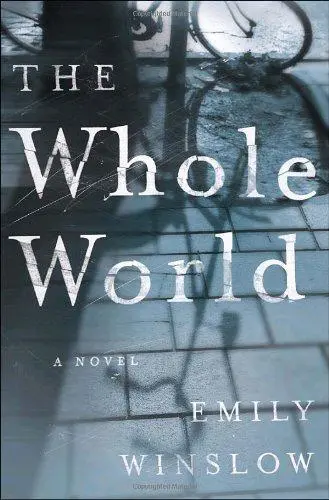
- Название:The Whole World
- Автор:
- Жанр:
- Год:неизвестен
- ISBN:нет данных
- Рейтинг книги:5 / 5. Голосов: 1
-
Избранное:Добавить в избранное
- Отзывы:
-
Ваша оценка:
The Whole World: краткое содержание, описание и аннотация
Предлагаем к чтению аннотацию, описание, краткое содержание или предисловие (зависит от того, что написал сам автор книги «The Whole World»). Если вы не нашли необходимую информацию о книге — напишите в комментариях, мы постараемся отыскать её.
Set in the richly evoked pathways and environs of Cambridge, England, The Whole World unearths the desperate secrets kept by its many complex characters – students, professors, detectives, husbands, mothers – secrets that lead to explosive consequences.
Two Americans studying at Cambridge University, Polly and Liv, both strangers to their new home, both survivors of past mistakes, become quick friends. They find a common interest in Nick, a handsome, charming, seemingly guileless graduate student. For a time, the three engage in harmless flirtation, growing closer while doing research for professor Gretchen Paul, the blind daughter of a famed novelist. But a betrayal, followed by Nick's inexplicable disappearance, brings long-buried histories to the surface.
The investigation raises countless questions, and the newspapers report all the most salacious details – from the crime that scars Polly's past to the searing truths concealed in photographs Gretchen cannot see. Soon the three young lovers will discover how little they know about one another, and how devastating the ripples of long-ago actions can be.
The Whole World — читать онлайн бесплатно полную книгу (весь текст) целиком
Ниже представлен текст книги, разбитый по страницам. Система сохранения места последней прочитанной страницы, позволяет с удобством читать онлайн бесплатно книгу «The Whole World», без необходимости каждый раз заново искать на чём Вы остановились. Поставьте закладку, и сможете в любой момент перейти на страницу, на которой закончили чтение.
Интервал:
Закладка:
About a month later, my brother, Will, broke his arm. He and a friend had been horsing around on skateboards, his favorite summer activity, which Dad didn’t like. Mom took the minivan to the hospital, where Will’s friend’s mom had taken him. I was out with the yellow car and didn’t know what was going on. That left Dad stranded at the bus stop when he came home from work. It was later revealed at trial that he’d had an ugly confrontation at the mill with his supervisor, about a forklift accident that had been covered up and some structural damage Dad was certain was worse than was being admitted. Dad had been the good guy in that conflict, and risked his job over it. Coming home that day, he’d been indignant and afraid of being fired. He’d been worried about the people who might get hurt if the company didn’t take action. He was worried that my brother was skateboarding at the parking lot of the vacant strip mall, which he’d told him not to do. He was worried about me and Jeremy. And then there was no one to meet him, which was either fundamentally disrespectful on a day he totally didn’t need that, or evidence of bad news. He was in a panic, or a rage, to get home.
I need to linger here, because if my brother hadn’t broken his arm, Dad probably would have been a hero. He would have followed through with things at work. Maybe he would have gotten fired for it and sued them and gotten the press after them. Or he would have forced them to shape up himself, and maybe no one would have known what he’d done, but he wouldn’t have minded that. My dad was a good person and, if Will hadn’t broken his arm, would still be one.
Because Will broke his arm, Dad had to walk home. The walk from the bus wasn’t too long, but it was a drizzly day. If Mom had picked him up, she would have driven the long way around, down Campbell Street, because she didn’t like the left turn onto Warwick. In a car it doesn’t really matter if you go the little-bit-longer way. But Dad was walking, and turned onto Warwick no problem, and then right onto Minerva, and then left onto Cowper. This was the more direct way. As he was walking he imagined all the things that could have made Mom miss picking him up. They involved hospitals, police, or fire trucks. He was really worried, and, just underneath all that, suspicious that there hadn’t been an emergency after all, and that no one really cared how hard he worked or what he’d done that day.
When he turned the corner from Cowper onto Lang, he saw our yellow car parked in the driveway. This is where his brother, Joe, lived. He wondered if we were all in there; if perhaps Joe had had a heart attack, or Rain had been arrested for shoplifting (he didn’t like Rain). He bounded straight across the lawn rather than detouring the long way up the walk. He could vaguely hear the TV running, but it could have been a lot of people talking. He pushed in the front door, and heard worrying, potentially medical sounds under the TV noise. Was someone having a terrible asthma attack?
I know all of this because “state of mind” figured heavily in his defense.
Just a few steps farther in, he recognized the sounds. He knew what they were and, worse, recognized me. He said later, on the stand, that he knew it was me because I used to breathe just like that when he tickled me when I was a kid: a distinctive kind of breathy whooping.
He didn’t walk through to the TV room, but he called out to make us stop.
We did so immediately. We dressed. When Jeremy turned off the TV, I squeezed my eyes shut. I needed something to dull the full effect of what was about to happen.
“Are you dressed?” Dad boomed from the front room.
“Yes,” I called back. Jeremy shoved the sheet into his backpack and took my hand to go meet him.
Tears slid down my face, but I didn’t cower.
Dad told me to walk myself home. He wanted to drive Jeremy to his house to talk to his parents. Jeremy shrugged. What else could we have done?
Jeremy kissed me on the cheek and said he would call me. I smiled bravely in return, and walked out past Dad without acknowledging him. From the next street I heard the yellow car start up in Uncle Joe’s driveway.
Dad said that when he and Jeremy got into the car, he saw Burger King bags on the floor of the passenger side, and a couple of big bags from a camping store in the back. We had used the car that day to buy a tent from a store out of town; a bunch of us were going to go up into the White Mountains later in August. Jeremy and I might have otherwise met at Uncle Joe’s on foot, and Dad would never have known we were there. But we’d had the car and, after getting a tent and a small grill, had stopped at Burger King on the way to Uncle Joe’s. When the lawyer prompted him, Dad described everything from this point onward-Burger King bags, camping stuff-in emotionless detail. He gave everything equal weight, to dull it, I guess. To flatten it all out.
When I got home no one was there, and I’d given Dad my key ring for the car. I sat outside on the step. I heard it happen, three streets over.
Dad admits that Jeremy didn’t say anything during the ride, which made it difficult for Dad’s lawyer to prove provocation in the moment. Dad says he doesn’t know why he did it, he just felt, compellingly, that it needed to be done. He makes it clear that this feeling wasn’t rational, and it isn’t one he retains. In fact, he says, as soon as it was over he recognized it for the horror it was. But as he did it, he said, it was as unthinking as a routine. You don’t put on your tie in the morning because you want to, he said. You do it because that’s what you do.
The prosecution had a slow ramp-up to their full description of the act. They had street diagrams and skid marks and experts on that particular engine to indicate where and how quickly Dad had accelerated. Apparently, Jeremy would have briefly seen it coming. Dad drove straight for the oak tree in the Palmers’ yard, no swerving. He had nothing against the Palmers; it was just a big tree near the road.
The defense tried to make it look like an act of suicidal depression, but Dad had aimed the car so the passenger side would impact the tree and the driver side wouldn’t. One could argue that that was luck more than good aim, but Dad admits it was intentional.
Jeremy had been thrown into the windshield. His face got shredded and sprayed blood like a cloudburst. His head was cracked open by the impact, and Dad said he could see Jeremy’s brain. He said it like it was just a detail, the same way he had seen the Burger King bags. Dad said Jeremy had seemed unconscious, but breathed in a rattly way for a while beside him. The coroner says that death was instantaneous, but I believe Dad because he was there.
Dad had had an airbag. He cracked three ribs.
In the trial, there was some haggling over whether Dad knew that the passenger side didn’t have an airbag, whether he knew that his side did, and whether he’d noticed that Jeremy hadn’t put on his seatbelt. He was given seven and a half years, and will likely serve only five.
And all of this happened because Will broke his arm.

I finished high school at home with tutors. I didn’t have too many credits outstanding, so there wasn’t that much to do. The school was nice. They didn’t make me come in for classes, but let me continue to be in the orchestra. I like being surrounded by the swell and flow of all those musical machine bits; I like being one of those bits. I like being part of something that works.
I spent the year after that at home with Mom and Will, planning. I was going to get away, there was no doubt about that. I had to get away, but I wanted to get somewhere good.
Читать дальшеИнтервал:
Закладка:
Похожие книги на «The Whole World»
Представляем Вашему вниманию похожие книги на «The Whole World» списком для выбора. Мы отобрали схожую по названию и смыслу литературу в надежде предоставить читателям больше вариантов отыскать новые, интересные, ещё непрочитанные произведения.








Обсуждение, отзывы о книге «The Whole World» и просто собственные мнения читателей. Оставьте ваши комментарии, напишите, что Вы думаете о произведении, его смысле или главных героях. Укажите что конкретно понравилось, а что нет, и почему Вы так считаете.