Emily Winslow - The Whole World
Здесь есть возможность читать онлайн «Emily Winslow - The Whole World» весь текст электронной книги совершенно бесплатно (целиком полную версию без сокращений). В некоторых случаях можно слушать аудио, скачать через торрент в формате fb2 и присутствует краткое содержание. Жанр: Современная проза, на английском языке. Описание произведения, (предисловие) а так же отзывы посетителей доступны на портале библиотеки ЛибКат.
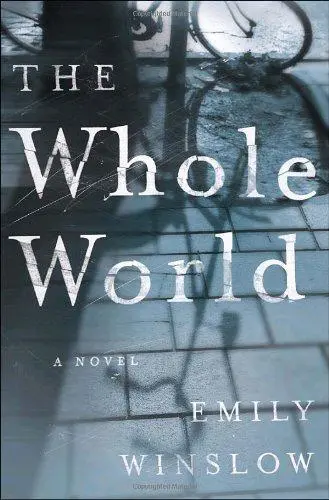
- Название:The Whole World
- Автор:
- Жанр:
- Год:неизвестен
- ISBN:нет данных
- Рейтинг книги:5 / 5. Голосов: 1
-
Избранное:Добавить в избранное
- Отзывы:
-
Ваша оценка:
The Whole World: краткое содержание, описание и аннотация
Предлагаем к чтению аннотацию, описание, краткое содержание или предисловие (зависит от того, что написал сам автор книги «The Whole World»). Если вы не нашли необходимую информацию о книге — напишите в комментариях, мы постараемся отыскать её.
Set in the richly evoked pathways and environs of Cambridge, England, The Whole World unearths the desperate secrets kept by its many complex characters – students, professors, detectives, husbands, mothers – secrets that lead to explosive consequences.
Two Americans studying at Cambridge University, Polly and Liv, both strangers to their new home, both survivors of past mistakes, become quick friends. They find a common interest in Nick, a handsome, charming, seemingly guileless graduate student. For a time, the three engage in harmless flirtation, growing closer while doing research for professor Gretchen Paul, the blind daughter of a famed novelist. But a betrayal, followed by Nick's inexplicable disappearance, brings long-buried histories to the surface.
The investigation raises countless questions, and the newspapers report all the most salacious details – from the crime that scars Polly's past to the searing truths concealed in photographs Gretchen cannot see. Soon the three young lovers will discover how little they know about one another, and how devastating the ripples of long-ago actions can be.
The Whole World — читать онлайн бесплатно полную книгу (весь текст) целиком
Ниже представлен текст книги, разбитый по страницам. Система сохранения места последней прочитанной страницы, позволяет с удобством читать онлайн бесплатно книгу «The Whole World», без необходимости каждый раз заново искать на чём Вы остановились. Поставьте закладку, и сможете в любой момент перейти на страницу, на которой закончили чтение.
Интервал:
Закладка:
“Okay,” I said. Harry pressed a cup into my hand. It burned my fingers. That kind of got me together. “Okay. My mother’s been arrested. They took her away.”
“Harry,” Gretchen interjected. “Call Jim. He’ll have a recommendation for a solicitor.” Harry jogged upstairs. Gretchen continued: “Drink up. You’re in shock.”
“Thank you,” I said. I sipped. Time passed.
“I’m lost here,” Liv admitted. “What’s she been arrested for?”
Gretchen knew. She’d connected the dots.
“It’s Nicholas, Liv,” said Gretchen. I nodded to thank her, which was thoughtless.
Harry had come back. He put a pink Post-it on the table in front of me. “Grant Tisch. Would you like me to phone him for you?”
“No,” I said, honestly surprised. “No, I think she did it.”
Gretchen sat up straighter. “Harry, phone the man.”
Things happened around me. Liv gaped. I tried to protest the lawyer, but Gretchen was a force.
The room seemed to be growing larger. The cushions on the couch swelled up and pressed on all sides, lifting me up toward the ceiling. Liv and Gretchen lengthened before me. Liv asked, “Are you all right?” and I said, “Yes,” because I had no force of my own. I didn’t have it in me to explain anything to anyone.
The inside of my head had become bigger than the world around me. It was a terrible place.
Gretchen spoke to the solicitor in front of me, to reassure me that my mother was in good hands. She used a tone with him that suggested he should have preemptively prevented my mother from being arrested in the first place.
“Grant Tisch is going to meet your mother at the police station, Polly,” Gretchen said. Harry put food in front of me, which I ate, I think. Liv was doing whatever she was asked, and generally wringing her hands. I missed a lecture on “Order and Disorder in Material Science.”
No one asked me again what I think it was my mother did.
Gretchen put me into the guest room even though it was daytime. Gretchen has this way. It wasn’t physical how she did it, but with force nonetheless. I said, “I think I should go home now,” and she acted like she didn’t hear it.
There was a telephone in there, which I unplugged. I locked the door and considered climbing out the window. If only the world outside the window didn’t have my mother in it.
I opened drawers. There were stationery and pens and stamps. Also an address book. This must be Harry’s writing room when it wasn’t accommodating guests.
I considered writing Nick, but where could I send it and what would I say? I couldn’t apologize, because I’d tried to save him. That I’d failed was not my fault.
I eventually collected myself and wandered back down to the lounge. Liv wasn’t there anymore. Harry wasn’t around either, not even in the sounds of distant puttering. The curtains were pulled. Gretchen sat at the table, running her fingers over a book.
She was startled by my steps. “Polly!” she said. “I urged Liv to attend her lecture. The most important thing was for you to rest.”
“Okay,” I said, still not fully under my own power.
I sat down across from her and she closed the book.
“Polly,” she said, “I think you should tell me what happened.”
I’ve played in chamber groups and I’ve played in orchestras. In a quartet, we follow each other, we follow the music, we follow what we’d agreed together in practice. Orchestras are a whole other thing. In performance, the orchestra itself becomes an instrument, played by the conductor. His hands point and waft, dictating pace and emphases. We absorb the emotions from his face and posture, to return them through our instruments. We’re open receivers. It’s an unequal situation. An orchestra does what it’s told.
“Polly,” she repeated, just that one word, just my name. It was like that moment when the conductor raises his hands. Everybody sits up straight. Elbows out, bows hovering over strings.
“Okay,” I said. And I opened my mouth to tell her.
CHAPTER 3

I’m surprised Gretchen let me leave the house. She was pretty upset by what I’d said.
I walked up Grange Road, turned left onto Adams and then straight to the Coton Footpath. It took me over the rush hour M11, still full at eight p.m., then past fields to a cheap little playground: a slide, a spinning thing, and two swings. I pumped with my legs, back and forth, higher and higher. The air was misty but it wasn’t actively showering. It was dark.
Before Jeremy and I had gone all the way, we used to make out in a park like this one.
Usually we came to the park together, but sometimes we met there. Once, I got there first and sat on a swing. He came just a little later, but for a few minutes watched me from a distance. He told me later that he liked to just look at me. And that my skirt blew up above my knees when I went up, and that my legs were the longest and prettiest he’d ever seen. I was, he said, the prettiest girl in school, which at the time had staggered me as an impossibly enormous compliment. It had made me the prettiest girl in the world.
I waited for him now. He might step out from behind a tree any moment.
He sat on the seat next to me. I said, “Hi.” He started to swing too, but we weren’t quite in sync. So it was hard for me to be sure it was him. He was behind me, then blurring past, then it was the back of his head. Over and over again. I kept trying to change my pace, to widen or shrink my arc so as to catch him. He stayed out of range. I couldn’t look him in the face. Perhaps this was a purposeful kindness. Perhaps this wasn’t five years ago, and was instead three or two or less. Perhaps his face wasn’t whole anymore, and he was sparing me from seeing it. He was a gentleman that way.
I stopped trying to catch up with his swing and just enjoyed his company. “Jeremy,” I said. “Do you like England?”
I didn’t expect him to answer. I knew he wasn’t really there.
Jeremy had blond hair. It’d been lighter than mine, except when I caught up in the summer. He was nice, a good swimmer, funny.
My father stormed in on us once while we were in the living room playing cards. “Polly,” he said seriously, clearly holding something back, “I need to talk to you.” Jeremy offered to excuse himself; Dad had been obviously ready to blow up about something. “No, son…” Dad said, seemingly conversational. “You need to stay.”
We’d looked at each other, Jeremy and I, feeling the hook pierce our gaping mouths. It was obvious what this was going to be about.
He’d found a cache of condoms in my room. He held up a sample.
I tried the offensive. “What were you doing in my room?” But he just shook his head. He wasn’t going to be derailed.
I tried again. “Okay. So what? You can see we’re being responsible.” At “we,” Dad’s head swung to Jeremy, who shrank a little.
“I care very much about your daughter, sir,” he said, as steadily as one can. It felt like a script, even though it was true.
“Do you?” Dad said, nodding to himself. “Okay, okay. You care. That’s nice.” He paced.
“Where’s Mom?” I asked, because he was kind of freaking me out.
“She’s out. She doesn’t know yet.”
My face gave it away. He put the condom into his pocket. “I see,” he said. I had told Mom months before.
He made Jeremy leave, then yelled at me. He told me I lived under his roof. It was all standard, as I understand these things. Dad seemed pretty okay afterward, like he’d got out what he needed to.
Jeremy and I became careful. We didn’t do anything for weeks. I stayed in most evenings too, to show Dad. The condoms were gone and I didn’t buy new ones; I didn’t want the pharmacist or one of the supermarket cashiers to maybe tell him something and set him off. But it wasn’t just me being good. Dad and I had this truce going on. Dad didn’t say anything when I spoke to Jeremy on the phone sometimes. Once, Dad even handed me the handset and told me who it was.
Читать дальшеИнтервал:
Закладка:
Похожие книги на «The Whole World»
Представляем Вашему вниманию похожие книги на «The Whole World» списком для выбора. Мы отобрали схожую по названию и смыслу литературу в надежде предоставить читателям больше вариантов отыскать новые, интересные, ещё непрочитанные произведения.










Обсуждение, отзывы о книге «The Whole World» и просто собственные мнения читателей. Оставьте ваши комментарии, напишите, что Вы думаете о произведении, его смысле или главных героях. Укажите что конкретно понравилось, а что нет, и почему Вы так считаете.