Emily Winslow - The Whole World
Здесь есть возможность читать онлайн «Emily Winslow - The Whole World» весь текст электронной книги совершенно бесплатно (целиком полную версию без сокращений). В некоторых случаях можно слушать аудио, скачать через торрент в формате fb2 и присутствует краткое содержание. Жанр: Современная проза, на английском языке. Описание произведения, (предисловие) а так же отзывы посетителей доступны на портале библиотеки ЛибКат.
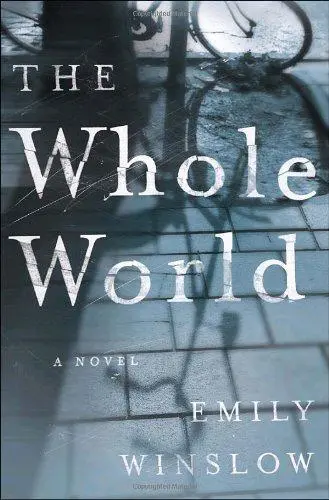
- Название:The Whole World
- Автор:
- Жанр:
- Год:неизвестен
- ISBN:нет данных
- Рейтинг книги:5 / 5. Голосов: 1
-
Избранное:Добавить в избранное
- Отзывы:
-
Ваша оценка:
The Whole World: краткое содержание, описание и аннотация
Предлагаем к чтению аннотацию, описание, краткое содержание или предисловие (зависит от того, что написал сам автор книги «The Whole World»). Если вы не нашли необходимую информацию о книге — напишите в комментариях, мы постараемся отыскать её.
Set in the richly evoked pathways and environs of Cambridge, England, The Whole World unearths the desperate secrets kept by its many complex characters – students, professors, detectives, husbands, mothers – secrets that lead to explosive consequences.
Two Americans studying at Cambridge University, Polly and Liv, both strangers to their new home, both survivors of past mistakes, become quick friends. They find a common interest in Nick, a handsome, charming, seemingly guileless graduate student. For a time, the three engage in harmless flirtation, growing closer while doing research for professor Gretchen Paul, the blind daughter of a famed novelist. But a betrayal, followed by Nick's inexplicable disappearance, brings long-buried histories to the surface.
The investigation raises countless questions, and the newspapers report all the most salacious details – from the crime that scars Polly's past to the searing truths concealed in photographs Gretchen cannot see. Soon the three young lovers will discover how little they know about one another, and how devastating the ripples of long-ago actions can be.
The Whole World — читать онлайн бесплатно полную книгу (весь текст) целиком
Ниже представлен текст книги, разбитый по страницам. Система сохранения места последней прочитанной страницы, позволяет с удобством читать онлайн бесплатно книгу «The Whole World», без необходимости каждый раз заново искать на чём Вы остановились. Поставьте закладку, и сможете в любой момент перейти на страницу, на которой закончили чтение.
Интервал:
Закладка:
I skulked along the edge of Emmanuel College and crossed St. Andrew’s Street quickly.
I stopped short of my office. It wasn’t a refuge. The stapler and pencil cup were probably still scattered on the floor, where they’d fallen when I pulled Polly onto the desk with me. The cleaners would have taken the rubbish bin, but the smell of sick would still be there, trapped in the poorly circulated air.
“Are you in your office?” I asked Peter.
He was. I crossed the road. The massive whale skeleton on Zoology’s patio rattled in the breeze. Female voices in the car park froze me until car door slams shut them away.
That’s the moment I thought of Lesley Harter. I hadn’t thought about her, except in passing, for years. She was seven years my senior, which was an impossible distance when I was fifteen, at least to me it had been. Now she would be… thirty-one. Which seemed equally impossible. She was probably married. She was probably a mother. She ran her family’s businesses, and had done since she was twenty. But I thought of her as just herself.
I had met her at a dressage event, where one of her horses was competing. She knew Dad through work. Alexandra had wanted to see the “horsies,” which is why we were there. I’d only been out of choir for a year, having cracked my voice at fourteen. I’d never seen a woman so beautiful. While Mum chased after Alexandra, Lesley showed me the horses.
She asked me to carry a box of tack into the trailer attached to her car. I put it down in the corner and she followed me in. The trailer walls muffled the loudspeaker and applause. “It’s all right,” she said. She just stood there, waiting for something, and letting me know it was all right. I stepped close and kissed her, terrified I was doing it wrong. When I pulled away, she smiled again. “You’re a lovely boy,” she said. She waited a few moments more before turning to hang up a bridle. She left it to me, all on me. If I wanted to touch her I could. I could see the outline of her bra under her polo shirt. I couldn’t move. It was overwhelming. She took pity on me. She kissed me again. I was mad with it in my response; I kissed her all over her face. She had earrings on, hard little gems that scratched my lips.
That’s all we did. Then we went to watch her horse compete. When he won, she raised her arms up in a cheer. Her breasts lifted with her arms. I could hardly breathe.
We became friends, and I never touched her again. I hardly saw her, just now and then. But when I did, she spoke to me like she valued my opinion. That wasn’t new, exactly, but usually adults wanted to hear what I had to say about academic things. She wanted my opinions on life. Should she forgive someone, should she insist on some condition in a contract? It was somehow much the same as what had passed between us in the trailer. She treated me as an equal.
I would never tell Peter about her.
He opened the front door of the building for me, and we went up to his office.
An empty coffee cup from Fitzbillies bakery was on his desk. The last time we were in there together, he’d flirted with the woman at the till. I noticed that this paper cup had a phone number written on the side. Next to it was a stack of books with papers inserted between pages throughout. None of the books were open. There was an empire-building computer game on his screen. “I thought you were working,” I said.
He grinned. “Procrastination is part of my process.”
His whiteboard had notes scrawled on it in three different colours, and an idle sketch of a rowboat, surprisingly detailed. More of his “process.” Polly rushed into my mind, her laughing that Penrose had illustrated his talk with colourful homemade transparencies. It’s something to watch American standards and expectations get tickled like that.
Polly even looks American, though I can’t quite explain what I mean by that. She looks like someone in an American chewing gum advert.
“So…?” Peter asked, leaning back in his chair, and I knew what he meant. I was in the stiff-backed guest chair, sitting straight up. I shook my head. “You and Liv?” he persisted.
He was my friend. I had to trust somebody.
“I went too far…” I began.
“Holding hands is acceptable in this century,” he teased.
The opportunity shuttered. I couldn’t make him understand without spelling it out. And once he did understand, he’d make a joke of that too, wouldn’t he. He’d think it was hilarious.
“Tell me again about your brother,” I countered. His face froze.
“The hell?”
That was mean of me. His brother was the only thing he was sensitive about.
“Seriously, do you have a problem?” he wanted to know.
“Not me, mate.” I’d gone too far. It was out of character for me to bait him, but I had to get him off Polly and Liv. “I want to talk about something else,” I said. “The only things you’re willing to be serious about are your brother and your work, so let’s talk about them.” I pumped these words out in a rapid staccato.
“I don’t want to be serious right now,” he pouted. Then, “Fine, we’ll talk about work.”
“How’s your thesis?” I asked. This was a more normal conversation.
“It’s all right,” he said. “My thesis is all right. I’ll be ready to submit soon.”
“It’s about time!” I said, joking. I could finish this year too, but I’d probably drag it out. People don’t think I’ve got laziness in me, but that’s because thoroughness and laziness can look so much alike.
Thoroughness can be a cover for numerous less desirable things.
I shouldn’t have gone on to analyse the handwriting on Gretchen’s photos. But I’d gone on to “see the job through,” as my father had said to me a fair few times in my life, despite not being home terribly much. It was my personal sense of tidiness and completion that drove me to sort out the handwritings after Liv had left; compassion and responsibility, which is what I thought it was, would have involved observing Gretchen more carefully.
I take words at face value. Gretchen had said she wanted to know everything. I don’t do well overriding what people say about themselves. I don’t put body language and tone of voice over words themselves. I should, I know that now.
“You’re a real shit, you know that?” Peter said, still hurt that I’d brought up his brother like that. But he wasn’t going anywhere. He hadn’t shifted his weight, or leaned forward as if to stand.
I decided to respond to that, instead of the words.
“It’s not just Polly or Liv. It’s…”
He prompted, “What?”
“Kepler.”
“Johannes Kepler?”
I nodded and he laughed at me.
“The cosmologist? From how many hundreds of years ago?”
Four hundred years ago. Kepler had defended the Copernican theory of a sun-centred universe. Circular orbits didn’t work out; they couldn’t explain the path Mars followed in the sky, seeming to backtrack on itself. Another kind of orbit might. He set out to prove that the orbits of the five known planets followed the shapes of Euclid ’s nested solids. This, to him, would have been a divine signature, proof that a sun-centred universe wasn’t godless or random.
What he found instead were ellipses.
Elliptical orbits are one of the greatest, most perfect discoveries in scientific history. They explained Mars’s apparent retrograde motion, the last scientific obstacle to a sun-centred system, and did so without any convoluted mechanics. Yet he despised them. They were too… I think “natural” might be the word. He’d been looking for a perfect crystal and had found a beating heart instead.
“You know,” I rambled. “Retrograde. Ellipses. The truth wasn’t exactly as he’d pictured it. So he hated it.”
Читать дальшеИнтервал:
Закладка:
Похожие книги на «The Whole World»
Представляем Вашему вниманию похожие книги на «The Whole World» списком для выбора. Мы отобрали схожую по названию и смыслу литературу в надежде предоставить читателям больше вариантов отыскать новые, интересные, ещё непрочитанные произведения.







Обсуждение, отзывы о книге «The Whole World» и просто собственные мнения читателей. Оставьте ваши комментарии, напишите, что Вы думаете о произведении, его смысле или главных героях. Укажите что конкретно понравилось, а что нет, и почему Вы так считаете.