Emily Winslow - The Whole World
Здесь есть возможность читать онлайн «Emily Winslow - The Whole World» весь текст электронной книги совершенно бесплатно (целиком полную версию без сокращений). В некоторых случаях можно слушать аудио, скачать через торрент в формате fb2 и присутствует краткое содержание. Жанр: Современная проза, на английском языке. Описание произведения, (предисловие) а так же отзывы посетителей доступны на портале библиотеки ЛибКат.
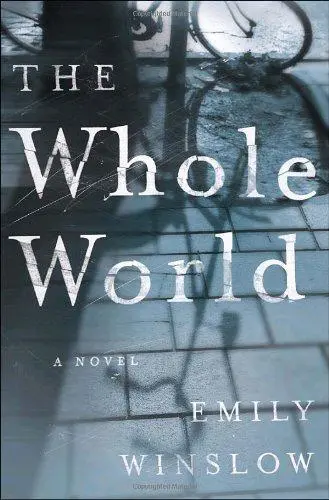
- Название:The Whole World
- Автор:
- Жанр:
- Год:неизвестен
- ISBN:нет данных
- Рейтинг книги:5 / 5. Голосов: 1
-
Избранное:Добавить в избранное
- Отзывы:
-
Ваша оценка:
The Whole World: краткое содержание, описание и аннотация
Предлагаем к чтению аннотацию, описание, краткое содержание или предисловие (зависит от того, что написал сам автор книги «The Whole World»). Если вы не нашли необходимую информацию о книге — напишите в комментариях, мы постараемся отыскать её.
Set in the richly evoked pathways and environs of Cambridge, England, The Whole World unearths the desperate secrets kept by its many complex characters – students, professors, detectives, husbands, mothers – secrets that lead to explosive consequences.
Two Americans studying at Cambridge University, Polly and Liv, both strangers to their new home, both survivors of past mistakes, become quick friends. They find a common interest in Nick, a handsome, charming, seemingly guileless graduate student. For a time, the three engage in harmless flirtation, growing closer while doing research for professor Gretchen Paul, the blind daughter of a famed novelist. But a betrayal, followed by Nick's inexplicable disappearance, brings long-buried histories to the surface.
The investigation raises countless questions, and the newspapers report all the most salacious details – from the crime that scars Polly's past to the searing truths concealed in photographs Gretchen cannot see. Soon the three young lovers will discover how little they know about one another, and how devastating the ripples of long-ago actions can be.
The Whole World — читать онлайн бесплатно полную книгу (весь текст) целиком
Ниже представлен текст книги, разбитый по страницам. Система сохранения места последней прочитанной страницы, позволяет с удобством читать онлайн бесплатно книгу «The Whole World», без необходимости каждый раз заново искать на чём Вы остановились. Поставьте закладку, и сможете в любой момент перейти на страницу, на которой закончили чтение.
Интервал:
Закладка:
She lifted the backing out, and there it was: “Me and Ginny, 1950.” So, Linda must have written it.
The writing style matched the poem transcriptions, and the grandparents’ photos, and the autograph. But it didn’t match the teenaged photos, or the inscriptions for Gretchen’s graduation.
So the one who’d labelled the framed photo couldn’t be Linda.
I could have lied to Gretchen. But I didn’t really think about the options or implications. I pounced on the paradox with a detached fascination.
“Maybe your mother didn’t really write those books. Maybe she was someone with just the same name as the author-”
She smacked my face. I hadn’t been hit since I was six years old. Our cleaner had hit me and been fired.
Gretchen’s face was rigid in a passive mould but tears gushed out as if through cracks in a dam. They slid into the paths of the thousand wrinkles that suddenly scored her skin. She was old now. She was wretched.
“Gretchen,” I said, trying to be kind.
“You don’t understand,” she whispered. And I didn’t understand. I didn’t.
She put her hands into the box and pulled up dozens of photos. They spilled from her fists. She pushed them into my chest, grinding them in. “Tell me again what she looked like. Tell me again.”
This was awful. She wanted me to be a conduit for something that was more electric than I could bear.
“Tell me again,” she demanded. She pushed me and lurched, suddenly disoriented. “Tell me again.”
“Gretchen, please.”
She stopped and got her bearings. “Take them,” she said, kicking at the photos, which were now a mess on the floor around us. “Take them away.”
I knelt on the floor to pick them up, like when Alexandra as a child used to throw cards on the floor and call it a game.
“Thank you,” she said, while I crawled under the table where some had fluttered or slid. When I passed her by she put her hand on my head, like a matron with a hunting dog in an old portrait.
I refilled the box in a jumble, and hefted it into my arms. I considered ripping the framed photo out of its place to take that as well. But there was a momentum leading toward my escape that I didn’t want to disturb. I headed toward the door without it.
Gretchen remembered. She pursued me into the lounge. The corner of the frame scraped my ear. She piled it, frame and all, on top of the box in my arms.
I promised her that I would take them all away.
She said, “Utterly, please. Utterly.”
If I’d been less rattled I would have stored the box somewhere, assuming that she would eventually change her mind. At this time, however, it seemed very important to take things literally. It seemed important to back away from making my own judgements about things. I hadn’t made good decisions lately.
So I did what Gretchen asked.
Harry’s car was just turning the corner, and I crossed the road quickly to avoid him. I didn’t want to chat, but was relieved to see him. His presence would keep Gretchen from doing something drastic.
I took the box back home. Home-home, not the Chanders’. Mum would be out. Dad was away on business. We have a pond behind the house. Not a garden pond; this was a real jungle, a wildlife zone, hopping and buzzing and splashing with life. It was deep.
My arms tingled from carrying the heavy box so far. I dropped it at the water’s edge and shook out my limbs to revive their circulation.
I considered sprinkling the photographs, like confetti, but that was too delicate a gesture. I hefted the box up and dumped it out.
I’d forgotten that they’d float. Photo faces dotted the water surface. Ginny and her side part stood out to me. I hadn’t noticed before that Liv’s hair is parted in the same way, but after last night, looking down at the top of her head, I wouldn’t forget. It’s a side part, to my left, and it had moved back and forth in front of me, my back up against the wall of her room.
The box itself bobbed, and I wondered if it had ever held something simple. I wondered if it had ever delivered a toy, or a lamp, or a book by someone who wasn’t Linda Paul.
I looked back at our house. I still had a key. My old room was still there, with my bed in it, even if Mum had her computer set up in there now too.
Gretchen didn’t like the idea of a nanny getting between her and her mother. I’d noticed that in one of the photos the nanny wore a pin from some society on her jumper. I tried to decipher it but Gretchen scoffed. She hadn’t cared. “She’s just the nanny.” Still, the photos told a different story. In the photos, she and the nanny seemed close. I’d had nannies. They were nice. Anna from Germany, and Marie from France. Anna taught me how to crack an egg, and how to cook on an Aga. Marie was retired from competitive tennis, and I spent most Marie days outside. Mum brought us lemonade and made me wear a hat. My mum was still my mum.
Briefly, I considered unlocking home and going back in time.
A car pulled up. I heard Alexandra and a friend pop out of it, spilling bright conversation. They didn’t see me, around the back of the house.
It was enough to shake me out of my sentimental mood. Going into the house wouldn’t undo being an adult.
Gretchen’s photos still floated. The framed picture glowed gold in the early winter sunset, and looked for all the world like a raft. It had drifted too far to reach with a stick, even with this long branch that had come down in the last storm. So I threw a stone at it, which smashed the glass. That bull’s-eye gave me confidence and I threw a larger one, which missed, and another, which pushed the frame perpendicular for a moment. Then it righted itself.
Something rustled in the bushes next door. Our neighbour, Mrs. Cowley, wouldn’t like me stirring things up down here. She didn’t like people around. Usually I tiptoed around her sensitivities, but now I picked up the branch. No, it couldn’t reach. But I hefted it up onto my shoulder and ran forward, releasing it like a javelin. It plunged into the water at least a metre from its target, the framed portrait. Scuttling noises retreated away toward the next house.
The lights in the ground floor of our house came on in a flash. The windows made a bright stripe across the whole building. I hadn’t noticed before that the lights hadn’t gone on as soon as Alexandra had entered.
My noise must have disturbed her. The back door banged open. “You!” she called bravely.
I waved and emerged from the trees. “Alex, it’s me.”
I expected her to be relieved. But she tensed up.
“Alex, it’s all right. It’s Nick.” My voice sounded forced. I didn’t sound like myself. She went back in without answering; the door slapped shut behind her.
As I got closer to the house, the angle of my view changed and I could see the whole of the lounge. Her companion wasn’t one of her usual girlfriends. It was a boy. He was taller than she was, so he had to be older. Most of the boys her age have yet to catch up with her. They argued. She buttoned up her blouse.
That’s what had looked so odd at the back door. Her shirt had been untucked and overlapped tightly around her, underneath her crossed arms.
I strode in. “Alexandra, won’t you introduce me to your friend?” I folded my arms across my chest.
She popped the last button in through its slit. “Gordon gave me a ride,” she said. Meaning a car. I know she meant his car.
His shirt was untucked too. He held his blazer in front of himself, draped awkwardly over his arm.
“You can go now,” I said to him.
He tried to get a cue from Alexandra. She shook her head and lifted her shoulders. I stepped between them. “Now!” I said.
When Alexandra turned to watch him drive away, I saw that her shirt had two lumps at the back where the ends of her bra were undone and poked up.
Читать дальшеИнтервал:
Закладка:
Похожие книги на «The Whole World»
Представляем Вашему вниманию похожие книги на «The Whole World» списком для выбора. Мы отобрали схожую по названию и смыслу литературу в надежде предоставить читателям больше вариантов отыскать новые, интересные, ещё непрочитанные произведения.










Обсуждение, отзывы о книге «The Whole World» и просто собственные мнения читателей. Оставьте ваши комментарии, напишите, что Вы думаете о произведении, его смысле или главных героях. Укажите что конкретно понравилось, а что нет, и почему Вы так считаете.