Malcolm Bradbury - Doctor Criminale
Здесь есть возможность читать онлайн «Malcolm Bradbury - Doctor Criminale» весь текст электронной книги совершенно бесплатно (целиком полную версию без сокращений). В некоторых случаях можно слушать аудио, скачать через торрент в формате fb2 и присутствует краткое содержание. Город: London, Год выпуска: 2000, ISBN: 2000, Издательство: Picador, Жанр: Современная проза, на английском языке. Описание произведения, (предисловие) а так же отзывы посетителей доступны на портале библиотеки ЛибКат.
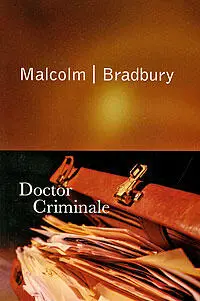
- Название:Doctor Criminale
- Автор:
- Издательство:Picador
- Жанр:
- Год:2000
- Город:London
- ISBN:978-0330390347
- Рейтинг книги:5 / 5. Голосов: 1
-
Избранное:Добавить в избранное
- Отзывы:
-
Ваша оценка:
Doctor Criminale: краткое содержание, описание и аннотация
Предлагаем к чтению аннотацию, описание, краткое содержание или предисловие (зависит от того, что написал сам автор книги «Doctor Criminale»). Если вы не нашли необходимую информацию о книге — напишите в комментариях, мы постараемся отыскать её.
Doctor Criminale — читать онлайн бесплатно полную книгу (весь текст) целиком
Ниже представлен текст книги, разбитый по страницам. Система сохранения места последней прочитанной страницы, позволяет с удобством читать онлайн бесплатно книгу «Doctor Criminale», без необходимости каждый раз заново искать на чём Вы остановились. Поставьте закладку, и сможете в любой момент перейти на страницу, на которой закончили чтение.
Интервал:
Закладка:
‘And then in Vienna you became Professor Codicil’s assistant and wrote his book on Criminale?’ I asked. Hollo stopped swirling his second brandy, and looked hard at me. ‘Why do you ask these questions? Are you some kind of policeman?’ ‘No, a journalist,’ I said, ‘I’m just researching Bazlo Criminale.’ ‘Only for your film?’ ‘Just for the film,’ I said, ‘But the trouble is, the man’s so elusive. None of the facts seem correct. That’s why I need to know who wrote the book.’ Hollo looked at me and said, ‘Well, I tell you, I did not.’ ‘Does that mean Codicil wrote it himself, after all?’ That old devil, you don’t think so?’ said Hollo, ‘No, Codicil did not write it either.’ ‘So there’s someone else,’ I said, ‘Who was it? Do you know?’ The waiter brought cutlery to the table, but Hollo said something to him, and he went away again without setting it down. ‘Well, of course I know,’ he said, after the waiter had moved away, ‘And you don’t guess?’ ‘No,’ I said. ‘But of course,’ said Hollo, ‘It was Criminale Bazlo.’
‘But it’s not an autobiographical book,’ I said, ‘In fact it’s very critical.’ ‘This is true, of course,’ said Hollo, ‘But still it was Bazlo.’ ‘You’re telling me he wrote a book that was deeply critical of himself?’ I asked. ‘Yes, why not?’ asked Hollo. This all seemed too difficult; I switched to something else. ‘All right, why didn’t he publish it here? Why did it have to come out in the West, in Vienna?’ ‘If you call that the West,’ said Hollo, ‘It is also Mittel-Europa.’ ‘That’s true,’ I said, ‘But why didn’t he use his own name? What made him use Codicil’s?’ ‘I see you know a few things,’ said Hollo, ‘Maybe you know a famous essay by the Frenchman Roland Barthes, called “The Death of the Author”?’ ‘Yes, I like it,’ I said, ‘The death of the author is what permits the birth of writing. But what’s that got to do with it?’
‘You know, I would like to write a better essay, called “The Hiding Away of the Author”,’ said Hollo, lighting up another cigarette, ‘About the author who is here and not here. About the book that exists, and does not. About the reader who is present in one place and not in another. About the text that says and does not say. Do you know Lukacs?’ The great Marxist intellectual,’ I said. ‘If you say so,’ said Hollo, ‘I call him the danger artist. You know he would write a preface to one of his books in the third person, to show he was not the same Lukacs who had written it, and it was only by some curious misfortune the book had appeared at all. Here we know all about the art of the danger artist.’
A small girl appeared by the table, selling roses wrapped in Cellophane. Hollo waved her away. ‘She mistakes us for lovers,’ he said. ‘So you’re saying Criminale wanted the book to appear, but he didn’t want certain people to know it had appeared?’ ‘No,’ said Hollo, ‘Criminale didn’t want the book to appear in case it did him harm, but he wanted it to appear in case it did him good. He made it appear that he did not want it to appear. But when it appeared he made it appear that he could do nothing.’ ‘You’re beginning to lose me,’ I said, ‘Are you telling me that Criminale sat here in Budapest and wrote a book critical of himself, got you to take it to Vienna, and then Codicil allowed it to come out under his name?’ ‘Not exactly,’ said Hollo. ‘Then what?’ I asked. ‘I am telling you that a certain Criminale, at a certain time, wrote a book about another certain Criminale,’ said Hollo. ‘I see,’ I said, though I didn’t.
‘And then that book went somehow to Vienna, don’t let us discuss how,’ said Hollo, ‘He often went there himself, after all, and difficult papers and other things were crossing those frontiers all the time. Even the regime permitted it in certain cases, when it suited them. Of course in Vienna some changes were made. When times change books must change. So it became a book about another Criminale.’ ‘And you made the changes?’ I asked. ‘I think I updated things by just a little,’ said Hollo. ‘And so where did Codicil come into all this?’ I asked. ‘Oh, Codicil,’ said Hollo, ‘He was the big man, always talking to ministers and financiers, another fixer of a different kind. He went everywhere, to lodges and clubs. Vienna is full of those important people. So of course he had no time for any of it.’ ‘Yet the book came out under his name,’ I said, ‘Why was that?’ ‘Many reasons,’ said Hollo, ‘He knew Criminale, they had some links. I was his assistant. And this was the right way to get it published.’ ‘You mean he did it to help a friend?’ I asked. Hollo laughed. ‘I see you do not know Codicil,’ he said, ‘Maybe rather to hurt an enemy.’ ‘What enemy?’ I asked. ‘How do I know?’ asked Hollo vaguely, ‘This man had so many. Oh, look, wonderful, she is here!’
I turned round, to see what he had seen. The door curtain to the restaurant had lifted; in the entrance, a slim tall girl stood, looking around. She was blonde, blue-eyed, a Hungarian beauty; she wore a short furry topcoat over a blue mini-dress. Hollo waved at her; she waved back. ‘Oh, I just forgot to mention,’ he said, ‘I told a friend of mine you would buy her lunch. You don’t mind, I hope?’ I looked over at the girl, who was taking off her coat and hanging it; she was very attractive. ‘I don’t mind at all,’ I said. The girl walked through the tables towards us; first she embraced Sandor Hollo, then she turned and smiled at me. ‘So how are you?’ she said. Hollo leapt up: This is Mr Jay or Kay, I don’t remember.’ ‘Francis,’ I said. ‘And this Hazy Ildiko,’ he said, ‘You are late, darling, always late. And this man is asking me such questions about Criminale Bazlo.’ ‘Oh, really, Criminale Bazlo, do you really like him?’ she asked me, sitting down. ‘I’m not sure,’ I said, ‘I’m just trying to find out about him.’ ‘Another,’ said Ildiko. ‘He makes a film and asks so many questions,’ said Hollo, ‘I will go to the waiter and order some food and wine, yes?’ ‘Oh, yes,’ said Ildiko. ‘The best of course,’ said Hollo, ‘You know our friend is a very rich man?’ ‘Not exactly,’ I said. ‘Talk to her,’ said Hollo, patting my shoulder, ‘By the way, Ildiko is the editor who publishes the books of Criminale.’
Ildiko looked at me from the other side of the booth and laughed. ‘So you know Sandor,’ she said, ‘What a rogue, don’t you think? You mustn’t believe a thing. He is always in trouble, no one knows what to think about him.’ ‘Criminale’s publisher,’ I said, ‘Are you really?’ ‘Yes, this is almost true, I am a bit,’ said Ildiko, ‘But for my little house he is already too famous. Today-he writes in German or English. His books come out first in Stuttgart or New York.’ ‘But some of his books?’ I asked. ‘Yes, we published him early, when he was not so great, so he lets us make the Hungarian translation. We think he is a Hungarian, even if he does not. Of course now in the free market it is very-hard for us. Luckily we have our impossible language.’ ‘Does that mean you know him well?’ I asked. ‘Please, do you talk all the time about Criminale?’ asked Ildiko, ‘What about football, the weather?’ ‘Do you know what he’s doing now?’ I asked. ‘I think he makes a big book, but he does not like to talk to me about it,’ said Ildiko. ‘You mean you’ve seen him lately?’ ‘Of course,’ said Ildiko. ‘About two weeks.’ ‘Two weeks ago?’ I asked, ‘Where, here in Budapest?’ ‘Yes, he keeps an apartment here,’ said Ildiko, ‘If you are so interested, why don’t you meet him?’ ‘Is that possible?’ I ask. ‘I think so,’ said Ildiko, ‘And then you don’t have to ask me so many questions.’
Читать дальшеИнтервал:
Закладка:
Похожие книги на «Doctor Criminale»
Представляем Вашему вниманию похожие книги на «Doctor Criminale» списком для выбора. Мы отобрали схожую по названию и смыслу литературу в надежде предоставить читателям больше вариантов отыскать новые, интересные, ещё непрочитанные произведения.



Обсуждение, отзывы о книге «Doctor Criminale» и просто собственные мнения читателей. Оставьте ваши комментарии, напишите, что Вы думаете о произведении, его смысле или главных героях. Укажите что конкретно понравилось, а что нет, и почему Вы так считаете.