Carlos Zafón - The Angel's Game
Здесь есть возможность читать онлайн «Carlos Zafón - The Angel's Game» весь текст электронной книги совершенно бесплатно (целиком полную версию без сокращений). В некоторых случаях можно слушать аудио, скачать через торрент в формате fb2 и присутствует краткое содержание. Жанр: Современная проза, на английском языке. Описание произведения, (предисловие) а так же отзывы посетителей доступны на портале библиотеки ЛибКат.
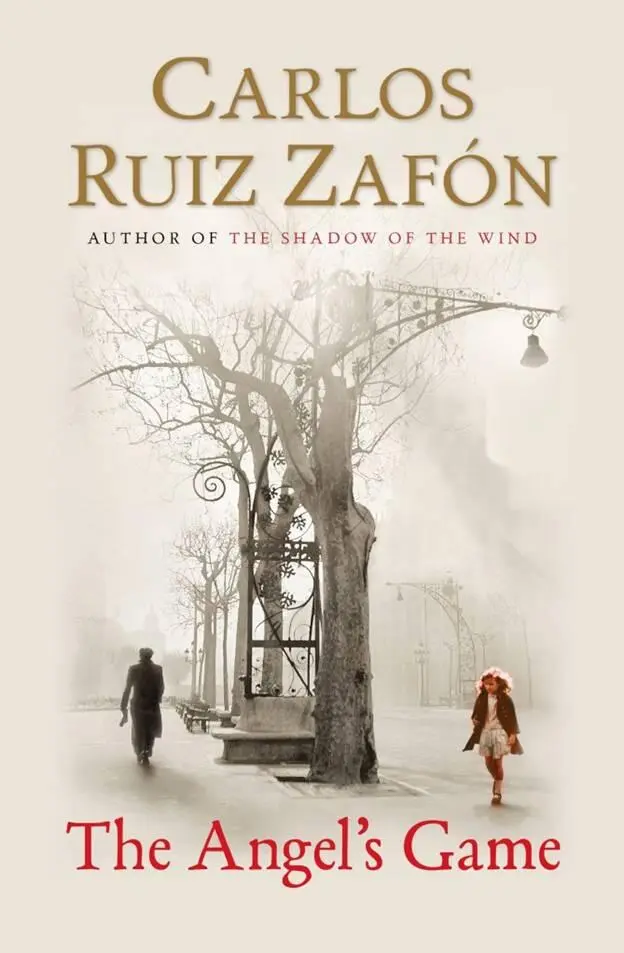
- Название:The Angel's Game
- Автор:
- Жанр:
- Год:неизвестен
- ISBN:нет данных
- Рейтинг книги:5 / 5. Голосов: 1
-
Избранное:Добавить в избранное
- Отзывы:
-
Ваша оценка:
The Angel's Game: краткое содержание, описание и аннотация
Предлагаем к чтению аннотацию, описание, краткое содержание или предисловие (зависит от того, что написал сам автор книги «The Angel's Game»). Если вы не нашли необходимую информацию о книге — напишите в комментариях, мы постараемся отыскать её.
The Angel's Game — читать онлайн бесплатно полную книгу (весь текст) целиком
Ниже представлен текст книги, разбитый по страницам. Система сохранения места последней прочитанной страницы, позволяет с удобством читать онлайн бесплатно книгу «The Angel's Game», без необходимости каждый раз заново искать на чём Вы остановились. Поставьте закладку, и сможете в любой момент перейти на страницу, на которой закончили чтение.
Интервал:
Закладка:
My publishers were a pair of colourful characters called Barrido and Escobillas. Barrido, who was small, squat, and always affected an oily, sibylline smile, was the brains of the operation. He sprang from the sausage industry and although he hadn’t read more than three books in his life – and this included the catechism and the telephone directory – he was possessed of a proverbial audacity for cooking the books, which he falsified for his investors, displaying a talent for fiction that any of his authors might have envied. These, as Vidal had predicted, the firm swindled, exploited and, in the end, kicked into the gutter when the winds were unfavourable – something that always happened sooner or later.
Escobillas played a complementary role. Tall, gaunt, with a vaguely threatening appearance, he had gained his experience in the undertaker business and beneath the pungent eau de cologne with which he bathed his private parts there always seemed to be a vague whiff of formaldehyde that made one’s hair stand on end. His role was essentially that of the sinister foreman, whip in hand, always ready to do the dirty work, to which Barrido, with his more cheerful nature and less athletic disposition, wasn’t naturally inclined. The ménage à trois was completed by their secretary, Herminia, who followed them like a loyal dog wherever they went, and whom we all nicknamed Lady Venom because, although she looked as if butter wouldn’t melt in her mouth, she was as trustworthy as a rattlesnake on heat.
Social niceties aside, I tried to see them as little as possible. Ours was a strictly commercial relationship and none of the parties felt any great desire to alter the established protocol. I had resolved to make the most of the opportunity and work hard: I wanted to prove to Vidal, and to myself, that I was worthy of his help and his trust. With fresh money in my hands, I decided to abandon Doña Carmen’s pensión in search of more comfortable quarters. For some time now I’d had my eye on a huge pile of a house at number 30, Calle Flassaders, a stone’s throw from Paseo del Borne, which for years I had passed as I went between the newspaper and the pensión. Topped by a tower that rose from a facade carved with reliefs and gargoyles, the building had been closed for years, its front door sealed with chains and rusty padlocks. Despite its gloomy and somewhat melodramatic appearance, or perhaps for that very reason, the idea of inhabiting it awoke in me that desire that only comes with ill-advised ideas. In other circumstances I would have accepted that such a place was far beyond my meagre budget, but the long years of abandonment and oblivion to which the dwelling seemed condemned made me hope that, if nobody else wanted it, perhaps its owners might accept my offer.
Asking around in the area, I discovered that the house had been empty for years and was handled by a property manager called Vicenç Clavé who had an office in Calle Comercio, opposite the market. Clavé was a gentleman of the old school who liked to dress in a similar fashion to the statues of mayors or national heroes that greeted you at the various entrances of Ciudadela Park; and if you weren’t careful, he would take off on rhetorical flights that encompassed every subject under the sun.
‘So you’re a writer. Well, I could tell you stories that would make good books.’
‘I don’t doubt it. Why don’t you begin by telling me the story of the house in Flassaders, number 30?’
Clavé adopted the look of a Greek mask.
‘The tower house?’
‘That’s the one.’
‘Believe me, young man, you don’t want to live there.’
‘Why not?’
Clavé lowered his voice. Whispering as if he feared the walls might hear us, he delivered his verdict in a funereal tone.
‘That house is jinxed. I visited the place when I went along with the notary to seal it up and I can assure you that the oldest part of Montjuïc Cemetery is more cheerful. It’s been empty since then. That place has bad memories. Nobody wants it.’
‘Its memories can’t be any worse than mine. Anyhow, I’m sure they’ll help bring down the asking price.’
‘Some prices cannot be paid with money.’
‘Can I see it?’
My first visit to the tower house was one morning in March, in the company of the property manager, his secretary and an auditor from the bank who held the title deeds. Apparently, the building had been trapped for years in a labyrinth of legal disputes until it finally reverted to the lending institution that had guaranteed its last owner. If Clavé was telling the truth, nobody had set foot in that house for at least twenty years.
8
Years later, when I read an account about British explorers penetrating the dark passages of a thousand-year-old Egyptian burial place – mazes and curses included – I would recall that first visit to the tower house in Calle Flassaders. The secretary came equipped with an oil lamp because the building had never had electricity installed. The auditor turned up with a set of fifteen keys with which to liberate the countless padlocks that fastened the chains. When the front door was opened, the house exhaled a putrid smell, like a damp tomb. The auditor started to cough, and the manager, who was making an effort not to look too sceptical or disapproving, covered his mouth with a handkerchief.
‘You first,’ he offered.
The entrance resembled one of those interior courtyards in the old palaces of the area, paved with large flagstones and with a stone staircase that led to the front door of the living quarters. Daylight filtered in through a glass skylight, completely covered in pigeon and seagull excrement, that was set on high.
‘There aren’t any rats,’ I announced once I was inside the building.
‘A sign of good taste and common sense,’ said the property manager behind me.
We proceeded up the stairs until we reached the landing on the main floor, where the auditor spent ten minutes trying to find the right key for the lock. The mechanism yielded with an unwelcoming groan and the heavy door opened, revealing an endless corridor strewn with cobwebs that undulated in the gloom.
‘Holy Mother of God,’ mumbled the manager.
No one else dared take the first step, so once more I had to lead the expedition. The secretary held the lamp up high, looking at everything with a baleful air.
The manager and the auditor exchanged a knowing look. When they noticed that I was observing them, the auditor smiled calmly.
‘A good bit of dusting and some patching up and the place will look like a palace,’ he said.
‘Bluebeard’s palace,’ the manager added.
‘Let’s be positive,’ the auditor corrected him. ‘The house has been empty for some time: there’s bound to be some minor damage.’
I was barely paying attention to them. I had dreamed about that place so often as I walked past its front door that now I hardly noticed the dark, gloomy aura that possessed it. I walked up the main corridor, exploring rooms of all shapes and sizes in which old furniture lay abandoned under a thick layer of dust and shadow. One table was still covered with a frayed tablecloth on which sat a dinner service and a tray of petrified fruit and flowers. The glasses and cutlery were still there, as if the inhabitants of the house had fled in the middle of dinner.
The wardrobes were crammed with threadbare faded clothes and shoes. There were whole drawers filled with photographs, spectacles, fountain pens and watches. Dust-covered portraits observed us from every surface. The beds were made and covered with a white veil that shone in the half-light. A gramophone rested on a mahogany table. It had a record on it and the needle had slid to the end. I blew on the film of dust that covered it and the title of the recording came into view: W. A. Mozart’s Lacrimosa.
Читать дальшеИнтервал:
Закладка:
Похожие книги на «The Angel's Game»
Представляем Вашему вниманию похожие книги на «The Angel's Game» списком для выбора. Мы отобрали схожую по названию и смыслу литературу в надежде предоставить читателям больше вариантов отыскать новые, интересные, ещё непрочитанные произведения.







Обсуждение, отзывы о книге «The Angel's Game» и просто собственные мнения читателей. Оставьте ваши комментарии, напишите, что Вы думаете о произведении, его смысле или главных героях. Укажите что конкретно понравилось, а что нет, и почему Вы так считаете.