Jonathan Franzen - Freedom
Здесь есть возможность читать онлайн «Jonathan Franzen - Freedom» — ознакомительный отрывок электронной книги совершенно бесплатно, а после прочтения отрывка купить полную версию. В некоторых случаях можно слушать аудио, скачать через торрент в формате fb2 и присутствует краткое содержание. Год выпуска: 2010, ISBN: 2010, Издательство: Farrar, Straus and Giroux, Жанр: Современная проза, на английском языке. Описание произведения, (предисловие) а так же отзывы посетителей доступны на портале библиотеки ЛибКат.
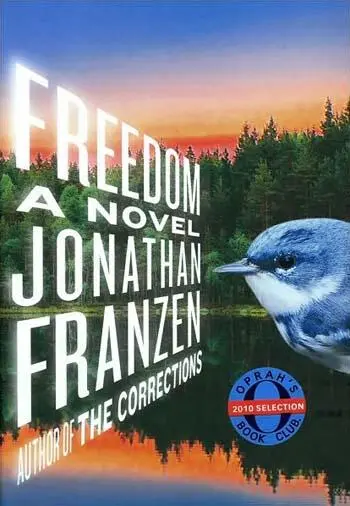
- Название:Freedom
- Автор:
- Издательство:Farrar, Straus and Giroux
- Жанр:
- Год:2010
- ISBN:978-1429979436
- Рейтинг книги:5 / 5. Голосов: 1
-
Избранное:Добавить в избранное
- Отзывы:
-
Ваша оценка:
Freedom: краткое содержание, описание и аннотация
Предлагаем к чтению аннотацию, описание, краткое содержание или предисловие (зависит от того, что написал сам автор книги «Freedom»). Если вы не нашли необходимую информацию о книге — напишите в комментариях, мы постараемся отыскать её.
But now, in the new millennium, the Berglunds have become a mystery. Why has their teenage son moved in with the aggressively Republican family next door? Why has Walter taken a job working with Big Coal? What exactly is Richard Katz—outré rocker and Walter's college best friend and rival—still doing in the picture? Most of all, what has happened to Patty? Why has the bright star of Barrier Street become "a very different kind of neighbor," an implacable Fury coming unhinged before the street's attentive eyes?
In his first novel since
, Jonathan Franzen has given us an epic of contemporary love and marriage.
comically and tragically captures the temptations and burdens of liberty: the thrills of teenage lust, the shaken compromises of middle age, the wages of suburban sprawl, the heavy weight of empire. In charting the mistakes and joys of
's characters as they struggle to learn how to live in an ever more confusing world, Franzen has produced an indelible and deeply moving portrait of our time.
Freedom — читать онлайн ознакомительный отрывок
Ниже представлен текст книги, разбитый по страницам. Система сохранения места последней прочитанной страницы, позволяет с удобством читать онлайн бесплатно книгу «Freedom», без необходимости каждый раз заново искать на чём Вы остановились. Поставьте закладку, и сможете в любой момент перейти на страницу, на которой закончили чтение.
Интервал:
Закладка:
Jonathan and Jenna’s father, at the far end of the table, was holding forth on foreign affairs at such commanding length that, little by little, the other conversations petered out. The turkeylike cords in his neck were more noticeable in the flesh than on TV, and it turned out to be the almost shrunken smallness of his skull that made his white, white smile so prominent. The fact that such a wizened person had sired the amazing Jenna seemed to Joey of a piece with his eminence. He spoke of the “new blood libel” that was circulating in the Arab world, the lie about there having been no Jews in the twin towers on 9/11, and of the need, in times of national emergency, to counter evil lies with benevolent half-truths. He spoke of Plato as if he’d personally received enlightenment at his Athenian feet. He referred to members of the president’s cabinet by their first names, explaining how “we” had been “leaning on” the president to exploit this unique historical moment to resolve an intractable geopolitical deadlock and radically expand the sphere of freedom. In normal times, he said, the great mass of American public opinion was isolationist and know-nothing, but the terrorist attacks had given “us” a golden opportunity, the first since the end of the Cold War, for “the philosopher” (which philosopher, exactly, Joey wasn’t clear on or had missed an earlier reference to) to step in and unite the country behind the mission that his philosophy had revealed as right and necessary. “We have to learn to be comfortable with stretching some facts,” he said, with his smile, to an uncle who had mildly challenged him about Iraq’s nuclear capabilities. “Our modern media are very blurry shadows on the wall, and the philosopher has to be prepared to manipulate these shadows in the service of a greater truth.”
Between Joey’s impulse to impress Jenna and its irruption in actual words there was only one short second of free-fall terror. “But how do you know it’s the truth?” he called out.
All heads turned to him, and his heart began to pound.
“We never know for certain,” Jenna’s father said, doing his smile thing. “You’re right about that. But when we discover that our understanding of the world, based on decades of careful empirical study by the very best minds, is in striking accordance with the inductive principle of universal human freedom, it’s a good indication that our thinking is at least approximately on track.”
Joey nodded eagerly, to show his total and profound agreement, and was surprised when, in spite of himself, he persisted: “But it seems like once we start lying about Iraq, we’re no better than the Arabs with the lie about no Jews being killed on 9/11.”
Jenna’s father, not ruffled in the slightest, said, “You’re a very bright young man, aren’t you?”
Joey couldn’t tell if this was supposed to be ironic.
“Jonathan says you’re a very fine student,” the old man continued gently. “And so I’m guessing you’ve already had the experience of being frustrated with people who aren’t as bright as you are. People who are not only unable but unwilling to admit certain truths whose logic is self-evident to you. Who don’t even seem to care that their logic is bad. Have you never been frustrated that way?”
“But that’s because they’re free,” Joey said. “Isn’t that what freedom is for? The right to think whatever you want? I mean, I admit, it’s a pain in the ass sometimes.”
Around the table, people chuckled at this.
“That’s exactly right,” Jenna’s father said. “Freedom is a pain in the ass. And that’s precisely why it’s so imperative that we seize the opportunity that’s been presented to us this fall. To get a nation of free people to let go of their bad logic and sign on with better logic, by whatever means are necessary.”
Unable to bear another second of exposure, Joey nodded even more eagerly. “You’re right,” he said. “I see, you’re right.”
Jenna’s father went on to unburden himself of further stretched facts and firm opinions that Joey heard hardly a word of. His body was throbbing with the excitement of having spoken up and being heard by Jenna. The feeling he’d misplaced all fall, the feeling of being a player, was coming back to him. When Jonathan stood up from the table, he rose unsteadily and followed him into the kitchen, where they collected enough undrunk wine to fill two sixteen-ounce tumblers for themselves.
“Dude,” Joey said, “you can’t mix red and white like that.”
“It’s rosé, dufus,” Jonathan said. “Since when are you Mr. Oenophile?”
They took their brimming glasses down to the basement and consumed the wine over air hockey. Joey was still so throbbing that he hardly felt the effects, which proved fortunate when Jonathan’s father came downstairs and joined them. “How about a little Cowboy Pool?” he said, rubbing his hands together. “I assume Jonathan’s already taught you our house game?”
“Yeah, I totally suck at it,” Joey said.
“It’s the queen of all pool games, combining the best features of both billiards and pocket billiards,” the old man said as he arranged the 1 ball, the 3 ball, and the 5 ball on their appointed spots. Jonathan seemed somewhat mortified by him, which interested Joey, since he tended to assume that only his own parents could truly mortify a person. “We have an additional special house rule that I’m willing to apply to myself tonight. Jonathan? What do you say? The rule is designed to prevent a highly skilled player from parking behind the 5 ball and running up the score. You boys will be allowed to do that, assuming you’ve mastered putting straight draw on the cue ball, whereas I will be obliged to shoot one billiard or sink one of the other balls each time I sink the 5.”
Jonathan rolled his eyes. “Yeah, sounds good, Dad.”
“Shall we shag?” his father said, chalking his cue.
Joey and Jonathan looked at each other and snickered explosively. The old man didn’t even notice.
It pained Joey to suck so badly at a game, and the effects of the wine became apparent when the old man gave him a few pointers that only made him suck worse. Jonathan, meanwhile, was competing intensely, bearing down with a look of dead seriousness that Joey hadn’t seen in him before. During one of his longer runs, his father took Joey aside and asked about his summer plans.
“That’s a long way away,” Joey said.
“Not so far at all, really. What are your areas of greatest interest?”
“I mostly need to make money, and stay in Virginia. I’m paying my own way through school.”
“So Jonathan tells me. It’s a remarkable ambition. And forgive me if I’m going too far here, but my wife says you’re beginning to develop an interest in your heritage, after not being raised in faith. I don’t know if that’s at all a factor in your deciding to make your own way in the world, but if it is, I want to congratulate you on thinking for yourself and having the courage to do that. In time, you might even come back to lead your family in their own exploration.”
“I’m definitely sorry I never learned anything about it.”
The old man shook his head the same disapproving way his wife had. “We have the most marvelous and durable tradition in the world,” he said. “I think for a young person today it ought to have a particular appeal, because it’s all about personal choice. Nobody tells a Jew what he has to believe. You get to decide all of that for yourself. You can choose your very own apps and features, so to speak.”
“Right, interesting,” Joey said.
“And what are your other plans? Are you interested in a business career the way everybody else seems to be these days?”
Читать дальшеИнтервал:
Закладка:
Похожие книги на «Freedom»
Представляем Вашему вниманию похожие книги на «Freedom» списком для выбора. Мы отобрали схожую по названию и смыслу литературу в надежде предоставить читателям больше вариантов отыскать новые, интересные, ещё непрочитанные произведения.

Обсуждение, отзывы о книге «Freedom» и просто собственные мнения читателей. Оставьте ваши комментарии, напишите, что Вы думаете о произведении, его смысле или главных героях. Укажите что конкретно понравилось, а что нет, и почему Вы так считаете.