Ellen Sussman - French Lessons
Здесь есть возможность читать онлайн «Ellen Sussman - French Lessons» весь текст электронной книги совершенно бесплатно (целиком полную версию без сокращений). В некоторых случаях можно слушать аудио, скачать через торрент в формате fb2 и присутствует краткое содержание. Жанр: Современная проза, на английском языке. Описание произведения, (предисловие) а так же отзывы посетителей доступны на портале библиотеки ЛибКат.
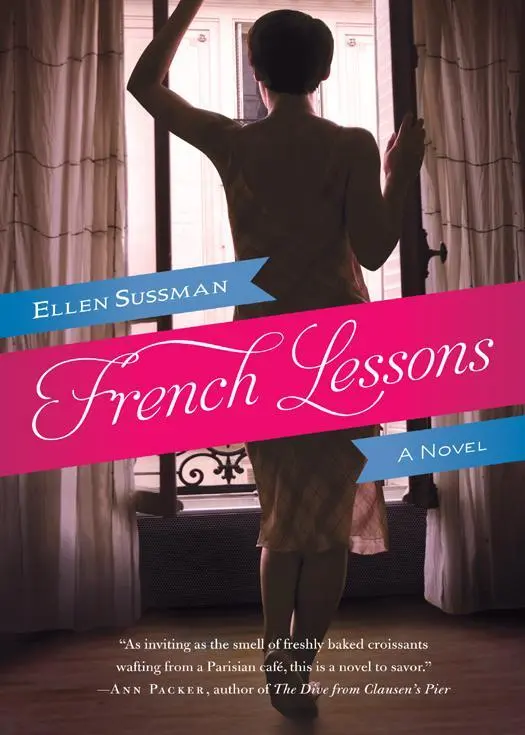
- Название:French Lessons
- Автор:
- Жанр:
- Год:неизвестен
- ISBN:нет данных
- Рейтинг книги:3 / 5. Голосов: 1
-
Избранное:Добавить в избранное
- Отзывы:
-
Ваша оценка:
French Lessons: краткое содержание, описание и аннотация
Предлагаем к чтению аннотацию, описание, краткое содержание или предисловие (зависит от того, что написал сам автор книги «French Lessons»). Если вы не нашли необходимую информацию о книге — напишите в комментариях, мы постараемся отыскать её.
Josie, Riley, and Jeremy have come to the City of Light for different reasons: Josie, a young high school teacher, arrives in hopes of healing a broken heart. Riley, a spirited but lonely expat housewife, struggles to feel connected to her husband and her new country. And Jeremy, the reserved husband of a renowned actress, is accompanying his wife on a film shoot, yet he feels distant from her world.
As they meet with their tutors – Josie with Nico, a sensitive poet; Riley with Phillippe, a shameless flirt; and Jeremy with the consummately beautiful Chantal – each succumbs to unexpected passion and unpredictable adventures. Yet as they traverse Paris's grand boulevards and intimate, winding streets, they uncover surprising secrets about one another – and come to understand long-buried truths about themselves.
French Lessons — читать онлайн бесплатно полную книгу (весь текст) целиком
Ниже представлен текст книги, разбитый по страницам. Система сохранения места последней прочитанной страницы, позволяет с удобством читать онлайн бесплатно книгу «French Lessons», без необходимости каждый раз заново искать на чём Вы остановились. Поставьте закладку, и сможете в любой момент перейти на страницу, на которой закончили чтение.
Интервал:
Закладка:
“But what could he do all day in Paris while I’m filming?” Dana said to the group. “Well, Pascale gave me the name of a language school and I set him up with a full week of private tutoring. While I’m working he’s learning the language of love with someone named Chantal.”
She spread the name open like it too was a gift: “Chan-t-a-a-al.”
“Not quite,” Jeremy said. He’s accustomed to his wife’s stories, the way they grow. By tomorrow night Chantal might be the most beautiful woman in all of France. “We haven’t yet discussed love,” he explained.
Everyone was charmed.
“Thank God I trust you the way I do,” Dana added.
“My stepdaughter would like to meet us for coffee,” Jeremy tells Chantal, in French, as they walk toward the steep hill of rue Mouffetard. Jeremy can see the long line of food stalls ahead; he can hear a man calling out, “Cerises! Melons!” Jeremy can understand Chantal’s French with surprising ease, but he’s lost with heavy accents or rapid-fire patter.
“How old is your stepdaughter?”
“She’s twenty,” Jeremy says. “She left me a note this morning. I haven’t even talked to her yet. She arrived sometime in the middle of the night. If you think it would be too difficult-”
“No, not at all,” Chantal says. “I’d love to meet her.”
Jeremy glances at Chantal. She is poised, elegant, a proper young Parisian woman. Suddenly he can’t imagine her next to wild Lindy. He hears loud voices ahead and turns his attention to the market. He’s not sure he wants to enter the noise and tumult-for the first time he considers suggesting something other than what Chantal has planned. A quiet street, someplace they can talk without shouting. They might talk about their lives, something they haven’t done all week. Who is this woman? He wants to know her-where she is from, where she lives now, what she wants in her life.
Why shouldn’t they talk about matters of the heart? In French! He has always known that his French is good, but he’s not one to take risks, to try out unsure sentences on strangers. And he doesn’t like to make a fool of himself. With Chantal his sentences seem to come out fully formed, as if he has been waiting for twenty-five years, since his college French classes, to speak with this woman.
And of course, whenever they come to Paris, it’s Dana who speaks. She had spent a year at the Sorbonne and fell in love with an Algerian man who returned with her to UCLA, living in her dorm room until her parents found out and disposed of him. Dana even looks French, or maybe it’s the short skirts and black tights she always wears. She urges Jeremy to speak in French when they shop or dine, but he finds that it takes too long to find the right words. Eventually she jumps in and helps him out.
“Will you buy me a pastry, monsieur ?” Chantal asks, and that’s the first stall they come to, a baker’s table, with pastries laid out in delectable rows-croissants, brioches, pains aux amandes, pains au chocolat, éclairs, palmiers .
“What would you like?” he asks, turning to Chantal. It feels surprisingly intimate, this simple act.
She looks for a moment and then points.
“Deux palmiers, s’il vous plaît,” he says to the baker. There is no hesitation in his voice-he doesn’t sound like the tourist who’s unsure if he’s said it right. Usually when he speaks French, his voice is too soft and he is asked to repeat himself. Simple, he thinks. It’s just a question of confidence.
The baker is a man his own age, too slim to be very interested in his own creations. He eyes Chantal and then smiles at Jeremy. Jeremy needs no translation here.
He pays for the pastries and turns to Chantal.
She looks away. Did she see the other man’s appreciative glance? She is suddenly shy with Jeremy.
“Tell me about the food,” Jeremy says, pointing up the street at the stalls lining the narrow road. “We’ll talk about my stepdaughter later.”
He feels oddly unfaithful talking about Lindy. She belongs to his life with Dana. And she’s complicated. She dropped out of school, stopped talking to her mother, and pulled Jeremy into her secrets. The fact that she appeared some time in the middle of the night, unannounced, and newly bald, has him worried. He has no idea what to expect from her. Easier to talk about eggplants and olallieberries.
Jeremy hears music and looks past the baker’s table. How could he have missed the sounds of the accordions? Again he hears the shouts of vendors hawking their fruits and vegetables, and in the mix, the sweet voice of someone singing. There’s too much to hear, too much to see. He focuses his eyes on a small circle of people gathered in a tiny square at the foot of rue Mouffetard. Three men play accordions, a woman stands with a microphone and sings, and in the middle of the circle a couple dances.
“Let’s go watch,” Jeremy says, and he leads Chantal through the market crowd to the performers. He glances at Chantal while they wrangle for space at the edge of the circle; her eyes are wide, a smile spreads across her face. He feels as if he’s created this Édith Piaf world.
The dancing couple is elderly-early seventies, he’d guess. And yet they move nimbly, gracefully, keeping perfect time with the music. They’re both tall and slim and look as if they’ve spent a lifetime in each other’s arms, spinning, bending, pulling out and back again. The woman is dressed in a fifties-style dress, with a full skirt that billows while she twirls. She wears shoes with straps that lace around her ankles. The man wears all white-a white cap, white shirt, white slacks, white shoes. He’s dapper and delicate.
A woman walks the perimeter of the circle, handing out sheets of paper. Jeremy takes one: it’s a song sheet. Already, he hears voices joining in song.
“Do they do this every day?” he asks Chantal.
“I’ve never seen it,” she says. “It’s beautiful.”
Another couple steps out to dance. They’re younger, less talented, but thoroughly pleased with themselves. And a woman with an enormous floppy hat joins the circle to dance on her own, her arms gracefully floating in the air around her, perhaps circling an imaginary partner.
“Would you like to dance?” Jeremy asks Chantal.
“I’m a terrible dancer,” she says.
“That’s impossible.”
He takes her hand and steps into the circle. He places his hand on the narrow curve of her waist and feels her fingers lightly land on his shoulder. He lifts his other hand, and she curls her fingers around his. She looks up at him with a nervous smile.
He begins to move her around the small space, listening to the sound of the accordions, testing her response to his gentle pressure on her back. She looks worried, unsure, and glances down at her feet.
“Look at me ,” he says. He knows how to dance-not skillfully, like the man in white. But he knows how to hear the music and move in its rhythm. This is what he does best: not talking, not storytelling or confessions or late-night arguments. He knows how bodies talk to each other.
He sees Chantal’s worried frown disappear-he lets her spin and sees a smile stretch across her face.
He imagines her in bed and pulls her closer. The music stops. She steps away.
“Merci,” she says, but she doesn’t look at him.
She steps off the makeshift dance floor and into the crowd of spectators.
He waits a moment before following her. It would be so easy, he thinks, to take her hand and pull her back. One more dance. Give yourself up to the music. Give yourself up to me .
But he thinks of Dana, of her body under his in bed, of the hunger in her eyes. He feels something stir inside him-desire, need, frustration-whatever it is, he’s in love with his wife. He’s just spending the day with a French tutor. Get back to the lesson , he tells himself.
Читать дальшеИнтервал:
Закладка:
Похожие книги на «French Lessons»
Представляем Вашему вниманию похожие книги на «French Lessons» списком для выбора. Мы отобрали схожую по названию и смыслу литературу в надежде предоставить читателям больше вариантов отыскать новые, интересные, ещё непрочитанные произведения.








Обсуждение, отзывы о книге «French Lessons» и просто собственные мнения читателей. Оставьте ваши комментарии, напишите, что Вы думаете о произведении, его смысле или главных героях. Укажите что конкретно понравилось, а что нет, и почему Вы так считаете.