Peter Matthiessen - Shadow Country
Здесь есть возможность читать онлайн «Peter Matthiessen - Shadow Country» весь текст электронной книги совершенно бесплатно (целиком полную версию без сокращений). В некоторых случаях можно слушать аудио, скачать через торрент в формате fb2 и присутствует краткое содержание. Жанр: Современная проза, на английском языке. Описание произведения, (предисловие) а так же отзывы посетителей доступны на портале библиотеки ЛибКат.

- Название:Shadow Country
- Автор:
- Жанр:
- Год:неизвестен
- ISBN:нет данных
- Рейтинг книги:3 / 5. Голосов: 1
-
Избранное:Добавить в избранное
- Отзывы:
-
Ваша оценка:
Shadow Country: краткое содержание, описание и аннотация
Предлагаем к чтению аннотацию, описание, краткое содержание или предисловие (зависит от того, что написал сам автор книги «Shadow Country»). Если вы не нашли необходимую информацию о книге — напишите в комментариях, мы постараемся отыскать её.
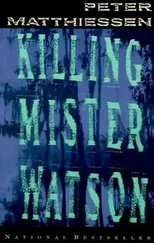
Peter Matthiessen's great American epic-Killing Mister Watson, Lost Man's River, and Bone by Bone-was conceived as one vast mysterious novel, but because of its length it was originally broken up into three books. In this bold new rendering, Matthiessen has cut nearly a third of the overall text and collapsed the time frame while deepening the insights and motivations of his characters with brilliant rewriting throughout. In Shadow Country, he has marvelously distilled a monumental work, realizing his original vision.
Inspired by a near-mythic event of the wild Florida frontier at the turn of the twentieth century, Shadow Country reimagines the legend of the inspired Everglades sugar planter and notorious outlaw E. J. Watson, who drives himself relentlessly toward his own violent end at the hands of neighbors who mostly admired him, in a killing that obsessed his favorite son.
Shadow Country traverses strange landscapes and frontier hinterlands inhabited by Americans of every provenance and color, including the black and Indian inheritors of the archaic racism that, as Watson's wife observed, "still casts its shadow over the nation."
Peter Matthiessen's lyrical and illuminating work in the Watson narrative has been praised highly by such contemporaries as Saul Bellow, William Styron, and W. S. Merwin. Joseph Heller said "I read it in great gulps, up each night later than I wanted to be, in my hungry impatience to find out more and more."
Shadow Country — читать онлайн бесплатно полную книгу (весь текст) целиком
Ниже представлен текст книги, разбитый по страницам. Система сохранения места последней прочитанной страницы, позволяет с удобством читать онлайн бесплатно книгу «Shadow Country», без необходимости каждый раз заново искать на чём Вы остановились. Поставьте закладку, и сможете в любой момент перейти на страницу, на которой закончили чтение.
Интервал:
Закладка:
But Edna scarcely notices, she cannot hear them, just soothes her brood gently as if tending them in dream. In normal times she must be a doting mother, since she is so easy with them even now when she is homeless, with no idea of what awaits them and no money to tide them over. Papa had only a quit-claim on Chatham Bend because his legal claim had not yet been approved: technically, he never owned his own fine house, Walter has learned. It’s so unfair!
Edna has given Walter power of attorney to sell the last shipment of cane syrup-she would have given it to anyone who asked. Walter tried to explain to her that Papa’s huge legal expenses of two years ago had put him deep in debt but she scarcely listened, didn’t seem to care. Nor did she find words to thank him when he advanced her money for her journey, promising to send after her whatever might be salvaged from “the estate”-Papa’s boats and livestock, farm equipment, odds and ends.
When I told her we would rescue Papa from that lonesome sand spit on the Gulf and give him a decent burial here in Fort Myers, she said simply, “Next to Mrs. Watson?” She meant dear Mama! And she didn’t say that with the least resentment but only to be polite, in the tone in which she might have said, “How nice!” After six years of marriage, three young children, and her shocking widowhood, she has never really seen herself as his honest-to-God wife.
Like Walter and Eddie, my stepmother believes that the less we speak of the whole tragedy the better. The important thing is to protect the children from malicious tongues, which will of course be much much easier for her than it is for us. We cannot flee as she can to north Florida, leaving everything behind. She won’t even stay long enough to see her husband buried, having convinced herself that her little family is in danger. For that I will never quite forgive Edna Bethea.
Well, that’s not true, I hope you know that, Mama. I forgive her with all my heart. To think what the poor soul has been through! Her voice is numb and her gaze faraway, and her stunned manner shows how terrified she was, how frantic she is to put all that behind her. Even my girls noticed the way she steals glances back over her shoulder as if that lynch mob, as Lucius calls it, might still catch her!
We took them to the train in the new Ford-their first auto ride. (Little Addison, at least, cheered up a bit.) Edna hurried them aboard to avoid any more awkward talk or prolonged good-byes, preferring to sit huddled in that stuffy car, clutching her infants and her few poor scraps until the train could blow its whistle and bear them far away to somewhere safe.
Through the window, I said I dearly hoped we would meet again one day. She looked past me, then blurted, “No, I don’t think so.” She meant no harm by it and yet she hurt my feelings. Am I being silly, Mama? Have I always been so silly?
The train whistle startled us. The train jolted. I trailed along the platform a little way, my fingertips on the lowered window, seeking her touch. I wanted so to hug her-hug anyone who might share this awful pain. Edna seemed aware of my yearning hand, but not until the final moment did she lay cool fingers shyly upon mine. “Please say our farewells,” she whispered, in tears for the first time, as if those tears had been yanked out of her by that hard jerk of the train.
“Farewell?” I sniffled, walking faster now, too upset to realize she referred to the reburial.
“To Mr. Watson,” Edna said in a hushed voice, still in tears. Yet that lorn face at the window never once looked back nor did she wave. A moment later she passed out of our lives.
NELL DYER

A few days after we heard the awful news, I was picking up Mother’s medicine at Doc Winkler’s drugstore when Carrie Langford came in with her little daughters. Doc Winkler was the only doctor in Lee County and what is more, his shop sold ice cream sodas. Poor Miss Carrie had gone all dark around those big dark eyes, and her glorious thick hair, pinned up too tight in mourning, had lost its shine. Her little Faith came over to me and whispered, kind of scared, “Our Mama’s been just crying and crying and we don’t know why.”
Darn it all if I don’t bust out with: “She’s crying cause some bad men shot your grandpa!” Those terrible words flew out like bats the moment I opened my mouth. Her grandpa had been real good to me at Chatham, so naturally I was upset, too, but at my age of almost twelve, I should have known better!
Hearing those words, Faith became hysterical, Grandpa, Grandpa! She would not stop wailing. Then Betsy started, Grandpa, Grandpa! because five-year-olds need attention even worse. They would not stop until their mother warned them to get their grief under control if they still wanted ice cream sodas. And just that moment-would you believe it?-the doorbell tinkled and in walked the first real live Indian we ever saw. Came right through the door in a high silk hat with an egret plume and a Seminole men’s frock with red, gold, and black stripes. This Indian walked straight out of the Glades into Doc Winkler’s Drug and Soda!
Betsy switched from Grandpa! Grandpa! to Mama! Mama!, never missed a breath, and Faith cried, “Mama? Is he going to scalp us?” Because back in those days, folks still talked about the Seminole Wars and the last redskins lurking in the Cypress and Shark River. Later I learned that Old Ice Cream Eater at Doc Winkler’s had been threatened with death by his own tribe for hanging around palefaces and gobbling paleface ice cream, too, for all I know.
Miss Carrie said, “No, child, that is Mr. Billie, he’s not here to kill little girls but only to enjoy a bowl of ice cream.” And we watched Mr. Billie hike that skirt way up to seat himself more comfortably upon his stool, and lo and behold, he didn’t have a stitch on underneath! Plopped his bare old brown behind right down and dropped that skirt over the stool and borrowed a toothpick off the counter to dig into his ear while he was waiting!
My mother made clothes for Mrs. Langford and her friends and was deathly afraid of losing her modest livelihood. When she found out what I’d said to those Langford girls, she burst into tears. Only a month before she’d had to send me over to apologize to Miss Carrie for having picked a beautiful big yellow rose that escaped out through her pickets and bloomed over the sidewalk. I picked that rose for my dear mother’s birthday present because she was sick and I didn’t have a penny, but not knowing that, my poor ma wept, saying, This child will be the death of me. I remembered those words on the day she died only a few years later.
When I went over to apologize, Miss Carrie invited me in for milk and pie. Neither she nor her brother Mr. Eddie visited Chatham while my family lived there so all I really knew about her was that Lucius Watson adored her instead of me.
Well, no wonder! Miss Carrie was beautiful, with a bountiful bosom and long soft brown hair and a complexion clear as a cowry shell and a faint scent of wildflowers-just an amazing person altogether and a good, good woman. And here was poor Nell with her home haircut close-cropped high above the ears so my ma could wash my neck. On top it shot up crazily like a hair fountain and fell down any old way over my spotty face. As Lucius teased in later years, I looked kind of odd and spiky-“like a wind-borne seed hunting some place to attach,” those were his words-but in my ma’s mirror I looked like some insane girl poking her head out of a bush.
Maybe because I was so uncouth, Miss Carrie insisted that I join her and her girls in their weekly tutoring in the ladylike speech and genteel deportment expected of a bank president’s family. Because I remembered her daddy very kindly and we both loved Lucius, we were soon fast friends.
Читать дальшеИнтервал:
Закладка:
Похожие книги на «Shadow Country»
Представляем Вашему вниманию похожие книги на «Shadow Country» списком для выбора. Мы отобрали схожую по названию и смыслу литературу в надежде предоставить читателям больше вариантов отыскать новые, интересные, ещё непрочитанные произведения.










Обсуждение, отзывы о книге «Shadow Country» и просто собственные мнения читателей. Оставьте ваши комментарии, напишите, что Вы думаете о произведении, его смысле или главных героях. Укажите что конкретно понравилось, а что нет, и почему Вы так считаете.