John Lanchester - Capital
Здесь есть возможность читать онлайн «John Lanchester - Capital» весь текст электронной книги совершенно бесплатно (целиком полную версию без сокращений). В некоторых случаях можно слушать аудио, скачать через торрент в формате fb2 и присутствует краткое содержание. Жанр: Современная проза, на английском языке. Описание произведения, (предисловие) а так же отзывы посетителей доступны на портале библиотеки ЛибКат.
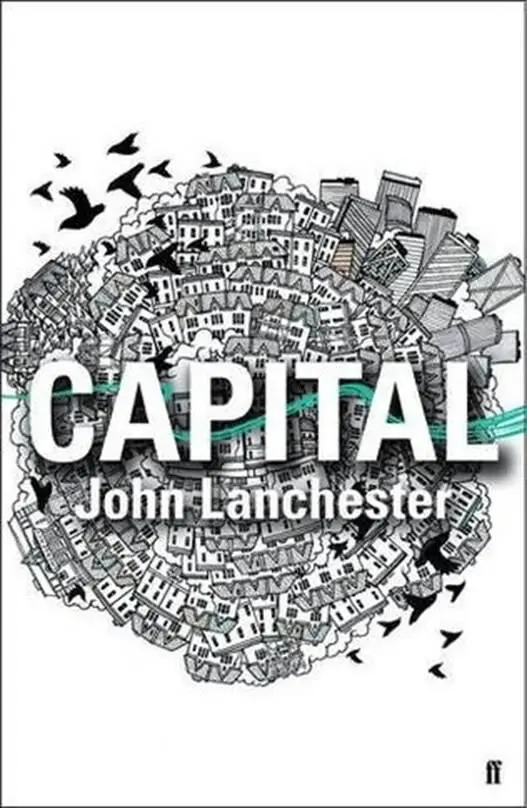
- Название:Capital
- Автор:
- Жанр:
- Год:неизвестен
- ISBN:нет данных
- Рейтинг книги:4.5 / 5. Голосов: 2
-
Избранное:Добавить в избранное
- Отзывы:
-
Ваша оценка:
Capital: краткое содержание, описание и аннотация
Предлагаем к чтению аннотацию, описание, краткое содержание или предисловие (зависит от того, что написал сам автор книги «Capital»). Если вы не нашли необходимую информацию о книге — напишите в комментариях, мы постараемся отыскать её.
Pepys Road: an ordinary street in the capital. Today, through each letterbox along this ordinary street drops a card with a simple message: We Want What You Have. At forty, Roger Yount is blessed with an expensively groomed wife, two small sons and a powerful job in the city. Freddy Kano, teenage football sensation, has left a two-room shack in Senegal to follow his dream. Traffic warden Quentina has exchanged the violence of the police in Zimbabwe for the violence of the enraged middle classes. Elsewhere in the Capital, Zbigniew has come from Warsaw to indulge the super-rich in their interior decoration whims. These are just some of the unforgettable characters in Lanchester's unputdownable masterpiece novel of contemporary urban life.
Capital — читать онлайн бесплатно полную книгу (весь текст) целиком
Ниже представлен текст книги, разбитый по страницам. Система сохранения места последней прочитанной страницы, позволяет с удобством читать онлайн бесплатно книгу «Capital», без необходимости каждый раз заново искать на чём Вы остановились. Поставьте закладку, и сможете в любой момент перейти на страницу, на которой закончили чтение.
Интервал:
Закладка:
A police van was outside the building; it was stopped in the middle of the street with its back door open, facing the flat’s front door. If it were a civilian piece of parking it would have been illegal. The man pushing Shahid, always keeping him at the limit of his balance so he felt he could fall at any moment, pushed him against the back of the van so that he barked his knees. Then another policeman banged on the back of the van three times, and another one opened it from the inside, and he was pushed, roughly but not violently, upwards, and hoicked into the back of the vehicle, where two policemen, not firearms officers, were sitting waiting for him. The van had benches along the sides, and a railing from which sets of handcuffs hung suspended. There was a thick glass wall between the passenger compartment and the front of the van, and there was also a separate compartment, a kind of cage with metal bars, in which a prisoner could be kept separate from other passengers. Shahid could not stop himself from thinking random, completely inappropriate thoughts, and one of them, looking at this cage, was: if I was Hannibal Lecter, they’d put me in there.
The two policemen who had shoved and pushed him into the van sat down on either side of him, so now there were four of them in the back. The door was slammed shut from the outside, and the van moved off. Both of the police across from him were staring at him, one of them smiling, the other scowling. The scowling policeman was chewing gum. No one had spoken to Shahid yet, and he began to feel, as well as confused and angry and frightened, a wave of stubbornness. Whatever this is, it’s completely wrong, and I’m not going to play along with it.
The van was travelling at speed. Not much traffic at this time of the morning.
71
From all the police dramas Shahid had seen, he knew that what would happen next was that he would be read his rights, all that stuff about you don’t have to say anything but if you don’t it means you’re guilty, then be taken up to a counter in a police station and booked, have his details taken, his personal belongings logged, then an interview room, and at some point he’s allowed to call his lawyer, all that. If you were lucky the police person in charge of your case would be Helen Mirren, if you were unlucky it would be David Jason, but underneath they were the same hard but fair basically decent truth-seeker.
It didn’t work like that. The van, noisy on the outside and silent within, drove for about twenty minutes, then pulled up in an underground garage. Shahid was pulled and manhandled out of the van, then shoved into a lift, the four policemen with him all the time. Then he was led down a corridor decorated in institutional green paint, and shoved into a brightly lit room, and left on his own. He still hadn’t been spoken to, not once.
There was a toilet in one corner of the room, with no lid and, now that he studied it, no seat. Shahid looked at it for a moment. Rooms did not tend to have toilets in them. There were four strip lights, of which one had a slight flicker, giving the whole room the sense that it was vibrating, uneven, as if something had gone wrong with your head and you were about to have a stroke, an aneurysm, a freak-out. There was a single folding chair at a table with a plastic wipe-clean top, and a horizontal plank in the corner of the room – no, looking at it, it wasn’t a plank. It was a small single bed whose sheet and blanket were folded so tightly they looked like a tablecloth. There was no pillow. The earliness of the morning and the horror of what was happening had slowed Shahid’s brain, but now he realised: this was a cell. He was in a cell. Something had gone horribly, eerily, impossibly, grotesquely wrong. He had an intuition what it was, too. In fact it could really be only one thing. But now there was nothing to do but wait.
72
Detective Inspector Mill had a talent for distinguishing between what needed to be done and what didn’t, between make-work and real work; he was good at asking people to do things and letting them get on with it. A clear brief and a free hand, that was the formula, and how he looked forward to being able to apply it all day long.
At the moment, though, there were times when he had to do a lot of his own shitwork. Routine legwork, routine paperwork, other people’s idea of how his time should be spent. That was how it was. He didn’t enjoy that so much, and a part of him couldn’t help but feel, when he was doing routine repetitive work, that it was the equivalent of harnessing a racehorse to a plough. He was philosophical about it, and his police career would either take off or it wouldn’t; for now he kept his head down and did what he was told. Today, that meant a. getting hold of a list of traffic wardens who served the area including Pepys Road, and b. going to talk to them.
Mill knew that being a traffic warden is a lousy job and as such is done by recent immigrants. They tend to cluster together – somebody from some part of the world gets a job, tells their family and their mates, they get jobs too. Same the world over. In this part of town, most of the traffic wardens were from West Africa, a fact which caused racial tensions, especially with indigenous blacks of Caribbean descent. Mill was braced for a wasted day talking to wary, uncommunicative West African traffic wardens whose skills in English wouldn’t be great and who would be pretending they were even worse than they were. I could quit, he thought. I could quit right now… and that thought helped him to get out of bed and get on with it.
The morning’s work began with a visit to the offices of Control Services, the company which supervised the borough’s parking. The contract for parking had been enforced with such lack of sensitivity, such aggressive pursuit of the officially non-existent quotas and bonuses, such a festival of clamped and towed residents, such a bonanza of gotcha! tickets and removals, such an orgy of unjust, malicious, erroneous, and just plain wrong parking tickets, that in local elections it had cost the incumbent council control of the borough not once but twice. And there was nothing the borough could do, because the terms of the contract were set out by central government, so that there was no effective control, at local level, of this local service. It was a local government classic: it was a total cock-up, it was completely unfixable, and it was nobody’s fault.
A sense of guilt or upset at this state of affairs was hard to discern at the head offices of Control Services; in fact it would be hard to imagine a more fully developed atmosphere of not noticing and not caring. Several bored men and women sat in front of computer monitors while two radios competed, the far end of the office favouring Magic FM while the end by the door preferred Heart. It was OK at either end of the room, but the crossfire in the middle was hard to take. A man with a narrow ratlike face came over to Mill and stood holding his hands clasped in front of him and Mill could tell that the man knew he was a policeman. Mill asked for and was given his list of names and addresses, and went out to wander around the beat and find traffic wardens.
It was a long morning. Mill spoke to a Ghanaian and four Nigerians, none of whom gave any sign of knowing anything about Pepys Road or We Want What You Have. They were variously wary, sullen, and blank, but none of them, to his eyes, looked guilty, there were no clues and no tells. In Pepys Road itself he tried to interview a Kosovan warden who seemed not to speak any English at all, and barely to understand any either. Gradually this whole idea came to seem like a stupid mistake, a notion from another world – the fact that these people were so cut off from the area they worked in was part of the problem, rather than the key to the mystery.
Читать дальшеИнтервал:
Закладка:
Похожие книги на «Capital»
Представляем Вашему вниманию похожие книги на «Capital» списком для выбора. Мы отобрали схожую по названию и смыслу литературу в надежде предоставить читателям больше вариантов отыскать новые, интересные, ещё непрочитанные произведения.






Обсуждение, отзывы о книге «Capital» и просто собственные мнения читателей. Оставьте ваши комментарии, напишите, что Вы думаете о произведении, его смысле или главных героях. Укажите что конкретно понравилось, а что нет, и почему Вы так считаете.