John Lanchester - Capital
Здесь есть возможность читать онлайн «John Lanchester - Capital» весь текст электронной книги совершенно бесплатно (целиком полную версию без сокращений). В некоторых случаях можно слушать аудио, скачать через торрент в формате fb2 и присутствует краткое содержание. Жанр: Современная проза, на английском языке. Описание произведения, (предисловие) а так же отзывы посетителей доступны на портале библиотеки ЛибКат.
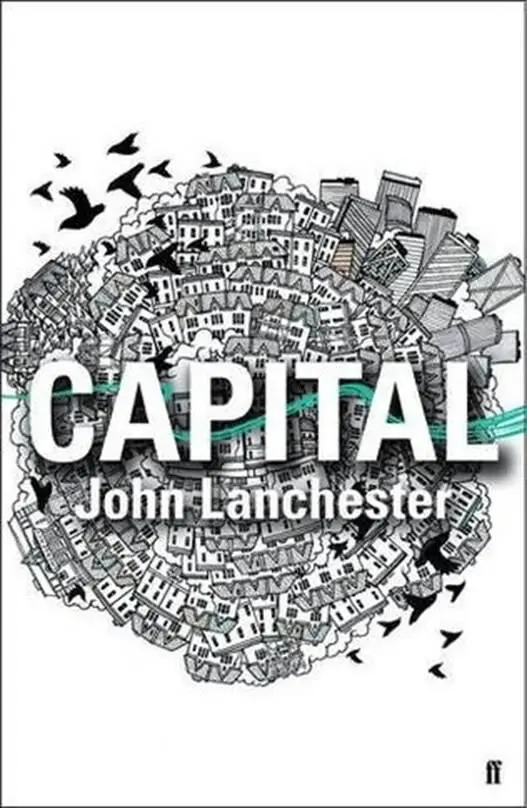
- Название:Capital
- Автор:
- Жанр:
- Год:неизвестен
- ISBN:нет данных
- Рейтинг книги:4.5 / 5. Голосов: 2
-
Избранное:Добавить в избранное
- Отзывы:
-
Ваша оценка:
Capital: краткое содержание, описание и аннотация
Предлагаем к чтению аннотацию, описание, краткое содержание или предисловие (зависит от того, что написал сам автор книги «Capital»). Если вы не нашли необходимую информацию о книге — напишите в комментариях, мы постараемся отыскать её.
Pepys Road: an ordinary street in the capital. Today, through each letterbox along this ordinary street drops a card with a simple message: We Want What You Have. At forty, Roger Yount is blessed with an expensively groomed wife, two small sons and a powerful job in the city. Freddy Kano, teenage football sensation, has left a two-room shack in Senegal to follow his dream. Traffic warden Quentina has exchanged the violence of the police in Zimbabwe for the violence of the enraged middle classes. Elsewhere in the Capital, Zbigniew has come from Warsaw to indulge the super-rich in their interior decoration whims. These are just some of the unforgettable characters in Lanchester's unputdownable masterpiece novel of contemporary urban life.
Capital — читать онлайн бесплатно полную книгу (весь текст) целиком
Ниже представлен текст книги, разбитый по страницам. Система сохранения места последней прочитанной страницы, позволяет с удобством читать онлайн бесплатно книгу «Capital», без необходимости каждый раз заново искать на чём Вы остановились. Поставьте закладку, и сможете в любой момент перейти на страницу, на которой закончили чтение.
Интервал:
Закладка:
When Freddy first arrived it was clear he needed to put on a few kilos in his upper body, otherwise the bigger and older men would be able, if and when they caught him, to muscle him off the ball; and maybe the extra weight would mean he lost a yard of speed. That had happened before with many other young footballers. But it didn’t with Freddy. Not that he put on the bulk; it turned out that he didn’t need it. His running style was so odd, so unpredictable and awkward and elusive, it was as if it short-circuited something in defenders’ brains. He was like an eel. They just couldn’t get a proper hold on him. The manager was very reluctant to believe this, but he finally accepted the evidence of his eyes, gathered over many fractions of games, leading up to entire second halves. OK, he eventually conceded. Freddy was ready. Or even if he wasn’t ready, he was still going to play.
Freddy, in his match-day strip and tracksuit, sat on the bench by his locker and did up his boots. On Mickey’s advice, they hadn’t yet signed a contract for the boots, so he was wearing a pair of Predators with the logos blacked out. If today went well, and there were other days like today, his shoe contract would be worth many millions. Freddy couldn’t care less about that, because he already had all the money and all the stuff he would ever need, but it mattered to Mickey and to his father, so he did what he was told. The only thing that mattered for Freddy was football. Everything else was to some degree fake.
A pair of shiny brown shoes appeared in front of him. Freddy looked up. It was the manager with the owner of the club behind him. The owner did not often come to the dressing room and this was, in nine months at the club, only the fourth time Freddy had met him: the others were when he’d first arrived, at an end-of-season club event, and once in the dressing room when Freddy had come on with fifteen minutes to go against Blackburn, and scored the winning goal. The owner smiled down at Freddy in his uneasy way, his eyes moving about as they always did, his air as always that of a man who wished to be somewhere else. Freddy caught a look in the manager’s eyes, and stood up. The owner waved him back down again but Freddy stayed standing.
‘Good luck today,’ the owner said in his slow, clear English. ‘Be fast!’
‘Yes sir. Thank you. I will try my best.’
‘More than try!’ said the owner. ‘Do!’ He was laughing; this was a great joke. He turned to the manager. ‘Do!’ The manager joined in his employer’s laughter. Still laughing and nodding, the owner moved on. Freddy sat back down. Across the room he caught the eye of the club’s longest-serving player, a central defender who had come up through the club’s youth system nearly twenty years ago, and never left. He winked at Freddy.
Then they were into the pre-match ritual: the walk on the pitch, the stretch and warm-up, the last words from the manager, who said what he always said, a saying that was partly a good-luck charm, partly a mantra, and partly a piece of good advice: ‘We are better than they are. The only way they win is if they work harder than us. So if we work harder than them, we win. So that’s what we’ll do.’ And then they were in the tunnel, the noise level changing as the crowd sounds filtered back into the enclosed space, the other team there too, jogging on the spot, their shoes scratching loudly on the cement flooring, the mascots in front holding hands with the captains, the referee looking back to check that they were all there, and then they were running out onto the pitch, the adrenalin and the exertion and the noise and the sudden emergence into daylight blending into each other so that they were all one thing. Freddy felt as excited and nervous as he could ever remember. He was carrying a ball: as he came onto the pitch he kicked it ahead of him, hard, and put on a burst to get to it, and the crowd shouted and gave the chant they had started to give for him: Fredd-y, Fredd-y. He pretended not to notice, not to be pleased, but his heart was glowing. Then he and the striker passed the ball between them. He flicked it up onto his head and nodded it off the pitch. He was ready. Freddy knew that his father was there, in the directors’ box, and knew also that he wouldn’t be able to see him if he looked for him – which was perfect.
He had his first touch within a minute of the kick-off. They knew he would be nervous so the holding midfielder, who was the player who made the team run – who covered and tackled, who got up and down the pitch, who broke up the opposition’s moves and did the short-passing to keep his own side in constant motion, who never seemed to do anything particularly noteworthy but never made a mistake and never had a bad game – knocked a short ball to him with his defender a couple of metres away. Freddy came to it, took it and turned in one move, and saw that the defender had dropped off him; he hadn’t tried to match Freddy’s speed to the ball. That meant he knew about him and was being careful. They were nervous of him: a good sign. He took two strides and knocked a pass at forty-five degrees to the striker, who tried to flick it back to him but was blocked by his close marker. The ball ricocheted back and went into touch off the striker.
They were playing well today. They had most of the ball but no chances in the first ten minutes. There were days with this club, these players, when the momentum felt irresistible. The opponents were just there because they had to be there, but they were only there to provide a game so that Freddy’s team could turn out the winners. This felt like one of those days. The home team were quicker, more fluid; it was as the manager had said, they were just plain better. Ten minutes into the game, the central midfielder was carrying the ball forward, and Freddy decided to try something. His defender was going to hang off him if he could; he’d been warned not to get too close, where Freddy could turn-and-burn him. OK. Freddy had no theories about anything, as far as he was aware, but he had an instinctive understanding of one strategy in particular: do the thing your opponent doesn’t want. So Freddy, instead of looking for space away from the defender, drifted closer to him, forcing the man to back off even further – basically, he had to run away from him, back-pedalling, or he had to accept that he’d be caught in no man’s land, and step closer, exactly where he didn’t want to be. So the full-back stepped in to Freddy, just as the midfielder shaped his bandy right leg to pass him the ball. Perfect. Freddy took a half-pace towards the ball, then checked, and with the defender lunging towards him, switched his weight onto his left leg and as the pass got to him, dummied and pivoted his body in one movement, and that was it, he was gone. Just as he was thinking, I’ve beaten him, the big man, who had dived in late with his right leg fully extended and with all his mass behind his lunge, a slightly reckless tackle but without ill intent, connected with the place where the ball had been less than a tenth of a second before, a point that was now occupied by Freddy’s fully extended left leg. The defender’s leg hit Freddy’s ten inches above the ankle, and spectators sitting as far as fifteen rows back heard the bone crack. Even people who didn’t hear that could see Freddy screaming and rolling his upper body from side to side, and the fans right at the back who couldn’t hear could see that the lower part of his leg was bent back under his knee at an angle that was not possible.
56
On a warm morning in May, two weeks after his failed attempt to break up with Davina, Zbigniew went to the front door of 42 Pepys Road. He had heard on the street’s grapevine that the owner needed some redecoration work done, so had called to make an appointment and give a quote. Work, thank God for work. While he was at work he didn’t have to think about Davina and about the dead end, the impasse, the stuck-with-his-leg-in-a-bear-trap disaster he had made of his own life; he managed not to think about those things for ten or fifteen minutes at a time. They were a good ten or fifteen minutes, the best of his day.
Читать дальшеИнтервал:
Закладка:
Похожие книги на «Capital»
Представляем Вашему вниманию похожие книги на «Capital» списком для выбора. Мы отобрали схожую по названию и смыслу литературу в надежде предоставить читателям больше вариантов отыскать новые, интересные, ещё непрочитанные произведения.






Обсуждение, отзывы о книге «Capital» и просто собственные мнения читателей. Оставьте ваши комментарии, напишите, что Вы думаете о произведении, его смысле или главных героях. Укажите что конкретно понравилось, а что нет, и почему Вы так считаете.