John Lanchester - Capital
Здесь есть возможность читать онлайн «John Lanchester - Capital» весь текст электронной книги совершенно бесплатно (целиком полную версию без сокращений). В некоторых случаях можно слушать аудио, скачать через торрент в формате fb2 и присутствует краткое содержание. Жанр: Современная проза, на английском языке. Описание произведения, (предисловие) а так же отзывы посетителей доступны на портале библиотеки ЛибКат.
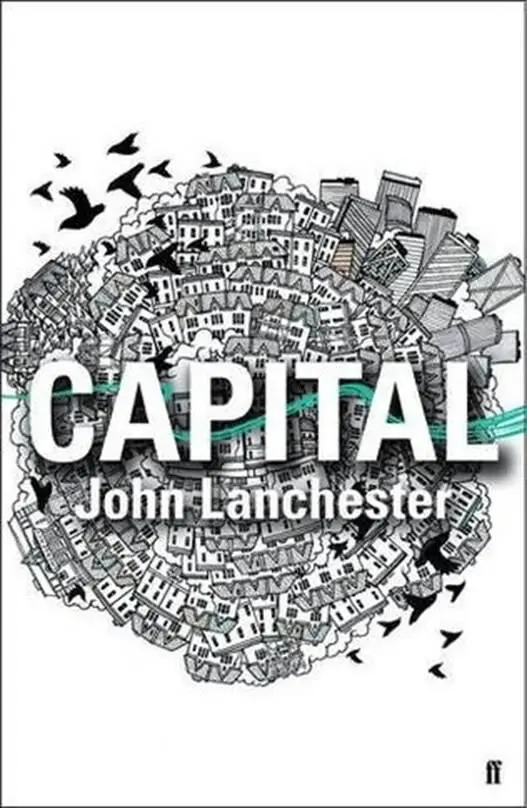
- Название:Capital
- Автор:
- Жанр:
- Год:неизвестен
- ISBN:нет данных
- Рейтинг книги:4.5 / 5. Голосов: 2
-
Избранное:Добавить в избранное
- Отзывы:
-
Ваша оценка:
Capital: краткое содержание, описание и аннотация
Предлагаем к чтению аннотацию, описание, краткое содержание или предисловие (зависит от того, что написал сам автор книги «Capital»). Если вы не нашли необходимую информацию о книге — напишите в комментариях, мы постараемся отыскать её.
Pepys Road: an ordinary street in the capital. Today, through each letterbox along this ordinary street drops a card with a simple message: We Want What You Have. At forty, Roger Yount is blessed with an expensively groomed wife, two small sons and a powerful job in the city. Freddy Kano, teenage football sensation, has left a two-room shack in Senegal to follow his dream. Traffic warden Quentina has exchanged the violence of the police in Zimbabwe for the violence of the enraged middle classes. Elsewhere in the Capital, Zbigniew has come from Warsaw to indulge the super-rich in their interior decoration whims. These are just some of the unforgettable characters in Lanchester's unputdownable masterpiece novel of contemporary urban life.
Capital — читать онлайн бесплатно полную книгу (весь текст) целиком
Ниже представлен текст книги, разбитый по страницам. Система сохранения места последней прочитанной страницы, позволяет с удобством читать онлайн бесплатно книгу «Capital», без необходимости каждый раз заново искать на чём Вы остановились. Поставьте закладку, и сможете в любой момент перейти на страницу, на которой закончили чтение.
Интервал:
Закладка:
‘I hope not,’ was all Shahid said.
‘Would it be such a bad thing if he were’ – Usman waggled his fingers in contemptuous inverted commas – ‘“up to something”? Would it be so bad if somebody were doing something? Rather than just passively accepting a state of injustice and oppression?’
‘You are a child,’ said Ahmed, instantly very angry. ‘You don’t have any real opinions, you just strike attitudes to try and create an effect. It would be a boring enough habit in a teenager but in a man your age it’s pathetic.’
‘You were never a teenager, though, were you, Ahmed?’ said Usman, now just as angry. ‘You were always half-dead. Injustice? Oppression? Not your problem. As long as there was enough on your plate. Why care about anyone else? Why care about your fellow Muslims suffering as long as you’ve got enough food to stuff into your stomach?’
‘If you had ever cared for or looked after anyone in your life, you might know something about the responsibility of providing food,’ said Ahmed.
Rohinka, loudly and deliberately, gave a cough. They looked at her, and she looked at the two children. The brothers recollected themselves and decided to calm down.
‘This is very good,’ said Usman, glancing down at his plate and then up from it, and declaring peace. There was an air of reluctance in the way he said it, as if he were making an unwilling concession to the existence of a physical pleasure. Rohinka smiled and they began talking about cooking, which had been one of Usman’s interests before he went all super-religious.
Shahid grew quiet. He was irritated by Iqbal, more irritated than he could easily say, and that was against the grain of his character, because he prided himself on being the least easily annoyed member of the Kamal family. All the Kamals were fluent in irritation. They loved each other but were almost always annoyed by each other, in ways that were both generalised and existential (why is he like that?) and also highly specific (how hard is it to remember to put the top back on the yoghurt?). Shahid had been very angry indeed in his late teens, angry with everything and everyone, and especially angry about the state of the world, but when he came back from his travels he had, he discovered, been able to let that feeling go. It was part of growing up – which was one of the reasons Shahid knew that Ahmed was wrong about his not having grown up. He didn’t want to be tied down, not quite yet, but that wasn’t the same thing as still being a child. Ahmed himself was irritating, and yet Shahid didn’t feel irritated. That was how grown-up he was.
Which was why Iqbal was such an issue. Shahid couldn’t remember the last time he had felt so annoyed by anyone; and the secret at the heart of his irritation, which he couldn’t quite bring himself to say to his brothers and sister-in-law, was that there was something he didn’t trust about Iqbal. There was something not right about him; not sinister or nefarious, not necessarily, but not quite right. Iqbal liked to have an aura of mystery about him, which was irritating in itself, and he did it in a way that left Shahid feeling uncomfortable. What made this all the more irritating was that if he told his family about it they would blame him: say it was his fault for having travelled in the first place, ask him what did he expect if he came back from Chechnya dragging jihadi mates behind him and letting them crash on his sofa? Just enough of him acknowledged just enough truth in this to make it infuriating to hear; so, because the conversation would turn out to be infuriating, he couldn’t even begin it. And nothing is more annoying than the thing you can’t say.
Fatima seemed to feel that enough time had passed without her getting any attention. She pointed a plastic spoon at her father and said, ‘Daddy! You promised sweeties!’
Mohammed was always much calmer than his sister, more self-contained. He spent enormous amounts of time pottering about and entertaining himself. But he knew a call to arms when he heard one.
‘Seeties,’ he said. ‘Seeties!’
‘You didn’t,’ said Rohinka warningly to her husband, hands on hips, the position Ahmed remembered from his cricketing days as the ‘double teapot’.
‘He’s in trouble now,’ Shahid said cheerfully to Usman.
‘Only after they’d eaten,’ said Ahmed. To the children: ‘After! Not now. After!’
His wife, daughter and son all looked at him with suspicion.
‘After!’ he said again. They all slowly chose to believe him and order was restored. Fatima went back to swinging her legs and semi-eating, semi-playing with her curry, and Mohammed, who had finished a while ago and had his bowl taken away, went back to shuffling stray pieces of rice around on the tray table of his high chair. Rohinka made offering gestures with a serving spoon, to which the brothers variously groaned and patted their stomachs. Seeing the children distracted, Ahmed lowered his voice and leaned forward.
‘There is the question of our mother to discuss.’
This was the real reason for the lunch. An air of seriousness came over the proceedings. Shahid pursed his lips. He said:
‘Have you spoken about a visit to’ – and then suddenly switching to an exaggerated Bollywood accent and widening his eyes so that the whites flashed – ‘mamaji?’
‘No, but she’s expecting an invitation.’
‘So invite her,’ said Usman. He was only partly bluffing: Mrs Kamal was at her easiest, not all that easy but her easiest, with her last-born son. Shahid, who was next in line to get married, would have it much worse, and so would Ahmed, who while safe on the marriage front, would be the brother who had to put their mother up, and who therefore would be open to multiple bases for advice, criticism, fault-finding, factual correction and silent disapproval: the way he ran his business, the way he ate and how much he ate, the way he brought up his children, his conduct as a husband, as a Muslim, as a son. Mrs Kamal visited roughly once every two years, and no one looked forward to it. This would be her first visit since the immediate aftermath of Mohammed’s birth.
‘It’ll be nice to see Mrs Kamal,’ said Rohinka, sweetly. Ahmed swivelled around and glared at her. But Rohinka – it was part of what made her sexy – was a genius at mock-innocence. She fluttered and dimpled at Ahmed from her place by the sink. He gave a snort.
Shahid realised that he was sitting with his head in his hands. His mother would without question be on at him about getting married, an arranged marriage at that – she might well have a candidate in mind. If she didn’t have a specific person she would certainly have a plan. She would bully him into agreeing to come to Lahore to assess suitable candidates. He had done this once before, two years ago, and it was excruciating, like a sustained assault on his sense of himself, on everything he wanted to be as a man, a free spirit, a traveller, a citizen of the world, a man who had seen and done things but was still young; sitting in a series of Lahore rooms with a series of variously embarrassed Pakistani women, some of them as reluctant as him, some (and this was much worse) evidently quite keen on the idea. At this point, it would be hard to find anything he more exactly didn’t want to do than go to Pakistan and leave Iqbal in his flat with his smelly feet and his opinions… Then Shahid had an idea. Maybe he could use the fact that he had to go to Lahore as a way of getting Iqbal out of his flat…
‘She’ll be on at me. What have I done to deserve this?’ said Shahid. He would like to say more – would like to say much more – but it was hard to, because Rohinka and Ahmed had had an arranged marriage, so it would be grossly insulting to go into his objections. And there was also the difficult-to-ignore fact that their marriage was a self-evident roaring success. Ahmed loved Rohinka and she (less explicably in Shahid’s view) loved him back; and she was also seriously foxy. So arranged marriages were outdated, wrong in principle, demeaning, no better than a form of licensed prostitution (but then so was Western marriage), patriarchal, sexist, and yet on the other hand if you ended up with someone like Rohinka…
Читать дальшеИнтервал:
Закладка:
Похожие книги на «Capital»
Представляем Вашему вниманию похожие книги на «Capital» списком для выбора. Мы отобрали схожую по названию и смыслу литературу в надежде предоставить читателям больше вариантов отыскать новые, интересные, ещё непрочитанные произведения.









Обсуждение, отзывы о книге «Capital» и просто собственные мнения читателей. Оставьте ваши комментарии, напишите, что Вы думаете о произведении, его смысле или главных героях. Укажите что конкретно понравилось, а что нет, и почему Вы так считаете.