John Irving - Until I Find You
Здесь есть возможность читать онлайн «John Irving - Until I Find You» весь текст электронной книги совершенно бесплатно (целиком полную версию без сокращений). В некоторых случаях можно слушать аудио, скачать через торрент в формате fb2 и присутствует краткое содержание. Город: New York, Год выпуска: 2005, ISBN: 2005, Издательство: Random House, Жанр: Современная проза, на английском языке. Описание произведения, (предисловие) а так же отзывы посетителей доступны на портале библиотеки ЛибКат.
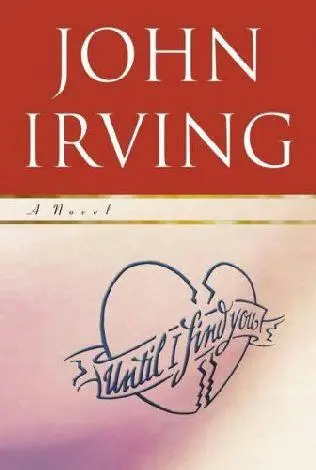
- Название:Until I Find You
- Автор:
- Издательство:Random House
- Жанр:
- Год:2005
- Город:New York
- ISBN:978-1400063833
- Рейтинг книги:5 / 5. Голосов: 1
-
Избранное:Добавить в избранное
- Отзывы:
-
Ваша оценка:
Until I Find You: краткое содержание, описание и аннотация
Предлагаем к чтению аннотацию, описание, краткое содержание или предисловие (зависит от того, что написал сам автор книги «Until I Find You»). Если вы не нашли необходимую информацию о книге — напишите в комментариях, мы постараемся отыскать её.
Alice and Jack abandon their quest, and Jack is educated at schools in Canada and New England — including, tellingly, a girls’ school in Toronto. His real education consists of his relationships with older women — from Emma Oastler, who initiates him into erotic life, to the girls of St. Hilda’s, with whom he first appears on stage, to the abusive Mrs. Machado, whom he first meets when sent to learn wrestling at a local gym.
Too much happens in this expansive, eventful novel to possibly summarize it all. Emma and Jack move to Los Angeles, where Emma becomes a successful novelist and Jack a promising actor. A host of eccentric minor characters memorably come and go, including Jack’s hilariously confused teacher the Wurtz; Michelle Maher, the girlfriend he will never forget; and a precocious child Jack finds in the back of an Audi in a restaurant parking lot. We learn about tattoo addiction and movie cross-dressing, “sleeping in the needles” and the cure for cauliflower ears. And John Irving renders his protagonist’s unusual rise through Hollywood with the same vivid detail and range of emotions he gives to the organ music Jack hears as a child in European churches. This is an absorbing and moving book about obsession and loss, truth and storytelling, the signs we carry on us and inside us, the traces we can’t get rid of.
Jack has always lived in the shadow of his absent father. But as he grows older — and when his mother dies — he starts to doubt the portrait of his father’s character she painted for him when he was a child. This is the cue for a second journey around Europe in search of his father, from Edinburgh to Switzerland, towards a conclusion of great emotional force.
A melancholy tale of deception,
is also a swaggering comic novel, a giant tapestry of life’s hopes. It is a masterpiece to compare with John Irving’s great novels, and restates the author’s claim to be considered the most glorious, comic, moving novelist at work today.
Until I Find You — читать онлайн бесплатно полную книгу (весь текст) целиком
Ниже представлен текст книги, разбитый по страницам. Система сохранения места последней прочитанной страницы, позволяет с удобством читать онлайн бесплатно книгу «Until I Find You», без необходимости каждый раз заново искать на чём Вы остановились. Поставьте закладку, и сможете в любой момент перейти на страницу, на которой закончили чтение.
Интервал:
Закладка:
This didn’t win Emma many friends among screenwriters, but what really insulted the industry was that Emma said she wasn’t interested in writing a screenplay herself—especially not an adaptation of The Slush-Pile Reader. In the novel, she’d already made the point that the story was one third porn film; no one would attempt to make a serious movie out of that material. To virtually assure herself that no one would, Emma entangled the film rights to her novel with the kind of approvals never granted to writers—not to first novelists, anyway. She again asserted that she had no interest in adapting The Slush-Pile Reader herself, yet she insisted on retaining script approval, should anyone else be enough of a fool to write a screenplay, and she insisted on having cast approval and director approval—even final cut. The Slush-Pile Reader couldn’t be made as a movie under those outrageous terms.
When Emma showed up at all the usual places—she took Jack with her, more and more—it was widely assumed that she was doing research for another Hollywood novel, but Jack didn’t know (at the time) that this was the case. He thought she just liked to eat and drink. But Emma saw herself as a specter sent to remind the studio execs that there was such a thing as a script reader who could write.
In the movie business, they were already speaking admiringly of The Slush-Pile Reader as “not makable,” which could be quite a compliment in the industry—provided you didn’t make a habit of it.
Jack worried about Emma. She had bought the house they’d been renting in Santa Monica, for no good reason. The move from Venice had irritated her; she said she didn’t want to move again. But if the house in Santa Monica was no prize to rent, it was just plain stupid to buy it.
It was a two-story, three-bedroom house on the downhill end of Entrada Drive—near where Entrada ran into the Pacific Coast Highway. You could hear the drone of traffic on the PCH over the air-conditioning. Furthermore, as if Emma and Jack were permanently drawn to the perfume of restaurant Dumpsters, the driveway of the house intersected the alley behind an Italian restaurant. It wasn’t sushi they smelled—it was more like old eggplant parmigiana.
But they were living on Entrada Drive when Emma’s first novel was published, and she became what she called (with no small amount of pride) “a self-supporting novelist.” Her revenge on having wasted her time as a film major was complete; she had made it in the industry’s hometown by writing, of all things, a novel. Staying in the house on Entrada, even buying the stupid place, was another way of thumbing her nose at the industry. Emma had come to L.A. as an outsider; it meant a lot to her to stay an outsider.
“I’m not moving to Beverly Hills, baby cakes.”
“Yeah, well—we sure do a lot of eating there,” Jack reminded her.
It was a lot of late-night eating, for the most part. Jack didn’t drink, so he was always the driver. Emma could drink a bottle of red wine by herself—usually before she finished her dinner. She had a special fondness for Kate Mantilini in Beverly Hills.
“Kate Mantilini is quite a distance to travel for a steak sandwich and mashed potatoes,” Jack complained; he didn’t eat bread, not to mention mashed potatoes. But Emma loved to eat at the long bar that ran the length of the restaurant. The industry crowd all knew her and asked her how the new novel was coming.
“It’s coming,” was all Emma would say. “Have you met my roommate, Jack Burns? He was the chick in My Last Hitchhiker— I mean the hot one.”
“I was the hitchhiker, ” Jack would explain. Despite Myra Ascheim telling him to lose the stubble, he was usually growing a little something on his face—anything that might mitigate his androgynous first impression.
Monday nights, Emma and Jack went to Dan Tana’s in West Hollywood. You could watch Monday Night Football on the TV at the bar, yet the waiters wore tuxedos. There was a mostly hip Hollywood crowd—people in the biz, or trying to be, but in the curious company of assorted gangsters and hookers. There were red-vinyl booths and red-and-white-checkered tablecloths, and the items on the menu were named for film-industry celebs.
“You’re gonna have a lamb loin named after you one day, honey pie,” Emma would tell Jack. She usually ordered the Lew Wasserman veal chop. After Wasserman died, Jack felt funny about eating there—as if the veal chop in his name were a piece of Lew himself. Emma also liked the steak à la Diller, but Jack ate light—often just a salad. He was back on iced tea big-time, as during his days cutting weight as a wrestler. With a half-gallon of tea on an empty stomach, Jack could dance all night.
Emma liked late-night music, too. She was crazy about a place in West Hollywood on Sunset Boulevard—Coconut Teaszer. It was a bit sleazy—lots of rock ’n’ roll and fast, sweaty dancing. Very young kids went there. Emma would occasionally pick up a boy and bring him home. Jack made an effort not to watch them making out in the backseat. “Listen,” she would always say to the kid. “You gotta do exactly what I tell you.” Jack tried not to listen.
He also tried not to imagine Emma in the top position. He didn’t like to think about her vaginismus, but he would remember the night he found her in tears in the bathroom—doubled over in pain. “He said he wouldn’t move,” she was crying. “He promised he wouldn’t—the little fucker!”
The mornings after Emma brought home some kid from Coconut Teaszer were the only ones when she wouldn’t get up early to write her next Hollywood novel. (“ Number Two, ” as she would refer to it—as if that were the title.) Emma was disciplined, even driven, but the pressure was off; she’d published her first novel and seemed confident that someone would publish the second.
To a lesser degree, the pressure was off Jack, too. That he had made his first film with William Vanvleck—and worse, was under contract to make another movie with him—didn’t impress anyone at C.A.A. (Or at I.C.M. or the William Morris Agency.) Perhaps, when Jack was free of any future obligation to Wild Bill, one of those agencies would consider representing him. But for now, Myra Ascheim was looking after him—he was instructed to call Myra his manager.
When Jack quit his job at American Pacific, there were no hard feelings; he’d slept with only two of the waitresses, and one of them had quit before he did. Even working for The Remake Monster beat being a waiter.
Emma wanted Jack to read her fan mail before he showed it to her. She had no tolerance for anything negative; Jack was under orders to throw the criticism away. “And don’t show me the death threats, Jack—just send them to the F.B.I.” There weren’t any death threats; most of Emma’s mail was positive. The worst of it, in Jack’s opinion, was how many of her readers insisted on telling Emma their life stories. It was amazing how many dysfunctional people wanted her to write about them.
Emma read Jack’s fan mail before he saw it, but he read all of his mail eventually—good and bad. He didn’t get a twentieth of the mail Emma received, and most of his was both vaguely and not so vaguely insinuating. Letters, always with photographs, from transsexuals—“chicks with dicks,” according to Emma—and letters from gay men, inquiring if Jack was gay. There was only the occasional letter from a young woman—usually, but not always, stating that she hoped he was straight.
Jack was more interested in Emma’s mail than he was in his, because he kept thinking that Michele Maher would write to her—demanding to know why Emma had used her name. But there was no letter from Michele Maher about The Slush-Pile Reader.
Читать дальшеИнтервал:
Закладка:
Похожие книги на «Until I Find You»
Представляем Вашему вниманию похожие книги на «Until I Find You» списком для выбора. Мы отобрали схожую по названию и смыслу литературу в надежде предоставить читателям больше вариантов отыскать новые, интересные, ещё непрочитанные произведения.



Обсуждение, отзывы о книге «Until I Find You» и просто собственные мнения читателей. Оставьте ваши комментарии, напишите, что Вы думаете о произведении, его смысле или главных героях. Укажите что конкретно понравилось, а что нет, и почему Вы так считаете.