Hermann Hesse - The Glass Bead Game
Здесь есть возможность читать онлайн «Hermann Hesse - The Glass Bead Game» весь текст электронной книги совершенно бесплатно (целиком полную версию без сокращений). В некоторых случаях можно слушать аудио, скачать через торрент в формате fb2 и присутствует краткое содержание. Год выпуска: 1969, Жанр: Современная проза, Социально-психологическая фантастика, на английском языке. Описание произведения, (предисловие) а так же отзывы посетителей доступны на портале библиотеки ЛибКат.
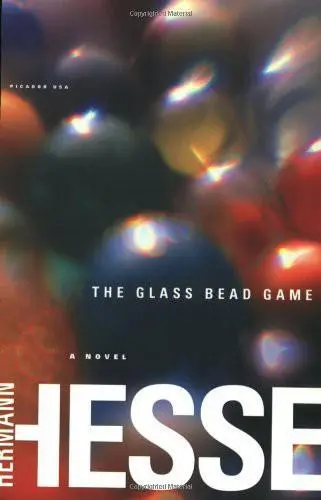
- Название:The Glass Bead Game
- Автор:
- Жанр:
- Год:1969
- ISBN:нет данных
- Рейтинг книги:4 / 5. Голосов: 2
-
Избранное:Добавить в избранное
- Отзывы:
-
Ваша оценка:
The Glass Bead Game: краткое содержание, описание и аннотация
Предлагаем к чтению аннотацию, описание, краткое содержание или предисловие (зависит от того, что написал сам автор книги «The Glass Bead Game»). Если вы не нашли необходимую информацию о книге — напишите в комментариях, мы постараемся отыскать её.
Something like chess but far more intricate, the game of Magister Ludi known as the Glass Bead Game is thought in its purest form, a synthesis through which philosophy, art, music and scientific law are appreciated simultaneously. The scholar-players are isolated within Castalia, an autonomous elite institution devoted wholly to the mind and the imagination…
The Glass Bead Game — читать онлайн бесплатно полную книгу (весь текст) целиком
Ниже представлен текст книги, разбитый по страницам. Система сохранения места последней прочитанной страницы, позволяет с удобством читать онлайн бесплатно книгу «The Glass Bead Game», без необходимости каждый раз заново искать на чём Вы остановились. Поставьте закладку, и сможете в любой момент перейти на страницу, на которой закончили чтение.
Интервал:
Закладка:
“I’ll try,” Plinio said. “I certainly don’t want to blame you for anything. I must concede that you behaved with absolute courtesy toward me — more than that. When I accepted your invitation to come here to Waldzell, where I have not been since that second course, not even since my appointment to the Castalian Commission, I made up my mind to confront you with what I experienced at that time, whether or not this visit turned out pleasantly. And now I mean to continue. I had come to the course and been put up in the guest house. The people in the course were almost all about my age; some were even a good deal older. There were at most twenty of us, the majority Castalians, but either poor, indifferent, or slack Glass Bead Game players, or rank beginners who had tardily decided that they ought to obtain some familiarity with the Game. It was a relief to me that I knew none of them. Although our instructor, one of the Archive assistants, really tried hard and was most friendly toward us, the whole thing had from the start the feeling of being a half-baked, useless affair, a make-up course whose random collection of students no more believes in its importance or chance of success than does the teacher, although no one involved will admit it. Why, you might have wondered, should this handful of people get together to engage in something they had no capacity for nor enough interest in to go at it with perseverance and devotion, and why should a skilled specialist bother to give them instruction and assign them exercises which he himself scarcely thought would come to anything? At the time I didn’t know — I found out from more experienced persons later on — that I simply had bad luck with this course, that another group of participants might have made it stimulating and useful, even inspiring. It often suffices, I was later told, to have two members of the class who kindle each other, or who already know each other and are good friends, to give the whole course, for all the participants and the teacher as well, the necessary impetus. But you are the Game Master, after all; you must know all about such matters.
“Well, then, I had rotten luck. The animating spark was missing from our haphazard group; there was no impetus, not even a little warmth. The whole thing remained a feeble extension course for grown-up schoolboys. The days passed, and my disappointment increased with each passing day. Still, besides the Glass Bead Game there was Waldzell, a place of sacred and cherished memories for me. If the Game course were a failure, I still ought to be able to celebrate a homecoming, to chat with former schoolmates, perhaps have a reunion with the friend who more than anyone else represented to me Our Castalia — you, Joseph. If I saw a few of the companions of my schooldays again, if on my walks through this beautiful, beloved region I met again the lares and penates of my youth, and if good fortune would have it that we might come close to each other again and a dialogue should spring up between us as in the old days, less between you and me than between my problem with Castalia and myself — then this vacation would not be wasted; then it would not so much matter about the course and all the rest.
“The first two old schoolfellows who crossed my path were innocuous enough. They were glad to see me, patted me on the back and asked childish questions about my legendary life out in the world. But the next few were not so innocuous; they were members of the Players’ Village and the younger elite and did not ask naive questions. On the contrary, when we ran into one another in one of the rooms of your sanctuaries and they could not very well avoid me, they greeted me with a pointed and rather tense politeness, or rather a condescending geniality. They made it clear that they were busy with important matters quite closed to me, that they had no time, no curiosity, no sympathy, no desire to renew old acquaintance. Well, I did not force myself on them; I let them alone in their Olympian, sardonic, Castalian tranquility. I looked across at them and their busy, self-satisfied doings like a prisoner watching through bars, or the way the poor, hungry, and oppressed eye the wealthy and aristocratic, the handsome, cultivated, untroubled, well-bred, well-rested members of an upper class with their clean faces and manicured hands.
“And then you turned up, Joseph, and when I saw you I felt rejoicing and new hope. You were crossing the yard; I recognized you from behind by your walk and at once called you by name. At last a human soul, I thought; at last a friend, or perhaps an opponent, but someone I can talk to, a Castalian to the bone, certainly, but someone in whom the Castalian spirit has not frozen into a mask and a suit of armor. A man, someone who understands. You must have noticed how glad I was and how much I expected from you, and in fact you met me halfway with the greatest courtesy. You still recognized me, I meant something to you, it gave you pleasure to see my face again. And so we did not leave it at that brief warm greeting in the yard; you invited me and devoted, or rather sacrificed, an evening to me. But what an evening that was! The two of us tormented ourselves trying to seem jocose, civil, and comradely toward each other, and how hard it was for us to drag that lame conversation from one subject to another. Where the others had been indifferent to me, with you it was worse — this strained and profitless effort to revive a lost friendship was much more painful. That evening finally put an end to my illusions. It made me realize with unsparing clarity that I was not one of your comrades, not seeking the same goals, not a Castalian, not a person of importance, but a nuisance, a fool trying to ingratiate himself, an uncultivated foreigner. And the fact that all this was conveyed to me with such politeness and good manners, that the disappointment and impatience were so impeccably masked, actually seemed to me the worst of it. If you had upbraided me: ‘What has become of you, my friend, how could you let yourself degenerate this way?’ the ice would have been broken and I would have been happy. But nothing of the sort. I saw that my notion of belonging to Castalia had come to nothing, that my love for all of you and my studying the Glass Bead Game and our comradeship were all nothing. Elite Tutor Knecht had taken note of my unfortunate visit to Waldzell; for my sake he had put himself through a whole evening of boredom, and shown me the door with undeviating courtesy.”
Designori, struggling with his agitation, broke off and with a tormented expression looked across at the Magister. Knecht sat there, all attention, absorbedly listening, but not in the least upset; he sat looking at his old friend with a smile that was full of friendly sympathy. Since Designori did not continue, Knecht rested his eyes on him, with a look of good will and satisfaction, in fact with a touch of amusement. For a minute or longer Plinio bleakly met that gaze. Then he cried out forcefully, although not angrily: “You’re laughing! Laughing? You think it was all fine?”
“I must admit,” Knecht said smilingly, “that you have described that episode remarkably well, splendidly. That is exactly how it was, and perhaps the lingering sense of insult and accusation in your voice was needed for you to bring it out as effectively as you did and to recall the scene to my mind with such perfect vividness. Also, although I’m afraid you still see the whole affair in somewhat the same light as you did then, and have not fully come to terms with it, you told your story with objective correctness — the story of two young men in a rather embarrassing situation in which both had to dissemble, and one of whom — that is, you — made the mistake of concealing the painfulness of the whole matter behind a gay exterior, instead of dropping the masquerade. It seems as if you were to this day blaming me more than yourself for the fruitlessness of that encounter, although it was absolutely up to you to have set its terms. Have you really failed to see that? But still you have described it very well, I must say. You’ve called back the whole sense of oppression and embarrassment over that weird evening. For a while I’ve felt as if I had to fight for composure again, and I’ve been ashamed for the two of us. No, your story is exactly right. It’s a pleasure to hear a story so well told.”
Читать дальшеИнтервал:
Закладка:
Похожие книги на «The Glass Bead Game»
Представляем Вашему вниманию похожие книги на «The Glass Bead Game» списком для выбора. Мы отобрали схожую по названию и смыслу литературу в надежде предоставить читателям больше вариантов отыскать новые, интересные, ещё непрочитанные произведения.









Обсуждение, отзывы о книге «The Glass Bead Game» и просто собственные мнения читателей. Оставьте ваши комментарии, напишите, что Вы думаете о произведении, его смысле или главных героях. Укажите что конкретно понравилось, а что нет, и почему Вы так считаете.