Hermann Hesse - The Glass Bead Game
Здесь есть возможность читать онлайн «Hermann Hesse - The Glass Bead Game» весь текст электронной книги совершенно бесплатно (целиком полную версию без сокращений). В некоторых случаях можно слушать аудио, скачать через торрент в формате fb2 и присутствует краткое содержание. Год выпуска: 1969, Жанр: Современная проза, Социально-психологическая фантастика, на английском языке. Описание произведения, (предисловие) а так же отзывы посетителей доступны на портале библиотеки ЛибКат.
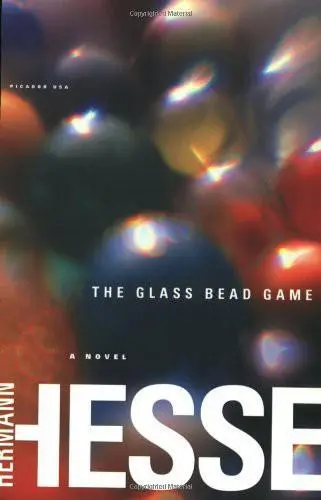
- Название:The Glass Bead Game
- Автор:
- Жанр:
- Год:1969
- ISBN:нет данных
- Рейтинг книги:4 / 5. Голосов: 2
-
Избранное:Добавить в избранное
- Отзывы:
-
Ваша оценка:
The Glass Bead Game: краткое содержание, описание и аннотация
Предлагаем к чтению аннотацию, описание, краткое содержание или предисловие (зависит от того, что написал сам автор книги «The Glass Bead Game»). Если вы не нашли необходимую информацию о книге — напишите в комментариях, мы постараемся отыскать её.
Something like chess but far more intricate, the game of Magister Ludi known as the Glass Bead Game is thought in its purest form, a synthesis through which philosophy, art, music and scientific law are appreciated simultaneously. The scholar-players are isolated within Castalia, an autonomous elite institution devoted wholly to the mind and the imagination…
The Glass Bead Game — читать онлайн бесплатно полную книгу (весь текст) целиком
Ниже представлен текст книги, разбитый по страницам. Система сохранения места последней прочитанной страницы, позволяет с удобством читать онлайн бесплатно книгу «The Glass Bead Game», без необходимости каждый раз заново искать на чём Вы остановились. Поставьте закладку, и сможете в любой момент перейти на страницу, на которой закончили чтение.
Интервал:
Закладка:
Knecht had known Plinio as a high-spirited, communicative, and brilliant young man, a good student and at the same time a young man of the world who felt superior to the unworldly Castalians and often baited them for the fun of it. Perhaps he had been somewhat vain, but he had also been openhearted, without pettiness, and had charmed, interested, and attracted his schoolmates. Some of them, in fact, had been dazzled by his good looks, his self-assurance, and the aura of foreignness that surrounded him, the hospitant from the outside world. Years later, toward the end of his student days, Knecht had seen him again, and had been disappointed; Plinio had then seemed to him shallower, coarsened, wholly lacking his former magic. They had parted coolly, with constraint.
Now Plinio once more seemed a totally different person. Above all he seemed to have wholly laid aside or lost his youthful gaiety, his delight in communication, argument, talk, his active, winning, extroverted character. His diffidence on meeting his former friend, his slowness to greet Knecht, and his qualms at taking up the Magister’s request to address him with their oldtime intimacy, were signs of a change evident also in his bearing, his look, his manner of speech and movements. In place of his former boldness, frankness, and exuberance there was now constraint. He was subdued, reticent, withdrawn; perhaps it was stiffness, perhaps only fatigue. His youthful charm had been submerged and extinguished in it, but the traits of superficiality and blatant worldliness had also vanished. The whole man, but especially his face, seemed marked, partly ravaged, partly ennobled by the expression of suffering.
While the Glass Bead Game Master followed the proceedings, he dwelt with part of his mind on this change, wondering what kind of suffering had overwhelmed this lively, handsome, life-loving man, and set such a mark on him. It seemed to Knecht an alien suffering, of a kind he had never known, and the more he pondered and probed, the more he felt sympathetically drawn to this suffering man. Mingled with this sympathy and affection was a faint feeling as if he were somehow to blame for his friend’s sorrow, as if he must in some way make amends.
After considering and rejecting a variety of suppositions about Plinio’s sadness, it occurred to him that the suffering in the man’s face was most uncommon. It was, rather, a noble, perhaps a tragic suffering, and its mode of expression was also of a type unknown in Castalia. Knecht recalled having sometimes seen a similar expression on the faces of people who lived in the world, although he had never seen it in so pronounced and fascinating a form. He realized that he knew it also from portraits of men of the past, portraits of scholars or artists in which a touching, half morbid, half fated sorrow, solitariness, and helplessness could be read. To the Magister, with his artist’s fine sensitivity to the secrets of expressions and his educator’s perception of the various shades of character, there were certain physiognomic signs which he instinctively went by, without ever having reduced them to a system. So, for example, he could recognize a peculiarly Castalian and a peculiarly worldly way of laughing, smiling, showing merriment, and likewise a peculiarly worldly type of suffering or sadness. He now detected this worldly sadness in Designori’s face, expressed there with the greatest purity and intensity, as though this face were meant to be representative of many, to epitomize the secret sufferings and morbidity of a multitude.
He was disturbed and moved by this face. It seemed to him highly significant that the world should have sent his lost friend here, so that Plinio and Joseph might truly and validly represent respectively the world and the Order, just as they had once done in their schoolboy debates. But it struck him as even more important and symbolic that in this lonely countenance, overlaid by sorrow, the world had dispatched to Castalia not its laughter, its joy in living, its pleasure in power, its crudeness, but rather its distress, its suffering. That Designori seemed rather to avoid than to seek him, that he responded so slowly and with such resistance, gave Knecht much food for thought. It also pleased him, for he had no doubt that he would nonetheless be able to win Plinio over. To be sure, his former schoolmate, thanks to his education in Castalia, was not one of those unyielding, sulky, or downright hostile commission members, such as Knecht had dealt with more than once. On the contrary, he was an admirer of the Order and a patron of the Province, which was indebted to him for many a service in the past. He had, however, given up the Glass Bead Game many years before.
We are in no position to report in detail how the Magister gradually regained his friend’s trust. Those of us who are familiar with the Master’s serenity and affectionate courtesy may imagine the process in our own way. Knecht steadily continued to court Plinio, and who in the long run could have resisted the Magister when he was seriously concerned to win someone’s heart?
In the end, several months after that first reunion, Designdri accepted the repeated invitation to visit Waldzell. One windy, slightly overcast autumn afternoon, the two men drove through a countryside constantly alternating between light and shade toward the site of their schooldays and early friendship. Knecht was in a blithe frame of mind, while his guest was silent but moody, undergoing abrupt alternations, like the harvested fields between sunlight and shadow, between the joys of return and the sadness of alienation. Near the village, they alighted and tramped on foot along the old paths which they had walked together as schoolboys, remembering schoolmates and teachers and some of their topics of discussion in those long-ago days. Designori stayed a day as Knecht’s guest, looking on at all of his official acts and labors, as had been agreed. At the end of the day — the guest was due to leave early next morning — they sat together in Knecht’s living room, already on the verge of their old intimacy. The course of the day, during which he had been able to observe the Magister’s work hour by hour, had made a great impression upon Designori. That evening the two men had a conversation which Designori recorded immediately after his return home. Although it incorporates a few unimportant matters which some readers may feel disturb the even flow of our account, we think it advisable to set down the complete text.
“I had in mind to show you so many things,” the Magister said, “and now I did not get to them after all. For example, my lovely garden — do you still recall the Magister’s Garden and Master Thomas’s plantings? Yes, and so many other things. I hope there will be future occasions for seeing them. But in any case, you have had the chance to check on a good many of your recollections, and you also have some idea of the nature of my official duties and my routine.”
“I am grateful to you for that,” Plinio said. “Only today have I begun to divine again what your Province really is, and what remarkable secrets it contains, although over the years I have thought about all of you here far more than you suspect. You have afforded me a glimpse of your office and of your life, Joseph, and I hope this will not be the last time and that we shall have many opportunities to discuss the things I have seen here, which I cannot yet talk about today. On the other hand, I am well aware that I should in some way be requiting your cordiality, and that my reserve must have taken you aback. However, you will visit me too some day, and see my native ground. For the present I can only tell you a little, just enough for you to know something about my situation. Speaking frankly, though it will be embarrassing and something of a penance for me, will probably unburden my heart.
Читать дальшеИнтервал:
Закладка:
Похожие книги на «The Glass Bead Game»
Представляем Вашему вниманию похожие книги на «The Glass Bead Game» списком для выбора. Мы отобрали схожую по названию и смыслу литературу в надежде предоставить читателям больше вариантов отыскать новые, интересные, ещё непрочитанные произведения.










Обсуждение, отзывы о книге «The Glass Bead Game» и просто собственные мнения читателей. Оставьте ваши комментарии, напишите, что Вы думаете о произведении, его смысле или главных героях. Укажите что конкретно понравилось, а что нет, и почему Вы так считаете.