Hermann Hesse - The Glass Bead Game
Здесь есть возможность читать онлайн «Hermann Hesse - The Glass Bead Game» весь текст электронной книги совершенно бесплатно (целиком полную версию без сокращений). В некоторых случаях можно слушать аудио, скачать через торрент в формате fb2 и присутствует краткое содержание. Год выпуска: 1969, Жанр: Современная проза, Социально-психологическая фантастика, на английском языке. Описание произведения, (предисловие) а так же отзывы посетителей доступны на портале библиотеки ЛибКат.
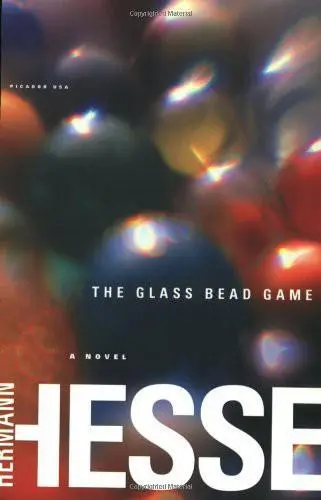
- Название:The Glass Bead Game
- Автор:
- Жанр:
- Год:1969
- ISBN:нет данных
- Рейтинг книги:4 / 5. Голосов: 2
-
Избранное:Добавить в избранное
- Отзывы:
-
Ваша оценка:
The Glass Bead Game: краткое содержание, описание и аннотация
Предлагаем к чтению аннотацию, описание, краткое содержание или предисловие (зависит от того, что написал сам автор книги «The Glass Bead Game»). Если вы не нашли необходимую информацию о книге — напишите в комментариях, мы постараемся отыскать её.
Something like chess but far more intricate, the game of Magister Ludi known as the Glass Bead Game is thought in its purest form, a synthesis through which philosophy, art, music and scientific law are appreciated simultaneously. The scholar-players are isolated within Castalia, an autonomous elite institution devoted wholly to the mind and the imagination…
The Glass Bead Game — читать онлайн бесплатно полную книгу (весь текст) целиком
Ниже представлен текст книги, разбитый по страницам. Система сохранения места последней прочитанной страницы, позволяет с удобством читать онлайн бесплатно книгу «The Glass Bead Game», без необходимости каждый раз заново искать на чём Вы остановились. Поставьте закладку, и сможете в любой момент перейти на страницу, на которой закончили чтение.
Интервал:
Закладка:
His friend Carlo Ferromonte was the first person to whom he spoke about this. Ferromonte was at this time librarian at the famous Monteport music library, and Knecht called on him a few hours later. Their conversation has been preserved in a letter of Ferromonte’s.
“Our former Music Master was your teacher, of course,” Knecht said, “and you were very fond of him. Do you see him often nowadays?”
“No,” Carlo replied. “That is, I see him fairly often, of course, when he is taking his walk, say, and I happen to be coming out of the library. But I haven’t talked with him for months. He is more and more withdrawing and no longer seems able to bear sociability. In the past he used to set aside an evening for people like me, those among his former subordinates who are officials in Monteport now; but that stopped about a year ago. It amazed us all that he went to Waldzell for your investiture.”
“Ah yes,” Knecht said. “But when you do see him occasionally, haven’t you been struck by any change in him?”
“Oh yes. You mean his fine appearance, his cheerfulness, his curious radiance? Of course we have noticed that. While his strength is diminishing, that serene cheerfulness is constantly increasing. We have grown accustomed to it. But I suppose it would strike you.”
“His secretary Petrus sees far more of him than you do,” Knecht exclaimed, “but he hasn’t grown accustomed to it, as you say. He came specially to Waldzell, on a plausible excuse, of course, to urge me to make this visit. What do you think of him?”
“Of Petrus? He has a first-rate knowledge of music, though he’s more on the pedantic than the brilliant side — a rather slow-moving if not slow-witted person. He’s totally devoted to the former Music Master and would give his life for him. I imagine his serving the master he idolizes is the whole content of his life; he’s obsessed by him. Didn’t you have that impression too?”
“Obsessed? Yes, but I don’t think this young man is obsessed simply by a fondness and passion; he’s not just infatuated with his old teacher and making an idol out of him, but obsessed and enchanted by an actual and genuine phenomenon which he sees better, or has better understood emotionally, than the rest of you. I want to tell you how it struck me. When I went to the former Master today, after not having seen him for six months, I expected little or nothing from this visit, after the hints his secretary had dropped. I had simply been alarmed to think that the revered old man might suddenly depart from us in the near future, and had hastened here in order to see him at least once more. When he recognized and greeted me, his face glowed, but he said no more than my name and shook hands with me. That gesture, too, and his hand, seemed to me also to glow; the whole man, or at least his eyes, his white hair, and his rosy skin, seemed to emit a cool, gentle radiance. I sat down with him. He sent the student away, just with a look, and there began the oddest conversation I have ever had. At the beginning, I admit, it was very disturbing and depressing for me, and shaming also, for I kept addressing the old man, or asking questions, and his only answer to anything was a look. I could not make out whether my questions and the things I told him were anything but an annoying noise to him. He confused, disappointed, and tired me; I felt altogether superfluous and importunate. Whatever I said to the Master, the only response was a smile and a brief glance. If those glances had not been so full of good will and cordiality, I would have been forced to think that he was frankly making fun of me, of my stories and questions, of the whole useless trouble I had taken to come and visit him. As a matter of fact, his silence and his smile did indeed contain something of the sort. They were actually a form of fending me off and reproving me, except that they were so in a different way, on a differing plane of meaning from, say, mocking words. I had first to wear myself out and suffer total shipwreck with what had seemed to me my patient efforts to start a conversation, before I began to realize that the old man could easily have manifested a patience, persistence, and politeness a hundred times greater than mine. Perhaps the episode lasted only fifteen minutes or half an hour; it seemed to me like half a day. I began to feel sad, tired, and angry, and to repent my journey. My mouth felt dry. There sat the man I revered, my patron, my friend, whom I had loved and trusted ever since I could think, who had always responded to whatever I might say — there he sat and listened to me talk, or perhaps did not listen to me, and had barricaded himself completely behind his radiance and smile, behind his golden mask, unreachable, belonging to a different world with different laws; and everything I tried to bring by speech from our world to his ran off him like rain from a stone. At last — I had already given up hope — he broke through the magic wall; at last he helped me; at last he said a few words. Those were the only words I heard him speak today.
“‘You are tiring yourself, Joseph,’ he said softly, his voice full of that touching friendliness and solicitude you know so well. That was all. ‘You are tiring yourself, Joseph.’ As if he had long been watching me engaged in a too-strenuous task and wanted to admonish me to stop. He spoke the words with some effort, as though he had not used his lips for speaking for a long time. And at that moment he laid his hand on my arm — it was light as a butterfly — looked penetratingly into my eyes, and smiled. At that moment I was conquered. Something of his cheerful silence, something of his patience and calm, passed into me; and suddenly I understood the old man and the direction his nature had taken, away from people and toward silence, away from words and toward music, away from ideas and toward unity. I understood what I was privileged to see here, and now for the first time grasped the meaning of this smile, this radiance. A saint, one who had attained perfection, had permitted me to dwell in his radiance for an hour; and blunderer that I am, I had tried to entertain him, to question him, to seduce him into a conversation. Thank God the light had not dawned on me too late. He might have sent me away and thus rejected me forever. And I would have been deprived of the most remarkable and wonderful experience I have ever had.”
“I see,” Ferromonte said thoughtfully, “that you have discovered something akin to a saint in our former Music Master. A good thing that you and none other has told me about this. I confess that I would have received such a story with the greatest distrust from anyone else. I am, taken all in all, not fond of mysticism; as a musician and historian I am pedantically given to neat classification. Since we Castalians are neither a Christian congregation nor a Hindu or Taoist monastery, I do not see that any of us qualify for sainthood — that is, for a purely religious category. Coming from anyone but you, Joseph — excuse me, I mean Domine — I would regard any such ascription as going off the deep end. But I imagine you do not mean to initiate canonization proceedings for our former Master; you would scarcely find a competent consistory for them in our Order. No, don’t interrupt me, I am speaking seriously; I don’t mean that as a joke at all. You have told me about an experience, and I must admit that I feel somewhat ashamed, because neither I nor any of my colleagues here at Monteport has entirely overlooked the phenomenon you describe. No, we have merely noticed it and paid it little heed. I am reflecting on the reason for my failure and my indifference. One explanation of course is the fact that you encountered the Master’s transformation as a finished product, whereas I witnessed its slow evolution. The former Magister you saw months ago and the one you saw today differed sharply from each other, whereas we, his neighbors, meeting him every so often, observed almost imperceptible changes. But I admit that this explanation doesn’t satisfy me. If something like a miracle is taking place before our eyes, however quietly and slowly, we ought to have been more stirred by it than we have been, and would have been if we had been unbiased. Here, I think, I’ve hit on the reason for my obtuseness: I was not in the least unbiased. I failed to observe the phenomenon because I did not want to observe it. Like everyone else, I noticed our Master’s increasing withdrawal and taciturnity, and the concurrent increase in his friendliness, the ever-brighter and more ethereal radiance of his face when we met and he responded mutely to my greeting. I noticed that, of course, and so did everyone else. But I fought against seeing anything more in it, and I fought against it not from lack of reverence for the old Magister, but in part out of distaste for the cult of personality and enthusiasm in general, in part out of distaste for such enthusiasm in this special case, for the kind of cult the student Petrus practices with his idolization of the Master. I’ve only fully realized all this as you were telling your story.”
Читать дальшеИнтервал:
Закладка:
Похожие книги на «The Glass Bead Game»
Представляем Вашему вниманию похожие книги на «The Glass Bead Game» списком для выбора. Мы отобрали схожую по названию и смыслу литературу в надежде предоставить читателям больше вариантов отыскать новые, интересные, ещё непрочитанные произведения.









Обсуждение, отзывы о книге «The Glass Bead Game» и просто собственные мнения читателей. Оставьте ваши комментарии, напишите, что Вы думаете о произведении, его смысле или главных героях. Укажите что конкретно понравилось, а что нет, и почему Вы так считаете.