Hermann Hesse - The Glass Bead Game
Здесь есть возможность читать онлайн «Hermann Hesse - The Glass Bead Game» весь текст электронной книги совершенно бесплатно (целиком полную версию без сокращений). В некоторых случаях можно слушать аудио, скачать через торрент в формате fb2 и присутствует краткое содержание. Год выпуска: 1969, Жанр: Современная проза, Социально-психологическая фантастика, на английском языке. Описание произведения, (предисловие) а так же отзывы посетителей доступны на портале библиотеки ЛибКат.
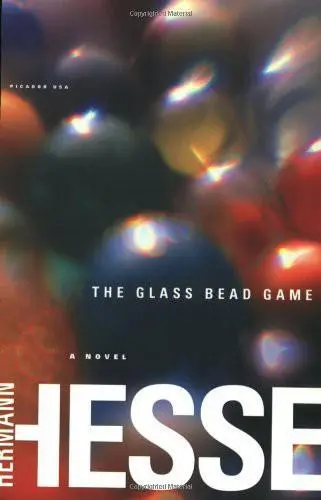
- Название:The Glass Bead Game
- Автор:
- Жанр:
- Год:1969
- ISBN:нет данных
- Рейтинг книги:4 / 5. Голосов: 2
-
Избранное:Добавить в избранное
- Отзывы:
-
Ваша оценка:
The Glass Bead Game: краткое содержание, описание и аннотация
Предлагаем к чтению аннотацию, описание, краткое содержание или предисловие (зависит от того, что написал сам автор книги «The Glass Bead Game»). Если вы не нашли необходимую информацию о книге — напишите в комментариях, мы постараемся отыскать её.
Something like chess but far more intricate, the game of Magister Ludi known as the Glass Bead Game is thought in its purest form, a synthesis through which philosophy, art, music and scientific law are appreciated simultaneously. The scholar-players are isolated within Castalia, an autonomous elite institution devoted wholly to the mind and the imagination…
The Glass Bead Game — читать онлайн бесплатно полную книгу (весь текст) целиком
Ниже представлен текст книги, разбитый по страницам. Система сохранения места последней прочитанной страницы, позволяет с удобством читать онлайн бесплатно книгу «The Glass Bead Game», без необходимости каждый раз заново искать на чём Вы остановились. Поставьте закладку, и сможете в любой момент перейти на страницу, на которой закончили чтение.
Интервал:
Закладка:
Tonight, too, they looked as they always did, except that they were very bright and seemed highly polished in the taut, thin air; but he could not find within himself the repose to surrender to them. From unknown realms some power was tugging at him; it ached in his pores, sucked at his eyes, quietly and continually affected him. It was a current, a warning quiver. In the hut nearby the warm, dim light of the hearth-fire glimmered. Life flowed small and warm inside: a cry, a laugh, a yawn, human smells, skin warmth, motherhood, children’s sleep. All that innocent presence seemed to deepen the night, to drive the stars still further back into the incomprehensible distances and heights.
And now, while Knecht heard Ada’s voice inside the hut crooning and humming a low melody as she quieted a child, there began in the sky the calamity that the village would remember for many years. A flickering and glimmering appeared here and there in the still, glittering network of stars, as if the usually invisible threads of the net were suddenly leaping into flame. Like hurled stones, glowing and guttering, a few stars fell slantwise across the sky, one here, two there, a few more here; and before the eye had turned from the first vanished falling star, before the heart, stilled at the sight, had begun to beat again, the lights falling or hurled at a slant or a slight arc across the sky began to come in swarms of dozens, hundreds. A countless host, borne on a vast, mute storm, they slanted across the silent night, as if a cosmic autumn were tearing all the stars like withered leaves from the tree of heaven and flinging them noiselessly into the void. Like withered leaves, like wafting snowflakes, they rushed away and down, thousands upon thousands, in fearful silence, vanishing beyond the wooded mountains to the southeast where never a star had set since time immemorial.
With frozen heart and swimming eyes, Knecht stood, head tilted back, gazing horrified but insatiably at the transformed and accursed sky, mistrusting his eyes and yet only too certain of the direness of what they beheld. Like all who watched this nocturnal spectacle, he thought the familiar stars themselves were wavering, scattering, and plunging down, and he expected that if the earth itself did not swallow him first, the firmament would soon appear black and emptied. After a while, however, he recognized what others could not know — that the well-known stars were still present, here and there and everywhere; that the frightful dispersion was taking place not among the old, familiar stars, but in the space between earth and sky, and that these new lights, fallen or flung, so swiftly appearing and swiftly vanishing, glowed with a fire of another sort from the old, the proper stars. This was somewhat reassuring and helped him regain his balance. But even if these were new, transitory, different stars scattering through the air, still it meant disaster and disorder. Deep sighs came from Knecht’s parched throat. He looked toward the earth; he listened to find out whether this uncanny spectacle were appearing to him alone, or whether others were also seeing it. Soon he heard groans, screams, and cries of terror from other huts. Others had seen it too; their cries had alarmed the sleepers and the unaware; in a moment panic had seized the entire village. With a sigh, Knecht took the burden on himself. This misfortune affected him, the Rainmaker, above all others, for he was in a way responsible for order in the heavens. Always before he had known or sensed great catastrophes in advance: floods, hailstorms, tempests. Always he had warned the mothers and elders to be prepared. He had averted the worst evils. He had interposed himself, his knowledge, his courage, and his confidence in the powers above, between the village and consternation. Why had he foreknown nothing this time, so that he could take no measure? Why had he said not a word to anyone of the obscure foreboding he had, after all, felt?
He lifted the mat hung over the entrance of the hut and softly called his wife’s name. She came, her youngest at her breast. He took the baby from her and laid it on the pallet. Holding Ada’s hand, he placed a finger to his lips, enjoining silence, and led her out of the hut. He saw her patiently tranquil face grow distorted by terror.
“Let the children sleep; I don’t want them to see this, do you hear?” he whispered intensely. “Don’t let any of them come out, not even Turu. And you yourself stay inside.”
He hesitated, uncertain how much to say, how many of his thoughts he ought to reveal. Finally he added firmly: “Nothing will harm you and the children.”
She believed him at once, although her face and her mind had not yet recovered from the fright.
“What is it?” she asked, again staring at the sky. “Is it, very bad?”
“It is bad,” he said gently. “I think it may be very bad. But it doesn’t concern you and the children. Stay in the hut; keep the mat drawn. I must talk to the people. Go in, Ada.”
He pressed her through the opening, drew the mat carefully closed, and stood for the span of a few breaths with his face turned toward the continuing rain of stars. Then he bowed his head, sighed heavily once more, and walked swiftly through the night toward the tribal mother’s hut.
Half the village was already assembled there. A muted roar rose from them, a tumult half numbed by terror and choked by despair. There were women and men who surrendered with a kind of voluptuous rage to their sense of horror and impending doom. Some stood stiff, rapt. Others jerked about wildly with uncontrolled movements of their limbs. One woman was foaming at the mouth as she danced, alone, a despairing and obscene dance, at the same time pulling out whole handfuls of her long hair. Knecht realized that the effects were already at work. Almost all had succumbed to the intoxication; they were bewitched or driven mad by the falling stars, and an orgy of madness, fury, and self-destructiveness might follow. It was high time to collect the few brave and sensible members of the tribe, and support their courage.
The ancient tribal mother was calm. She believed that the end of all things had come, and that there was nothing to be done about it. Toward the inevitable she showed a firm, hard face that looked almost mocking in its pinched astringency. He persuaded her to listen to him. He tried to show her that the old stars, the ones that had always been, were still in the sky. But she could not grasp it, either because her eyes no longer had the strength to discern them, or because her conception of the stars was too unlike the Rainmaker’s. She shook her head and maintained her courageous grin, but when Knecht implored her not to abandon the people to their terror, she instantly was of his mind. A small group of frightened but not yet maddened villagers still willing to be led formed around her and the Weathermaker.
Up to the moment he reached the group, Knecht had hoped to be able to check the panic by example, reason, speech, explanations, and encouragement. But his brief conversation with the tribal mother had shown him that it was too late for anything of the sort. He had hoped to let the others share in his own experience, to make them a gift of it. He had hoped to persuade them that the stars themselves were not falling, or not all of them, that no cosmic storm was sweeping them away. He had imagined that by such urging he would be able to move them from helpless dismay to active observation, so that they would be able to bear the shock. But he quickly saw that there were very few villagers who would hearken to him, and by the time he won them over all the others would have utterly given way to madness. No, as was so often the case, reason and sensible speech could accomplish nothing here.
Fortunately there were other means. Although it was impossible to dispel their mortal terror by appeal to reason, this terror could still be guided, organized, given shape, so that the confusion of maddened people could be made into a solid unity, the wild, single voices merged into a chorus. But there was no time to be lost. Knecht stepped before the people, loudly crying the well-known prayers that opened public ceremonies of penance and mourning: the lament for the death of a tribal mother, or the ceremony of sacrifice and atonement in the face of perils such as epidemics and floods. He shouted the words in rhythm and reinforced the rhythm by clapping his hands; and in the same rhythm, shouting and clapping his hands all the while, he stooped almost to the ground, straightened up, stooped again, and straightened up. Almost at once ten or twenty others joined in his movements. The white-haired mother of the village murmured in the same rhythm and with tiny bows sketched the ritual movements. Those who were still flocking to the assemblage from the huts at once joined in the beat and the spirit of the ceremony; the few who had gone off their heads collapsed, and lay motionless, or else were caught up in the murmur of the chorus and the religious genuflections. His method was effective. Instead of a demoralized horde of madmen, there now stood a reverent populace prepared for sacrifice and penance, each one benefiting, each one encouraged by now having to lock his horror and fear of death within himself, or bellow it crazily for himself alone. Each now fitted into his place in the orderly chorus of the multitude, keeping to the rhythm of the exorcistic ceremony. Many mysterious powers are present in such a rite. Its greatest comfort is its uniformity, confirming the sense of community; its infallible medicine meter and order, rhythm and music.
Читать дальшеИнтервал:
Закладка:
Похожие книги на «The Glass Bead Game»
Представляем Вашему вниманию похожие книги на «The Glass Bead Game» списком для выбора. Мы отобрали схожую по названию и смыслу литературу в надежде предоставить читателям больше вариантов отыскать новые, интересные, ещё непрочитанные произведения.









Обсуждение, отзывы о книге «The Glass Bead Game» и просто собственные мнения читателей. Оставьте ваши комментарии, напишите, что Вы думаете о произведении, его смысле или главных героях. Укажите что конкретно понравилось, а что нет, и почему Вы так считаете.