Hermann Hesse - The Glass Bead Game
Здесь есть возможность читать онлайн «Hermann Hesse - The Glass Bead Game» весь текст электронной книги совершенно бесплатно (целиком полную версию без сокращений). В некоторых случаях можно слушать аудио, скачать через торрент в формате fb2 и присутствует краткое содержание. Год выпуска: 1969, Жанр: Современная проза, Социально-психологическая фантастика, на английском языке. Описание произведения, (предисловие) а так же отзывы посетителей доступны на портале библиотеки ЛибКат.
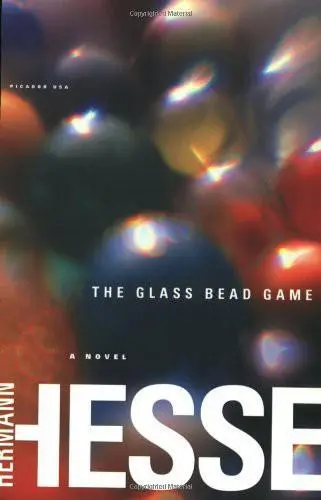
- Название:The Glass Bead Game
- Автор:
- Жанр:
- Год:1969
- ISBN:нет данных
- Рейтинг книги:4 / 5. Голосов: 2
-
Избранное:Добавить в избранное
- Отзывы:
-
Ваша оценка:
The Glass Bead Game: краткое содержание, описание и аннотация
Предлагаем к чтению аннотацию, описание, краткое содержание или предисловие (зависит от того, что написал сам автор книги «The Glass Bead Game»). Если вы не нашли необходимую информацию о книге — напишите в комментариях, мы постараемся отыскать её.
Something like chess but far more intricate, the game of Magister Ludi known as the Glass Bead Game is thought in its purest form, a synthesis through which philosophy, art, music and scientific law are appreciated simultaneously. The scholar-players are isolated within Castalia, an autonomous elite institution devoted wholly to the mind and the imagination…
The Glass Bead Game — читать онлайн бесплатно полную книгу (весь текст) целиком
Ниже представлен текст книги, разбитый по страницам. Система сохранения места последней прочитанной страницы, позволяет с удобством читать онлайн бесплатно книгу «The Glass Bead Game», без необходимости каждый раз заново искать на чём Вы остановились. Поставьте закладку, и сможете в любой момент перейти на страницу, на которой закончили чтение.
Интервал:
Закладка:
Something like this was the way he felt, and our attempts to speak of it in our conceptual language, which he could never know, convey nothing of the awe and the passion of his experience. Rising at night, being led through the dark, still woods full of dangers and mysteries, waiting on the ledge in the chill of night and early morning, the appearance of the thin phantom of a moon, the wise Master’s few words, being alone with the Master at so extraordinary an hour — all this was experienced and preserved by Knecht as a solemn mystery, as a solemn initiation, as his admission into a league and a cult, into a humble but honorable relationship to the Unnamable, the cosmic mystery. This and many another similar experience could not be put into thoughts, let alone words. Even more remote from his way of thinking, even more impossible than any other thought, would have been words such as this: “Is it only I alone who have created this experience, or is it objective reality? Does the Master have the same feelings as I, or would mine amuse him? Are my thoughts new, unique, my own, or have the Master and many before him experienced and thought exactly the same?” No, for him there were no such analyses and differentiations. Everything was reality, was steeped in reality, full of it as bread dough is of yeast. The clouds, the moon, and the shifting scenes in the theater of the sky, the cold wet limestone under his bare feet, the damp, trickling cold dew in the pallid night air, the comforting homelike smell of hearth smoke and bed of leaves suffusing the skin the Master had slung around him, the dignity and the faint note of old age and readiness for death in his rough voice — all that was beyond reality and penetrated almost violently into the boy’s senses. And sense impressions are a deeper soil for growing memories than the best systems and analytical methods.
Although the Rainmaker was one of the few members of the tribe who had an occupation, who had developed a special art and ability, his everyday life outwardly did not differ greatly from that of the other members of the tribe. He was an important man with considerable prestige; he also received payment from the tribe whenever he had to do some service for the community; but this happened only on special occasions. By far his most important and sacred function came in the spring when he determined the proper day for sowing every kind of fruit and plant. He did this by carefully considering the state of the moon, partly by handed-down rules, partly by his own experience. But the solemn act of opening the season of seeding — the strewing of the first handful of grain and seeds on the community land — was no longer part of his office. That task was too high for any mere man; it was performed every year by the tribal mother herself or by her oldest female relative. The Master became the principal person in the village only when he really had to function as Weathermaker. This happened when a long drought, or a long spell of damp and cold, struck the fields and threatened the tribe with famine. Then Turu had to apply the methods effective against drought and poor crops: sacrifices, exorcisms, processions. According to legend, in cases of obstinate drought or endless rain, when all other means failed and the spirits could not be moved by persuasion, pleas, or threats, there was a last infallible method used in the days of the mothers and grandmothers: sacrifice of the Weathermaker himself by the community. The tribal mother, it was said, had witnessed one such sacrifice.
Aside from looking after the weather, the Master also had a kind of private practice as an exorcist, as a maker of amulets and charms, and in some cases as a doctor, wherever medical matters were not reserved to the tribal mother. But for the rest, Master Turu lived the life of every other tribesman. He helped to till the common land when his turn came, and also had his own small garden near the hut. He gathered and stored fruit, mushrooms, and firewood. He hunted and fished, and kept a goat or two. As a farmer he was like all the others, but as hunter, fisherman, and herb gatherer he was not like anyone else. Rather, he was a solitary genius with a reputation for knowing a great many natural and magical tricks, devices, knacks, and aids. It was said he could weave a willow noose which no animal could escape. He had special recipes for fish bait; he knew how to lure crayfish; and there were some who thought that he understood the language of many a beast. But his real specialty was more arcane: observation of the moon and the stars, knowledge of the weather signs, ability to forecast weather and growth, and a command of many magical effects. Thus he was a great collector of plant and animal materials efficacious for remedies and poisons, for working magic, for conferring blessings, and for fending off dangerous spirits. He knew where to find even the rarest plants; he knew when they blossomed and ripened seed, and the right time to dig their roots. He knew where to find all kinds of snakes and toads, knew how to use horns, hoofs, claws, hair. He knew what to do with growths, deformities, weird and horrible excrescences: knots, tumors, burls, and scales, of wood, of leaves, of grain, of nuts, of horns and hoofs.
Knecht had more to learn with his feet and hands, his eyes, skin, ears, and nose, than with his intellect, and Turu taught far more by example and by dumbshow than by words and prescription. The Master rarely spoke coherently, and even when he did his words were only a supplement to his singularly impressive gestures. Knecht’s apprenticeship differed little from the apprenticeship a young hunter or fisherman undergoes with a good master, and it gave him great pleasure, for he learned only the things that were already latent within him. He learned to be in wait, to listen, to stalk, to watch, to be on his guard, to be alert, to spy and sense; but the game that he and his master stalked was not only fox and badger, otter and toad, bird and fish, but essence, the whole, meaning, relationship. They sought to determine, to recognize, to guess and forecast the fleeting, unstable weather, to know the death lying hidden in a berry or snakebite, to eavesdrop on the secret relations between clouds or storms and the phases of the moon, relations that affected the growth of crops as they did the haleness or doom of man and beast. No doubt they were really seeking the same ends as the science and technology of later centuries, dominance over nature and a control over her laws; but they went about it in an entirely different way. They did not stand off from nature and try to penetrate into her secrets by violence. They were never opposed and hostile to nature, but always part of her and reverently devoted to her. It is quite likely that they knew her better and dealt more wisely with her. But one thing was utterly impossible for them: not even in their most audacious moments would it have occurred to them to meet nature and the world of spirits without fear, let alone to feel superior to them. Such hubris was unthinkable; they could not have imagined having any other attitude but fear toward the forces of nature, toward death and the demons. Fear loomed over the life of man. It could not be overcome. But it could be pacified, outwitted, masked, brought within bounds, placed within the orderly framework of life as a whole. The various systems of sacrifices served this purpose. Fear was the permanent pressure upon the lives of these people, and without this high pressure their life would have lacked stress, of course, but also lacked intensity. A man who had been able to ennoble his fear by transforming part of it into awe had gained a great deal. People of this sort, people whose fear had become a form of piety, were the good men and the progressive men of that age. There were many sacrifices and many kinds of sacrifice; and a certain portion of these sacrifices, with their accompanying rites, fell within the province of the Weathermaker.
Читать дальшеИнтервал:
Закладка:
Похожие книги на «The Glass Bead Game»
Представляем Вашему вниманию похожие книги на «The Glass Bead Game» списком для выбора. Мы отобрали схожую по названию и смыслу литературу в надежде предоставить читателям больше вариантов отыскать новые, интересные, ещё непрочитанные произведения.







Обсуждение, отзывы о книге «The Glass Bead Game» и просто собственные мнения читателей. Оставьте ваши комментарии, напишите, что Вы думаете о произведении, его смысле или главных героях. Укажите что конкретно понравилось, а что нет, и почему Вы так считаете.