Alice Munro - Dear Life
Здесь есть возможность читать онлайн «Alice Munro - Dear Life» весь текст электронной книги совершенно бесплатно (целиком полную версию без сокращений). В некоторых случаях можно слушать аудио, скачать через торрент в формате fb2 и присутствует краткое содержание. Город: New York, Год выпуска: 2012, ISBN: 2012, Издательство: Alfred A. Knopf, Жанр: Современная проза, short_story, на английском языке. Описание произведения, (предисловие) а так же отзывы посетителей доступны на портале библиотеки ЛибКат.
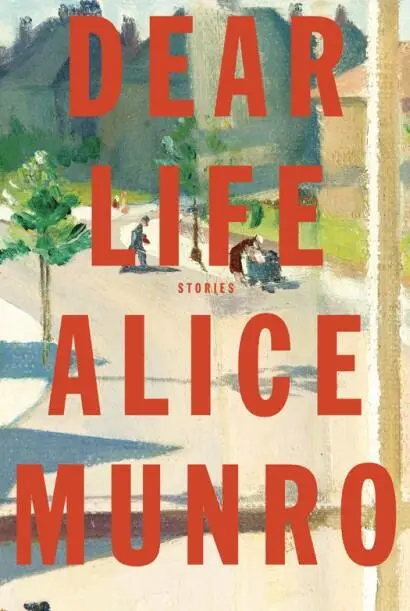
- Название:Dear Life
- Автор:
- Издательство:Alfred A. Knopf
- Жанр:
- Год:2012
- Город:New York
- ISBN:9780307596888
- Рейтинг книги:3 / 5. Голосов: 1
-
Избранное:Добавить в избранное
- Отзывы:
-
Ваша оценка:
Dear Life: краткое содержание, описание и аннотация
Предлагаем к чтению аннотацию, описание, краткое содержание или предисловие (зависит от того, что написал сам автор книги «Dear Life»). Если вы не нашли необходимую информацию о книге — напишите в комментариях, мы постараемся отыскать её.
Dear Life — читать онлайн бесплатно полную книгу (весь текст) целиком
Ниже представлен текст книги, разбитый по страницам. Система сохранения места последней прочитанной страницы, позволяет с удобством читать онлайн бесплатно книгу «Dear Life», без необходимости каждый раз заново искать на чём Вы остановились. Поставьте закладку, и сможете в любой момент перейти на страницу, на которой закончили чтение.
Интервал:
Закладка:
I couldn’t take it in. All this way I had thought of her, when I thought of her at all, as a person who would already be set aside, who after the first disturbance could not maintain herself as a character in our lives. I was still full of the relief of being home and his being home, safe. Assurance had spread all over me so that my body was ready, still, to spring out of the car and run to the house. I had even been feeling for my house key, having forgotten what I had done with it.
I wouldn’t have needed it, anyway. Franklin was opening the door of our house. He did not call out in surprise or relief, not even when I had left the car and was out and going towards him. He just came down the house steps in a measured way, and his words held me off as I reached him. He said, “Wait.”
Wait. Of course. She was there.
“Get back in the car,” he said. “We can’t talk out here, it’s too cold.”
When we were in the car he said, “Life is totally unpredictable.”
His voice was unusually gentle and sad. He didn’t look at me but stared straight ahead at the windshield, at our house.
“No use saying I’m sorry,” he told me.
“You know,” he went on, “it’s not even the person. It’s like a sort of aura. It’s a spell. Well of course it is really the person but it surrounds them and embodies them. Or they embody—I don’t know. Do you understand? It just strikes like an eclipse or something.”
He shook his bent head. All dismay.
He was longing to talk about her, you could see that. But this spiel was surely something that would have made him sick, normally. That was what made me lose hope.
I felt myself getting bitterly cold. I was going to ask him if he had alerted the other party to this transformation. Then I thought that of course he had and she was with us, in the kitchen with the things she polished.
His enchantment was so dreary. It was like anybody else’s. Dreary.
“Don’t talk any more,” I said. “Just don’t talk.”
He turned and looked at me for the first time and spoke without any of that special wondering hush in his voice.
“Christ, I’m kidding,” he said. “I thought you’d catch on. All right. All right. Oh for God’s sake, shut up. Listen.”
For I was howling now with anger and relief.
“All right, I was a little mad at you. I felt like giving you a hard time. What was I supposed to think when I came home and you were just gone? All right, I’m an asshole. Stop. Stop.”
I didn’t want to stop. I knew it was all right now, but it was such a comfort to howl. And I found a fresh grievance.
“What is her car doing here, then?”
“They can’t do anything with it, it’s junk.”
“But why is it here?”
He said it was here because the non-junk parts of it, and that wasn’t much, now belonged to him. Us.
Because he had bought her a car.
“A car? New?”
New enough to run better than what she had.
“The thing is she wants to go to North Bay. She has relatives or something there and that’s where she wants to go when she can get a car fit to take her.”
“She has relatives here. Wherever she lives here. She has three-year-old kids to look after.”
“Well apparently the ones in North Bay would suit her better. I don’t know about any three-year-olds. Maybe she’ll take them along.”
“Did she ask you to buy her a car?”
“She wouldn’t ask for anything.”
“So now,” I said. “Now she’s in our life.”
“She’s in North Bay. Let’s go in the house. I haven’t even got a jacket on.”
On our way I asked if he had told her about his poem. Or maybe read it to her.
He said, “Oh God no, why would I do that?”
The first thing I saw in the kitchen was the sparkle of glass jars. I yanked a chair out and climbed up on it and began putting them away on top of the cupboard.
“Can you help me?” I said, and he handed them up to me.
I wondered—could he have been lying about the poem? Could she have heard it read to her? Or been left to read it by herself?
If so, her response had not been satisfactory. Whose ever could be?
Suppose she said that it was lovely? He would have hated that.
Or she might have wondered out loud how he could get away with what he had got away with. The smut, she might have said. That would have been better, but not as much better as you might think.
Who can ever say the perfect thing to the poet about his poetry? And not too much or not too little, just enough.
He put his arms around me, lifted me down from the chair.
“We can’t afford rows,” he said.
No indeed. I had forgotten how old we were, forgotten everything. Thinking there was all the time in the world to suffer and complain.
I could see the key now, the one I had put through the slot. It was in a crack between the hairy brown mat and the doorsill.
I would have to be on the lookout for that letter I had written as well.
Supposing I should die before it came? You can think yourself in reasonable shape and then die, just like that. Ought I to leave a note for Franklin to find, just in case?
If a letter comes addressed to you from me, tear it up.
The thing was, he would do what I asked. I wouldn’t, in his place. I would rip it open, no matter what promises had been made.
He’d obey.
What a mix of rage and admiration I could feel, at his being willing to do that. It went back through our whole life together.
FINALE
*
The final four works in this book are not quite stories. They form a separate unit, one that is autobiographical in feeling, though not, sometimes, entirely so in fact. I believe they are the first and last—and the closest—things I have to say about my own life .
THE EYE
WHEN I was five years old my parents all of a sudden produced a baby boy, which my mother said was what I had always wanted. Where she got this idea I did not know. She did quite a bit of elaborating on it, all fictitious but hard to counter.
Then a year later a baby girl appeared, and there was another fuss but more subdued than with the first one.
Up until the time of the first baby I had not been aware of ever feeling different from the way my mother said I felt. And up until that time the whole house was full of my mother, of her footsteps her voice her powdery yet ominous smell that inhabited all the rooms even when she wasn’t in them.
Why do I say ominous? I didn’t feel frightened. It wasn’t that my mother actually told me what I was to feel about things. She was an authority on that without having to question a thing. Not just in the case of a baby brother but in the matter of Red River cereal which was good for me and so I must be fond of it. And in my interpretation of the picture that hung at the foot of my bed, showing Jesus suffering the little children to come unto him. Suffering meant something different in those days, but that was not what we concentrated on. My mother pointed out the little girl half hiding round a corner because she wanted to come to Jesus but was too shy. That was me, my mother said, and I supposed it was though I wouldn’t have figured it out without her telling me and I rather wished it wasn’t so.
The thing I really felt miserable about was Alice in Wonderland huge and trapped in the rabbit hole, but I laughed because my mother seemed delighted.
It was with my brother’s coming, though, and the endless carryings-on about how he was some sort of present for me, that I began to accept how largely my mother’s notions about me might differ from my own.
I suppose all this was making me ready for Sadie when she came to work for us. My mother had shrunk to whatever territory she had with the babies. With her not around so much, I could think about what was true and what wasn’t. I knew enough not to speak about this to anybody.
Читать дальшеИнтервал:
Закладка:
Похожие книги на «Dear Life»
Представляем Вашему вниманию похожие книги на «Dear Life» списком для выбора. Мы отобрали схожую по названию и смыслу литературу в надежде предоставить читателям больше вариантов отыскать новые, интересные, ещё непрочитанные произведения.









Обсуждение, отзывы о книге «Dear Life» и просто собственные мнения читателей. Оставьте ваши комментарии, напишите, что Вы думаете о произведении, его смысле или главных героях. Укажите что конкретно понравилось, а что нет, и почему Вы так считаете.