Alice Munro - Alice Munro's Best
Здесь есть возможность читать онлайн «Alice Munro - Alice Munro's Best» весь текст электронной книги совершенно бесплатно (целиком полную версию без сокращений). В некоторых случаях можно слушать аудио, скачать через торрент в формате fb2 и присутствует краткое содержание. Город: Toronto, Год выпуска: 2008, ISBN: 2008, Издательство: McClelland & Stewart, Жанр: Современная проза, на английском языке. Описание произведения, (предисловие) а так же отзывы посетителей доступны на портале библиотеки ЛибКат.
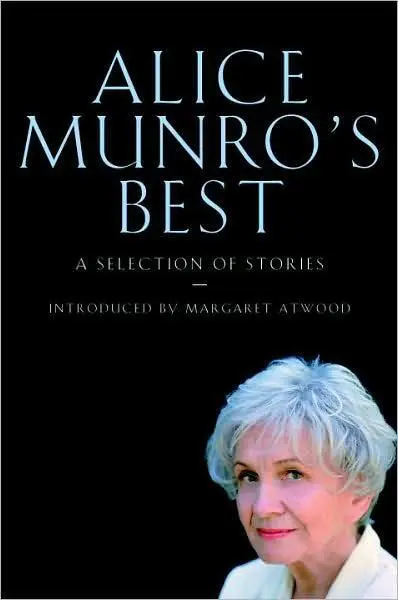
- Название:Alice Munro's Best
- Автор:
- Издательство:McClelland & Stewart
- Жанр:
- Год:2008
- Город:Toronto
- ISBN:9780771065200
- Рейтинг книги:3 / 5. Голосов: 1
-
Избранное:Добавить в избранное
- Отзывы:
-
Ваша оценка:
Alice Munro's Best: краткое содержание, описание и аннотация
Предлагаем к чтению аннотацию, описание, краткое содержание или предисловие (зависит от того, что написал сам автор книги «Alice Munro's Best»). Если вы не нашли необходимую информацию о книге — напишите в комментариях, мы постараемся отыскать её.
This splendid gift edition is sure to delight Alice Munro’s growing body of admirers, what Atwood calls her “devoted international readership.” Long-time fans of her stories will enjoy meeting old favourites, where their new setting in this book may reveal new sides to what once seemed a familiar story; devoted followers may even dispute the exclusion of a specially-beloved story. Readers lucky enough to have found her recently will be delighted, as one masterpiece succeeds another.
The 17 stories are carefully arranged in the order in which she wrote them, which allows us to follow the development of her range. “A Wilderness Station,” for example, breaks “short story rules” by taking us right back to the 1830s then jumping forward more than 100 years. “The Albanian Virgin” destroys the idea that her stories are set in B.C. or in Ontario’s “Alice Munro Country.” And “The Bear Came Over the Mountain,” the story behind the film
, takes us far from the world of young girls learning about sex into unflinching old age.
This is a book to read slowly, savouring each story. It deserves a place in every Canadian book-lover’s library.
Alice Munro's Best — читать онлайн бесплатно полную книгу (весь текст) целиком
Ниже представлен текст книги, разбитый по страницам. Система сохранения места последней прочитанной страницы, позволяет с удобством читать онлайн бесплатно книгу «Alice Munro's Best», без необходимости каждый раз заново искать на чём Вы остановились. Поставьте закладку, и сможете в любой момент перейти на страницу, на которой закончили чтение.
Интервал:
Закладка:
She did not understand that under no circumstances would anybody go to the police. She didn’t know that she belonged now to this tribe, this kula , even though taking her prisoner had not been their intention and was an embarrassing mistake.
It is shameful beyond belief to attack a woman. When they had shot and killed her guide, they had thought that she would turn her horse around and fly back down the mountain road, back to Bar. But her horse took fright at the shot and stumbled among the boulders and she fell, and her leg was injured. Then they had no choice but to carry her with them, back across the border between the Crna Gora (which means Black Rock, or Montenegro) and Maltsia e madhe.
“But why rob the guide and not me?” she said, naturally thinking robbery to be the motive. She thought of how starved they looked, the man and his horse, and of the fluttering white rags of his headdress.
“Oh, they are not robbers!” said the Franciscan, shocked. “They are honest men. They shot him because they were in blood with him. With his house. It is their law.”
He told her that the man who had been shot, her guide, had killed a man of this kula. He had done that because the man he had killed had killed a man of his kula. This would go on, it had been going on for a long time now, there were always more sons being born. They think they have more sons than other people in the world, and it is to serve this necessity.
“Well, it is terrible,” the Franciscan concluded. “But it is for their honor, the honor of their family. They are always ready to die for their honor.”
She said that her guide did not seem to be so ready, if he had fled to Crna Gora.
“But it did not make any difference, did it?” said the Franciscan. “Even if he had gone to America, it would not have made any difference.”
AT TRIESTE SHE had boarded a steamer, to travel down the Dalmatian Coast. She was with her friends Mr. and Mrs. Cozzens, whom she had met in Italy, and their friend Dr. Lamb, who had joined them from England. They put in at the little port of Bar, which the Italians call Antivari, and stayed the night at the European Hotel. After dinner they walked on the terrace, but Mrs. Cozzens was afraid of a chill, so they went indoors and played cards. There was rain in the night. She woke up and listened to the rain and was full of disappointment, which gave rise to a loathing for these middle-aged people, particularly for Dr. Lamb, whom she believed the Cozzenses had summoned from England to meet her. They probably thought she was rich. A transatlantic heiress whose accent they could almost forgive. These people ate too much and then they had to take pills. And they worried about being in strange places — what had they come for? In the morning she would have to get back on the boat with them or they would make a fuss. She would never take the road over the mountains to Cetinge, Montenegro’s capital city — they had been told that it was not wise. She would never see the bell tower where the heads of Turks used to hang, or the plane tree under which the Poet-Prince held audience with the people. She could not get back to sleep, so she decided to go downstairs with the first light, and, even if it was still raining, to go a little way up the road behind the town, just to see the ruins that she knew were there, among the olive trees, and the Austrian fortress on its rock and the dark face of Mount Lovchen.
The weather obliged her, and so did the man at the hotel desk, producing almost at once a tattered but cheerful guide and his underfed horse. They set out — she on the horse, the man walking ahead. The road was steep and twisting and full of boulders, the sun increasingly hot and the intervening shade cold and black. She became hungry and thought she must turn back soon. She would have breakfast with her companions, who got up late.
No doubt there was some sort of search for her, after the guide’s body was found. The authorities must have been notified — whoever the authorities were. The boat must have sailed on time, her friends must have gone with it. The hotel had not taken their passports. Nobody back in Canada would think of investigating. She was not writing regularly to anyone, she had had a falling-out with her brother, her parents were dead. You won’t come home till all your inheritance is spent, her brother had said, and then who will look after you?
When she was being carried through the pine forest, she awoke and found herself suspended, lulled — in spite of the pain and perhaps because of the raki — into a disbelieving surrender. She fastened her eyes on the bundle that was hanging from the saddle of the man ahead of her and knocking against the horse’s back. It was something about the size of a cabbage, wrapped in a stiff and rusty-looking cloth.
I HEARD THIS STORY in the old St. Joseph’s Hospital in Victoria from Charlotte, who was the sort of friend I had in my early days there. My friendships then seemed both intimate and uncertain. I never knew why people told me things, or what they meant me to believe.
I had come to the hospital with flowers and chocolates. Charlotte lifted her head, with its clipped and feathery white hair, toward the roses. “Bah!” she said. “They have no smell! Not to me, anyway. They are beautiful, of course.
“You must eat the chocolates yourself,” she said. “Everything tastes like tar to me. I don’t know how I know what tar tastes like, but this is what I think.”
She was feverish. Her hand, when I held it, felt hot and puffy. Her hair had all been cut off, and this made her look as if she had actually lost flesh around her face and neck. The part of her under the hospital covers seemed as extensive and lumpy as ever.
“But you must not think I am ungrateful,” she said. “Sit down. Bring that chair from over there — she doesn’t need it.”
There were two other women in the room. One was just a thatch of yellow-gray hair on the pillow, and the other was tied into a chair, wriggling and grunting.
“This is a terrible place,” said Charlotte. “But we must just try our best to put up with it. I am so glad to see you. That one over there yells all night long,” she said, nodding toward the window bed. “We must thank Christ she’s asleep now. I don’t get a wink of sleep, but I have been putting the time to very good use. What do you think I’ve been doing? I’ve been making up a story, for a movie! I have it all in my head and I want you to hear it. You will be able to judge if it will make a good movie. I think it will. I would like Jennifer Jones to act in it. I don’t know, though. She does not seem to have the same spirit anymore. She married that mogul.
“Listen,” she said. “(Oh, could you haul that pillow up more, behind my head?) It takes place in Albania, in northern Albania, which is called Maltsia e madhe, in the nineteen-twenties, when things were very primitive. It is about a young woman travelling alone. Lottar is her name in the story.”
I sat and listened. Charlotte would lean forward, even rock a little on her hard bed, stressing some point for me. Her puffy hands flew up and down, her blue eyes widened commandingly, and then from time to time she sank back onto the pillows, and she shut her eyes to get the story in focus again. Ah, yes, she said. Yes, yes. And she continued.
“Yes, yes,” she said at last. “I know how it goes on, but that is enough for now. You will have to come back. Tomorrow. Will you come back?”
I said, yes, tomorrow, and she appeared to have fallen asleep without hearing me.
THE KULA WAS a great, rough stone house with a stable below and the living quarters above. A veranda ran all the way around, and there would always be an old woman sitting there, with a bobbin contraption that flew like a bird from one hand to the other and left a trail of shiny black braid, mile after mile of black braid, which was the adornment of all the men’s trousers. Other women worked at the looms or sewed together the leather sandals. Nobody sat there knitting, because nobody would think to sit down to knit. Knitting was what they did while they trotted back and forth to the spring with their water barrels strapped to their backs, or took the path to the fields or to the beech wood, where they collected the fallen branches. They knitted stockings — black and white, red and white, with zigzag patterns like lightning strokes. Women’s hands must never be idle. Before dawn they pounded the bread dough in its blackened wooden trough, shaped it into loaves on the backs of shovels, and baked it on the hearth. (It was corn bread, unleavened and eaten hot, which would swell up like a puffball in your stomach.) Then they had to sweep out the kula and dump the dirty ferns and pile up armloads of fresh ferns for the next night’s sleep. This was often one of Lottar’s jobs, since she was so unskilled at everything else. Little girls stirred the yogurt so that lumps would not form as it soured. Older girls might butcher a kid and sew up its stomach, which they had stuffed with wild garlic and sage and apples. Or they would go together, girls and women, all ages, to wash the men’s white head scarves in the cold little river nearby, whose waters were clear as glass. They tended the tobacco crop and hung the ripe leaves to dry in the darkened shed. They hoed the corn and cucumbers, milked the ewes.
Читать дальшеИнтервал:
Закладка:
Похожие книги на «Alice Munro's Best»
Представляем Вашему вниманию похожие книги на «Alice Munro's Best» списком для выбора. Мы отобрали схожую по названию и смыслу литературу в надежде предоставить читателям больше вариантов отыскать новые, интересные, ещё непрочитанные произведения.



Обсуждение, отзывы о книге «Alice Munro's Best» и просто собственные мнения читателей. Оставьте ваши комментарии, напишите, что Вы думаете о произведении, его смысле или главных героях. Укажите что конкретно понравилось, а что нет, и почему Вы так считаете.