Alice Munro - Alice Munro's Best
Здесь есть возможность читать онлайн «Alice Munro - Alice Munro's Best» весь текст электронной книги совершенно бесплатно (целиком полную версию без сокращений). В некоторых случаях можно слушать аудио, скачать через торрент в формате fb2 и присутствует краткое содержание. Город: Toronto, Год выпуска: 2008, ISBN: 2008, Издательство: McClelland & Stewart, Жанр: Современная проза, на английском языке. Описание произведения, (предисловие) а так же отзывы посетителей доступны на портале библиотеки ЛибКат.

- Название:Alice Munro's Best
- Автор:
- Издательство:McClelland & Stewart
- Жанр:
- Год:2008
- Город:Toronto
- ISBN:9780771065200
- Рейтинг книги:3 / 5. Голосов: 1
-
Избранное:Добавить в избранное
- Отзывы:
-
Ваша оценка:
Alice Munro's Best: краткое содержание, описание и аннотация
Предлагаем к чтению аннотацию, описание, краткое содержание или предисловие (зависит от того, что написал сам автор книги «Alice Munro's Best»). Если вы не нашли необходимую информацию о книге — напишите в комментариях, мы постараемся отыскать её.
This splendid gift edition is sure to delight Alice Munro’s growing body of admirers, what Atwood calls her “devoted international readership.” Long-time fans of her stories will enjoy meeting old favourites, where their new setting in this book may reveal new sides to what once seemed a familiar story; devoted followers may even dispute the exclusion of a specially-beloved story. Readers lucky enough to have found her recently will be delighted, as one masterpiece succeeds another.
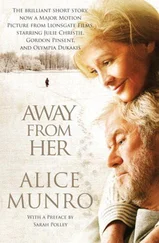
The 17 stories are carefully arranged in the order in which she wrote them, which allows us to follow the development of her range. “A Wilderness Station,” for example, breaks “short story rules” by taking us right back to the 1830s then jumping forward more than 100 years. “The Albanian Virgin” destroys the idea that her stories are set in B.C. or in Ontario’s “Alice Munro Country.” And “The Bear Came Over the Mountain,” the story behind the film
, takes us far from the world of young girls learning about sex into unflinching old age.
This is a book to read slowly, savouring each story. It deserves a place in every Canadian book-lover’s library.
Alice Munro's Best — читать онлайн бесплатно полную книгу (весь текст) целиком
Ниже представлен текст книги, разбитый по страницам. Система сохранения места последней прочитанной страницы, позволяет с удобством читать онлайн бесплатно книгу «Alice Munro's Best», без необходимости каждый раз заново искать на чём Вы остановились. Поставьте закладку, и сможете в любой момент перейти на страницу, на которой закончили чтение.
Интервал:
Закладка:
She has to think of so many things at once — Champlain and the naked Indians and the salt deep in the earth, but as well as the salt the money, the money-making intent brewing forever in heads like Jarvis Poulter’s. Also the brutal storms of winter and the clumsy and benighted deeds on Pearl Street. The changes of climate are often violent, and if you think about it there is no peace even in the stars. All this can be borne only if it is channelled into a poem, and the word channelled is appropriate, because the name of the poem will be — it is — “The Meneseteung.” The name of the poem is the name of the river. No, in fact it is the river, the Meneseteung, that is the poem — with its deep holes and rapids and blissful pools under the summer trees and its grinding blocks of ice thrown up at the end of winter and its desolating spring floods. Almeda looks deep, deep into the river of her mind and into the tablecloth, and she sees the crocheted roses floating. They look bunchy and foolish, her mother’s crocheted roses — they don’t look much like real flowers. But their effort, their floating independence, their pleasure in their silly selves do seem to her so admirable. A hopeful sign. Meneseteung.
She doesn’t leave the room until dusk, when she goes out to the privy again and discovers that she is bleeding, her flow has started. She will have to get a towel, strap it on, bandage herself up. Never before, in health, has she passed a whole day in her nightdress. She doesn’t feel any particular anxiety about this. On her way through the kitchen, she walks through the pool of grape juice. She knows that she will have to mop it up, but not yet, and she walks upstairs leaving purple footprints and smelling her escaping blood and the sweat of her body that has sat all day in the closed hot room. No need for alarm. For she hasn’t thought that crocheted roses could float away or that tombstones could hurry down the street. She doesn’t mistake that for reality, and neither does she mistake anything else for reality, and that is how she knows that she is sane.
VI
I dream of you by night,
I visit you by day.
Father, Mother, Sister, Brother,
Have you no word to say?
April 22, 1903. At her residence, on Tuesday last, between three and four o’clock in the afternoon, there passed away a lady of talent and refinement whose pen, in days gone by, enriched our local literature with a volume of sensitive, eloquent verse. It is a sad misfortune that in later years the mind of this fine person had become somewhat clouded and her behaviour, in consequence, somewhat rash and unusual. Her attention to decorum and to the care and adornment of her person had suffered, to the degree that she had become, in the eyes of those unmindful of her former pride and daintiness, a familiar eccentric, or even, sadly, a figure of fun. But now all such lapses pass from memory and what is recalled is her excellent published verse, her labours in former days in the Sunday school, her dutiful care of her parents, her noble womanly nature, charitable concerns, and unfailing religious faith. Her last illness was of mercifully short duration. She caught cold, after having become thoroughly wet from a ramble in the Pearl Street bog. (It has been said that some urchins chased her into the water, and such is the boldness and cruelty of some of our youth, and their observed persecution of this lady, that the tale cannot be entirely discounted.) The cold developed into pneumonia, and she died, attended at the last by a former neighbour, Mrs. Bert (Annie) Friels, who witnessed her calm and faithful end. January, 1904. One of the founders of our community, an early maker and shaker of this town, was abruptly removed from our midst on Monday morning last, whilst attending to his correspondence in the office of his company. Mr. Jarvis Poulter possessed a keen and lively commercial spirit, which was instrumental in the creation of not one but several local enterprises, bringing the benefits of industry, productivity, and employment to our town.
So the Vidette runs on, copious and assured. Hardly a death goes undescribed, or a life unevaluated.
I LOOKED FOR Almeda Roth in the graveyard. I found the family stone. There was just one name on it — ROTH. Then I noticed two flat stones in the ground, a distance of a few feet — six feet? — from the upright stone. One of these said PAPA, the other MAMA. Farther out from these I found two other flat stones, with the names WILLIAM and CATHERINE on them. I had to clear away some overgrowing grass and dirt to see the full name of Catherine. No birth or death dates for anybody, nothing about being dearly beloved. It was a private sort of memorializing, not for the world. There were no roses, either — no sign of a rosebush. But perhaps it was taken out. The groundskeeper doesn’t like such things; they are a nuisance to the lawnmower, and if there is nobody left to object he will pull them out.
I thought that Almeda must have been buried somewhere else. When this plot was bought — at the time of the two children’s deaths — she would still have been expected to marry, and to lie finally beside her husband. They might not have left room for her here. Then I saw that the stones in the ground fanned out from the upright stone. First the two for the parents, then the two for the children, but these were placed in such a way that there was room for a third, to complete the fan. I paced out from CATHERINE the same number of steps that it took to get from CATHERINE to WILLIAM, and at this spot I began pulling grass and scrabbling in the dirt with my bare hands. Soon I felt the stone and knew that I was right. I worked away and got the whole stone clear and I read the name MEDA. There it was with the others, staring at the sky.
I made sure I had got to the edge of the stone. That was all the name there was — Meda. So it was true that she was called by that name in the family. Not just in the poem. Or perhaps she chose her name from the poem, to be written on her stone.
I thought that there wasn’t anybody alive in the world but me who would know this, who would make the connection. And I would be the last person to do so. But perhaps this isn’t so. People are curious. A few people are. They will be driven to find things out, even trivial things. They will put things together. You see them going around with notebooks, scraping the dirt off gravestones, reading microfilm, just in the hope of seeing this trickle in time, making a connection, rescuing one thing from the rubbish.
And they may get it wrong, after all. I may have got it wrong. I don’t know if she ever took laudanum. Many ladies did. I don’t know if she ever made grape jelly.
DIFFERENTLY
GEORGIA ONCE TOOK a creative-writing course, and what the instructor told her was: Too many things. Too many things going on at the same time; also too many people. Think, he told her. What is the important thing? What do you want us to pay attention to? Think.
Eventually she wrote a story that was about her grandfather killing chickens, and the instructor seemed to be pleased with it. Georgia herself thought that it was a fake. She made a long list of all the things that had been left out and handed it in as an appendix to the story. The instructor said that she expected too much, of herself and of the process, and that she was wearing him out.
The course was not a total loss, because Georgia and the instructor ended up living together. They still live together, in Ontario, on a farm. They sell raspberries, and run a small publishing business. When Georgia can get the money together, she goes to Vancouver to visit her sons. This fall Saturday she has taken the ferry across to Victoria, where she used to live. She did this on an impulse that she doesn’t really trust, and by midafternoon, when she walks up the driveway of the splendid stone house where she used to visit Maya, she has already been taken over some fairly shaky ground.
Читать дальшеИнтервал:
Закладка:
Похожие книги на «Alice Munro's Best»
Представляем Вашему вниманию похожие книги на «Alice Munro's Best» списком для выбора. Мы отобрали схожую по названию и смыслу литературу в надежде предоставить читателям больше вариантов отыскать новые, интересные, ещё непрочитанные произведения.





Обсуждение, отзывы о книге «Alice Munro's Best» и просто собственные мнения читателей. Оставьте ваши комментарии, напишите, что Вы думаете о произведении, его смысле или главных героях. Укажите что конкретно понравилось, а что нет, и почему Вы так считаете.