Hilary Mantel - Beyond Black
Здесь есть возможность читать онлайн «Hilary Mantel - Beyond Black» — ознакомительный отрывок электронной книги совершенно бесплатно, а после прочтения отрывка купить полную версию. В некоторых случаях можно слушать аудио, скачать через торрент в формате fb2 и присутствует краткое содержание. Год выпуска: 2006, Издательство: Macmillan, Жанр: Современная проза, roman, Детектив, sf_mystic, на английском языке. Описание произведения, (предисловие) а так же отзывы посетителей доступны на портале библиотеки ЛибКат.
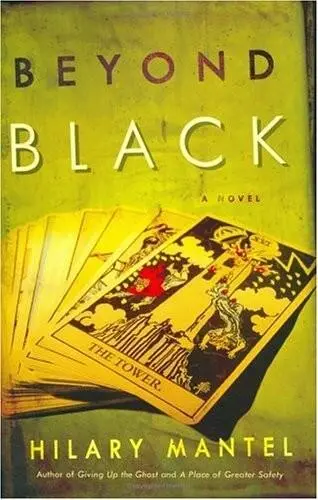
- Название:Beyond Black
- Автор:
- Издательство:Macmillan
- Жанр:
- Год:2006
- ISBN:нет данных
- Рейтинг книги:5 / 5. Голосов: 1
-
Избранное:Добавить в избранное
- Отзывы:
-
Ваша оценка:
Beyond Black: краткое содержание, описание и аннотация
Предлагаем к чтению аннотацию, описание, краткое содержание или предисловие (зависит от того, что написал сам автор книги «Beyond Black»). Если вы не нашли необходимую информацию о книге — напишите в комментариях, мы постараемся отыскать её.
Alison, the daughter of a prostitute, beleaguered during her childhood by the pressures of her connection to the spiritual world, lives in a different kind of solitude. She cannot escape the dead who speak to her, least of all the constant presence of Morris, her low-life spiritual guide. An expansive presence onstage, Alison at once feels her bond with Colette, inviting her to join her on the road as her personal assistant and companion.
Troubles spiral out of control when the pair moves to a suburban wasteland in what was once the English countryside and take up with a spirit guide and his drowned therapist. It is not long before Alison's connection to the place beyond black threatens to uproot their lives forever. This is Hilary Mantel at her finest- insightful, darkly comic, unorthodox, and thrilling to read.
Beyond Black — читать онлайн ознакомительный отрывок
Ниже представлен текст книги, разбитый по страницам. Система сохранения места последней прочитанной страницы, позволяет с удобством читать онлайн бесплатно книгу «Beyond Black», без необходимости каждый раз заново искать на чём Вы остановились. Поставьте закладку, и сможете в любой момент перейти на страницу, на которой закончили чтение.
Интервал:
Закладка:
“You don’t know what will trigger them,” Al says. “There’s a whole pack of them, you see. Accumulating. It worries me. I’m not saying it doesn’t worry me. The only thing is, the only good thing—Morris doesn’t bring them home. They fade away somewhere, before we turn into Admiral Drive. He doesn’t like it, you see. Says it’s not a proper home. He doesn’t like the garden.”
They were coming back from Suffolk—or somewhere, at any rate, where people still had an appetite—because they were behind a van that said WRIGHT’S FAMOUS PIES, SAVORIES, CONFECTIONERY.
“Look at that,” Al said, and read it out, laughing. At once she thought, why did I do that? I could kick myself. They’ll claim they’re hungry now.
Morris gripped the passenger seat and rocked it, saying, “I could murder a Famous Pie.” Said Pikey Pete, “You can’t beat a Savoury.” Said young Dean, with his customary politeness, “I’ll have a Confectionery, please.”
Colette said, “Is that headrest rocking again, or is it you fidgetting? God, I’m starving, I’m going to pull in at Clacket Lane.”
When Colette was at home she lived on vitamin pills and ginseng. She was a vegetarian except for bacon and skinless chicken breasts. On the road they ate what they could get, when they could get it. They dined in the theme pubs of Billaricay and Egham. In Virginia Water they ate nachos and in Broxborne they ate fat pillows of dough that the baker called Belgian Buns. In laybys they ate leaking seafood sandwiches and when spring came, in the pedestrianized zones of small Thameside towns they sat on benches with warm Cornish pasties, nibbling daintily around the frills. They ate broccoli and three-cheese bake straight from the cash-and-carry, and wholesaler’s quiche Lorraine with sinewy nuggets of ham as pink as a scalded baby, and KrispyKrum Chickettes, and lemon mousse that reminded them of the kind of foam you clean carpets with.
“I have to have something sweet,” Alison said. “I have to keep my energy levels up. Some people think it’s glamorous having psychic powers. They’re dead wrong.”
Colette thought, it’s hard enough keeping her tidy, never mind glamorous. She served her time with Al, in the shopping precincts of small towns, standing outside fitting rooms the size of sentry boxes, with curtains that never pulled straight across. There were creaks and sighs from the other sentry boxes; the thin smell of desperation and self-hatred hung in the air. Colette had made a vow to take her upmarket, but Al was uncomfortable in posh shops. She did have some pride, though. Whatever she bought, she decanted into a carrier bag from a shop that catered to normal-sized women.
“I have to keep body and mind receptive and quiet,” she said. “If carrying a bit of flesh is the price I have to pay, so be it. I can’t tune in to Spirit if I’m bouncing around in an aerobics class.”
Morris said, have you seen MacArthur, he is a mate of mine and Keef Capstick, he is a mate of Keef ’s too. Have you seen MacArthur, he is a mate of mine and he wears a knitted weskit. Have you seen MacArthur, he has only one eye, have you seen him, he has one earlobe ripped off, a sailor ripped it off in a fracas, that’s what he tells people. How did he lose his eye? Well, that’s another story. He blames that on a sailor too, but round here, we know he’s lying. And Morris gave a dirty laugh.
When spring came, the gardening service sent a man. A truck dropped him, and his mower, then rattled off. Colette went to the door to administer him. No use waiting for Al to do it.
“It’s only I don’t know how to start it?” he said. He stood pushing a finger under his woolly hat, as if, Colette thought, he were making some sort of secret sign to her.
She stared at him. “You don’t know how to start the mower?”
He said, “What do I look like, in this hat?”
“I can’t imagine,” she said.
“Do you think I look like a brickie?”
“I couldn’t say.”
“You can see ’em all over the place, they’re building walls.” He pointed. “Down there.”
“You’re soaked through,” Colette said, noticing this.
The man said, “No, it’s not up to much, is it, this cardigan, parka, jacket? I could do with a fleece.”
“A fleece wouldn’t keep the rain out.”
“I could get a plastic, a plastic to put over it.”
“Whatever you think best,” Colette said coldly.
The man trudged away. Colette shut the door.
Ten minutes later the doorbell rang. The man had pulled his hat over his eyes. He was standing on the doormat, dripping under the porch. “So, starting it? Could you?”
Colette’s eyes swept him, up and down. She saw with disgust that his toes were poking out of his shoes, waggling the cracked leather up and down. “Are you sure you’re qualified for this job?”
The man shook his head. “I’ve not been trained on a mower,” he said.
“Why did they send you?”
“I suppose they thought you could train me on it.”
“And why would they think that?”
“Well, you look a lovely girl.”
“Don’t try it on,” Colette said. “I’m ringing your manager.” She slammed the door.
Al came to the head of the stairs. She had been having a lie-down, after seeing a bereaved client. “Col?”
“Yes?”
“Was that a man?” Her voice was vague, sleepy.
“It was the gardening service. He was crap. He couldn’t start the mower.”
“So what happened?”
“So I told him to bugger off and I’m ringing them to complain.”
“What sort of man was he?”
“An idiot.”
“Young, old?”
“I don’t know. I didn’t look. He was wet. He had a hat on.”
In summer, they drove through countryside perfumed by the noxious vapours of pesticides and herbicides, and by the sweet cloud that lay over the golden fields of oil-seed rape. Their eyes streamed, their throats dried and tightened; Al groped in her bag for antiseptic lozenges. Autumn: she saw the full moon snared in the netting of a football field, caught there bulging, its face bruised. When a traffic snarl-up brought them to a halt, she noticed the trudging shopper with her grocery bags, leaning into the wind. She noticed the rotted wood of a balcony, London brick weeping soot, winter mould on a stack of garden chairs. A curve in the road, a pause at traffic lights, brings you close to another life, to an office window where a man leans on a filing cabinet in a crumpled shirt, as close as some man you know; while a van backs into the road, you halt, you are detained, and the pause makes you intimate with a man stroking his bald head, framed in the lighted cavity of his garage beneath the up-and-over door.
At journey’s end comes the struggle with randomly arriving trivia, zinging through the ether. You are going to get a new sofa. You are a very tenacious person. Morris was supposed to act as a sort of doorman, ushering the spirits and making them queue up, threatening them so they don’t all talk at once. But he seemed to have fallen into a prolonged sulk, since they moved to Admiral Drive. Nothing suited him, and he left her to be teased and tormented by Diana imitators, Elvis imitators, the petty dead purveying misinformation, working tricks and setting riddles. From her audiences, the same old questions: for example, is there sex in Spirit World?
She would answer, giggling, “There’s an elderly lady I know who’s very psychic, and I’ll tell you what she says: she says, there’s a tremendous amount of love in Spirit World, but there’s none of that funny stuff.”
It would get a laugh. The audience would relax. They didn’t really suppose there could be an answer to this question. But once when they got home, Colette had said, “Well, is there sex in Spirit World? I don’t want to know what Mrs. Etchells says, I want to know what you say.”
Читать дальшеИнтервал:
Закладка:
Похожие книги на «Beyond Black»
Представляем Вашему вниманию похожие книги на «Beyond Black» списком для выбора. Мы отобрали схожую по названию и смыслу литературу в надежде предоставить читателям больше вариантов отыскать новые, интересные, ещё непрочитанные произведения.










Обсуждение, отзывы о книге «Beyond Black» и просто собственные мнения читателей. Оставьте ваши комментарии, напишите, что Вы думаете о произведении, его смысле или главных героях. Укажите что конкретно понравилось, а что нет, и почему Вы так считаете.