Stanley Elkin - George Mills
Здесь есть возможность читать онлайн «Stanley Elkin - George Mills» весь текст электронной книги совершенно бесплатно (целиком полную версию без сокращений). В некоторых случаях можно слушать аудио, скачать через торрент в формате fb2 и присутствует краткое содержание. Год выпуска: 2010, Издательство: Open Road Integrated Media LLC, Жанр: Современная проза, на английском языке. Описание произведения, (предисловие) а так же отзывы посетителей доступны на портале библиотеки ЛибКат.
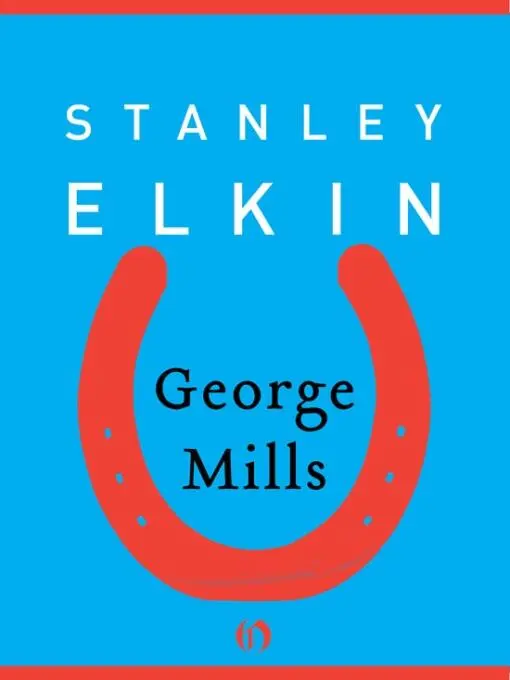
- Название:George Mills
- Автор:
- Издательство:Open Road Integrated Media LLC
- Жанр:
- Год:2010
- ISBN:нет данных
- Рейтинг книги:3 / 5. Голосов: 1
-
Избранное:Добавить в избранное
- Отзывы:
-
Ваша оценка:
George Mills: краткое содержание, описание и аннотация
Предлагаем к чтению аннотацию, описание, краткое содержание или предисловие (зависит от того, что написал сам автор книги «George Mills»). Если вы не нашли необходимую информацию о книге — напишите в комментариях, мы постараемся отыскать её.
George Mills — читать онлайн бесплатно полную книгу (весь текст) целиком
Ниже представлен текст книги, разбитый по страницам. Система сохранения места последней прочитанной страницы, позволяет с удобством читать онлайн бесплатно книгу «George Mills», без необходимости каждый раз заново искать на чём Вы остановились. Поставьте закладку, и сможете в любой момент перейти на страницу, на которой закончили чтение.
Интервал:
Закладка:
“I don’t care about your problems.”
“Sure, if you did you’d get stoned too.”
“Yeah, well, I’ve got my own troubles,” George said, turning away.
“What, a saved, tucked-in guy like you? All snuggy snug and living the lap robe, deck chair life?”
“Louise told you that on the train.”
“Who? Oh. Lulu? Nah. The mischief maker told me.”
“Mrs. Glazer?”
“Long distance. She was dying. She reached out and touched someone. Cancerous bitch.”
“Come if you’re coming. I’m going back.”
“Wait,” Cornell said, and his voice was unenhanced. “Does Mahesvaram mean anything to you?”
When George turned back to look at him Cornell was standing on the tracks, all the fingers of his left hand stuffed into his mouth. “It’s that word she gave you,” he said quietly, “it was her mantra.”
Messenger seemed as if he were going to collapse, and Mills rushed to support him.
“Watch out!” Grant shouted. “You’re standing on the third rail!”
The two men leaped away from each other, tripping over the outside track. Grant roared. “Geez, that’s the oldest one in the book,” the engineer wheezed. “I used to get Judith with that one. Same as I got her kids. A third rail on a steam engine?”
“What else?” Cornell hissed, recovering, grasping the sleeve of Mills’s suit coat. “Did she tell you about my kid?”
“Not now,” George said, and pulled away. “You go on. I have to talk to that guy.” He turned toward the engineer, already addressing him while he was still several yards away. “What’s your problem, Grant?”
“Oh, my problem.”
“This morning I was your dead mistress’s pallbearer. The family knows the use I’ve been to them. I mean the girls, I mean the sisters-in-law, I mean the aunt. I mean Mr. Glazer and the Claunches, Jr. and Sr. both. If I were to mention your rudeness to me, or the people in my party…”
Grant was laughing, applauding his speech. “Hear hear,” he said. “Har har.”
“You’re drunk.”
“Do you play cards?” Grant asked suddenly.
“What?”
“Cards. Card games. Do you know how to play card games?”
“Yes,” Mills said, “sure.”
“How many games?”
“What are you talking about?”
“How many card games do you know how to play? Gin? Do you know gin?”
“I play gin.”
“Call rummy? Michigan rummy?”
“Michigan rummy.”
“Pinochle? Bridge?”
“I never learned bridge.”
“You never learned.”
“So?”
“You never learned. You don’t know call rummy. Or a dozen games I could mention you’ve never heard of. The poker variations. Sure, you play cards. You never learned. You know who taught me bridge? Judith. Judith did. I was her bridge partner.”
“You’re crazy,” Mills said.
“What do you think my father did? For a living? How did he support us?”
“How would I know?”
“Guess.”
“I don’t know. He worked for the Claunches. He was in service. I don’t know. You’re the gardener’s boy.”
They were at the station.
“My father was a pharmacist. He owned a drugstore.”
“Guess what?” Louise said, coming out of the train station. She was laughing.
“My daughter programs computers and my son has three shoestores in Kansas City,” the servant said.
“That john’s no bigger than a child’s potty,” Louise said. “The toilet paper’s no wider than a reel of tape. It’s scale. Everything’s scale.”
He opened the door of his Buick Special and was about to get in — Louise was already in the back, Cornell in front — when someone called to him. “Hold on a moment would you?” It was the man who had waved to him, the one who’d been admiring the classic cars when Mills had passed the garages on his way to find Louise.
“Yes?” Mills said. “What?”
“Don’t mean to hold you up,” the man said, approaching the car. “Your Special?”
“Yes,” Mills said.
“Sixty-three?”
“Yes.”
“Thought so,” the man said. “Spotted it when you drove up to St. Michael and St. George this morning. Recognized the grille straight off. Dead giveaway. Had that lovely grille on her the year she was introduced and then they went to a different design the following year. Why’d they do that? Any idea?”
“No,” Mills said.
“Could be birds. Scooped in birds. Some aerodynamic thing. You think?”
“I don’t know.”
“That’s mine. Over there. The Studebaker.”
“Very nice.”
“Thank you,” the man said. “Felt a bit odd about driving it to her funeral but if that’s what old Judy wanted, why, hell, what the hell, eh?”
“What the hell,” George said.
“Look,” the man said, “take my card, will you? I know it’s a long shot, but if you ever do want to sell, give me a call. If I’m not at the office call me at home. The number’s unlisted but I’ve jotted it down on the back.”
Mills told him he wasn’t thinking of selling his car.
“I know,” the man said. “I’d feel the same way if I were you. But call anyway. We’ll do lunch at the club.” He looked in the car window and tipped an imaginary hat.
“Sir,” he said. “Madam.”
PART FOUR
1
It wasn’t religious this time, it was political and historical.
And maybe if I wasn’t the thinking man’s George Mills was the vocal one’s one. A witness, in a dynasty of witnesses, one more chump who crewed history, whose destiny it was to hang out with the field hands, just there, you see, in range and hard by, but a little out of focus in the group photographs, rounded up when the marauders came, feeding the flames, one more wisp of smoke at the Inquisitions, doing all the obligatory forced marches, boat folks from the word go, but nothing personal on anybody’s part. Not the government’s, not the rebels’. Certainly not our own.
My own taling meant for more than just the story hour, that kid’s garden of lullaby and closed circle of our family tradition. Your father-to-son disclosures I mean, all archived confidence and my spooked clan’s secret recipes. And if I was different it’s because I seemed to clamor for audience as well as style. Because we Millses have always had the latter. The former, too, if you come right down to it. Maybe particularly the former, even if it always turns out to be, as it always does turn out to be, some knee-jounced, lap-settled, thumb-sucking babe child who can’t get over any of it, who takes it all in, who takes it, terrified and relieved too that nothing, nothing whatsoever, is all that will ever be expected of him. That the only thing he has to do is remember that primal incident in the Polish forest when Guillalume fixed forever the Millsian parameters and gave us — never mind revolution, never mind reform bills, modern times or the inchworm creep of hope — our Constitution. And one thing other of course: to be ready to spill it all out when the babe child was on the other knee as it were, meanwhile perfecting his style — which we Millses have always had — rendering the story to his own inner ear if he were still without issue, perfecting his nuance as another might perfect his French for a trip abroad, and taking care to get the magic parts pat.
Because we’re not even a joke. After all these years, all these centuries. Not fabled in song and story, not even a joke. Our name, till I came along, never even in the papers. Our eyewitness unrecorded, our testimony not so much ignored as never even overheard, the generations sworn to secrecy, or if not actually sworn at least inclined that way. Content enough with our secret handshakes and coded bearing, our underground railway ways.
Читать дальшеИнтервал:
Закладка:
Похожие книги на «George Mills»
Представляем Вашему вниманию похожие книги на «George Mills» списком для выбора. Мы отобрали схожую по названию и смыслу литературу в надежде предоставить читателям больше вариантов отыскать новые, интересные, ещё непрочитанные произведения.


Обсуждение, отзывы о книге «George Mills» и просто собственные мнения читателей. Оставьте ваши комментарии, напишите, что Вы думаете о произведении, его смысле или главных героях. Укажите что конкретно понравилось, а что нет, и почему Вы так считаете.