Stanley Elkin - George Mills
Здесь есть возможность читать онлайн «Stanley Elkin - George Mills» весь текст электронной книги совершенно бесплатно (целиком полную версию без сокращений). В некоторых случаях можно слушать аудио, скачать через торрент в формате fb2 и присутствует краткое содержание. Год выпуска: 2010, Издательство: Open Road Integrated Media LLC, Жанр: Современная проза, на английском языке. Описание произведения, (предисловие) а так же отзывы посетителей доступны на портале библиотеки ЛибКат.
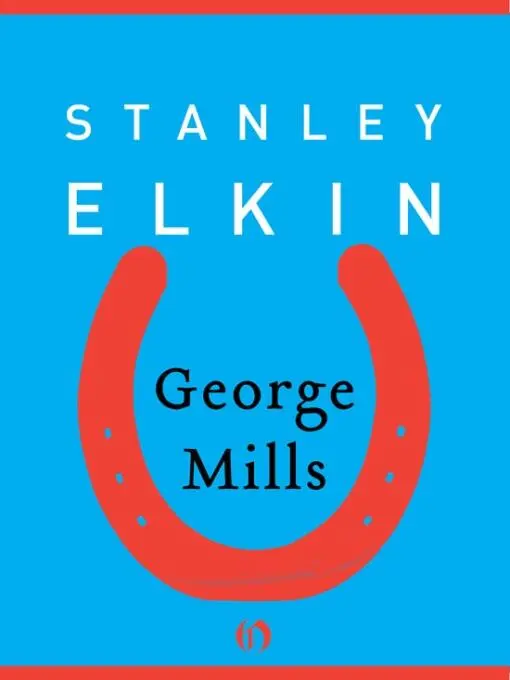
- Название:George Mills
- Автор:
- Издательство:Open Road Integrated Media LLC
- Жанр:
- Год:2010
- ISBN:нет данных
- Рейтинг книги:3 / 5. Голосов: 1
-
Избранное:Добавить в избранное
- Отзывы:
-
Ваша оценка:
George Mills: краткое содержание, описание и аннотация
Предлагаем к чтению аннотацию, описание, краткое содержание или предисловие (зависит от того, что написал сам автор книги «George Mills»). Если вы не нашли необходимую информацию о книге — напишите в комментариях, мы постараемся отыскать её.
George Mills — читать онлайн бесплатно полную книгу (весь текст) целиком
Ниже представлен текст книги, разбитый по страницам. Система сохранения места последней прочитанной страницы, позволяет с удобством читать онлайн бесплатно книгу «George Mills», без необходимости каждый раз заново искать на чём Вы остановились. Поставьте закладку, и сможете в любой момент перейти на страницу, на которой закончили чтение.
Интервал:
Закладка:
“Meals-on-Wheels people phoned? I never heard this. She must have called them when I wasn’t in the room.”
“She gave away all my unpublished numbers. She put it out on the highest authority — her word as somebody terminal — that I was their absentee landlord, the s.o.b. who wouldn’t pay for their crumbled plumbing or fix their faulty wiring, that I darkened their hallways and stairs and put governing devices on their water and electric. She told them that she became involved with Meals-on-Wheels when she discovered who owned those rat traps. She said it was to make moral restitution.”
“They called you up?”
“They’re poor, Mills. Do you know what poverty is? Real poverty? It’s not having any conception of how rich the rich really are. They don’t know doodly squat about us. Sure they called. I set them straight of course. Judith wasn’t crazy enough to believe her campaign would fly. But she did her damage. She got what she wanted.”
“What did she want?”
“What did she want? I’m an old man. It was those goddamn unpublished numbers. There must have been fifteen of them. It was to annoy me. All that trouble just to annoy me. Think! If I replaced them, tell me, how in hell could a man my age learn the new ones?”
Mills watched the old man, a rich old man who had the sturdy look of one who had had his children late in life, whose spiffy, offhand rich man’s style, his blazers and rakish, researched plaids (and dozens more just like them in hotel suites along prime beach front properties on selected coasts) would be familiar in boardrooms and the cockpits of private jets, at golf classics and aboard presidential yachts, to popes come calling and heads of state dropped in on, to mistresses (they would not be beautiful or even all that much younger than he), to society and the horsy and doggy sets in the capital cities (because surely he liked to get out once in a while, down to Brasilia to see the generals, off to Brussels for cabal and conspiracy with the good old boys of the Trilateral Commission), which were clothes and climate too, serviceable as an Arab’s burnoose. It was just possible, Mills thought, that Claunch alone had no decent suit, and he wondered how he came by his fervid imagination and privy fantasies. And just how rich the rich really are. Poor Mills, Mills thought. For all his serving-man’s history and butler’s genes, there had been no rich men in his life. These little litanies were a sort of crazy faith, the only one the saved, grace-stated man possessed. And was weary of his star-struck inventories which pulled against his nature in ways he did not even begin to understand.
He did not want to hear Claunch out, was suddenly ashamed of the services he’d already rendered. He told himself he listened out of courtesy, as a guest. For Lulu in the choo-choo for whom this day had been an outing. (And Messenger still to be heard out!)
“This,” Claunch said, waving his cigarette about the room, “was my daughter’s dollhouse.”
“Sir?”
“Well she made it up,” he said. “The team photographs were clipped out of yearbooks. The ribbons and trophies came from pawnshops, garage sales. Even the loving cups, the silver bowls.”
“But they’re inscribed,” George said.
“To strangers. To Whom It May Concern.’ “
“What for?”
Claunch shrugged. “She was nuts.”
Mills wasn’t interested. Not in Claunch’s money and power nor in his abrupt, summary ways. There was nothing for him here. He did not need to know anything or have anything. It was astonishing to him that he had ever gone to Mexico, that he had supervised deathbeds so unreluctantly. That his passions had been up. He was tired of all of them — of Breel, the Claunches, the Meals-on-Wheelers, Messenger, the Glazer girls, himself. Amazed he’d consented to be a pallbearer or given a moment’s thought to the character of his suit. Dumbstruck he’d taken any part at all. He had let everyone bully him, everyone. Father Merchant, all his lockstep, aspic’d ancestors. Now he would turn to go and Claunch Sr. would embrace him with one more confidence, one last devastating request. He knew what it might be, knew he would decline. That whatever the disparity in their wealth or power, it was Claunch who was subject to temptation, snarled in gravity and desire, Mills who was free.
So he turned to go. Disengaged as the dead, indifferent as wood.
“What did she tell you?”
“Nothing,” Mills said.
“She wasn’t a quiet woman. She wasn’t shy, she wasn’t modest. Anything on her mind burned holes in her pockets. She spent confidence like a drunken sailor.”
“Nothing was on her mind.”
“You were with her for weeks. You saw her die, you watched her dress size come down.”
“Yes.”
“What did she tell you?”
“Your unpublished numbers.”
“Don’t tangle with me, Mills. What did she tell you? ”
“Everything.”
“Horseshit.”
(And thought of Greatest Grandfather Mills.)
“Wait,” Claunch said, “don’t go. Please, Mills. Please, George.”
“Tell me what you want,” George Mills said. (Thinking: You can’t have it, there’s nothing left.) And didn’t wait for Claunch to reply, telling him instead what any of them — his forebears — would have told him, mollycoddling grief and concern, handling his anxiety like something armed, primed, talking him in off all his rich man’s window ledges — because much had been lost in the retelling, blurred in the father-to-son translations, distinction smudged as a ruin — seeing a thousand pairs of boots radiant in the hall, hearing even as he spoke them the rote and passionless lies, his ancient tribe’s ancient there-theres and now-nows, the primitive consolations — for bread, a nickel for a cup of coffee, a coin for a candy, a place to hide from the wind — worn-out as a witchdoctor’s gibberish. (And seeing for perhaps the first time in a thousand years something even more radiant and splendid than the cumulative shine on the cumulative boots. Glittering spectra beyond trust. Bright as belief. And thinking: Why, we could have destroyed them!)
“Was the pain ever more than she could handle?”
“Sometimes she’d take an extra aspirin.”
“Aspirin? Only aspirin?”
“Her belief comforted her.”
“Yes,” Claunch said, “there was that. She believed.”
(And Cornell to be mollified. Was something between them? Not his business. Nothing his business.)
“Tell me,” Claunch said softly, “did she curse me?”
“There was a kind of message.”
“Oh?” he said. “A message?”
“She didn’t want there to be hard feelings.”
“She told you she forgave me?” Claunch asked hopefully.
“No,” Mills said, and looked directly at the ambassadorlike man. “She told me she apologized.”
He passed a row of garages with their antique and classic automobiles. (He had noticed one or two at the church, three more at the cemetery. In the narrow roadway it had looked more like a rally than a burial.) And crossed past a middle-aged couple examining a restored 1933 Plymouth which Mills recognized as being exactly like Wickland’s old car in Florida, the one his father had driven to De Land on his errands. The man smiled and waved, and George nodded at him.
He did not have to be told where to go. Not instinct this time either, and certainly not grace and down from déjà vu and history. Not even imagination so much as a blueprint knowledge of its location, certain, sure as a housekeeper where things went. Knowing there’d be a toy station, population, elevation signs, a town’s given name high on the station nostalgic as a stand of trees or the iron horse itself. (It would bear the name of wood or game: Elmville. Deerfield.) Flowers would be planted around its platform, along its borders.
Читать дальшеИнтервал:
Закладка:
Похожие книги на «George Mills»
Представляем Вашему вниманию похожие книги на «George Mills» списком для выбора. Мы отобрали схожую по названию и смыслу литературу в надежде предоставить читателям больше вариантов отыскать новые, интересные, ещё непрочитанные произведения.


Обсуждение, отзывы о книге «George Mills» и просто собственные мнения читателей. Оставьте ваши комментарии, напишите, что Вы думаете о произведении, его смысле или главных героях. Укажите что конкретно понравилось, а что нет, и почему Вы так считаете.