Stanley Elkin - George Mills
Здесь есть возможность читать онлайн «Stanley Elkin - George Mills» весь текст электронной книги совершенно бесплатно (целиком полную версию без сокращений). В некоторых случаях можно слушать аудио, скачать через торрент в формате fb2 и присутствует краткое содержание. Год выпуска: 2010, Издательство: Open Road Integrated Media LLC, Жанр: Современная проза, на английском языке. Описание произведения, (предисловие) а так же отзывы посетителей доступны на портале библиотеки ЛибКат.
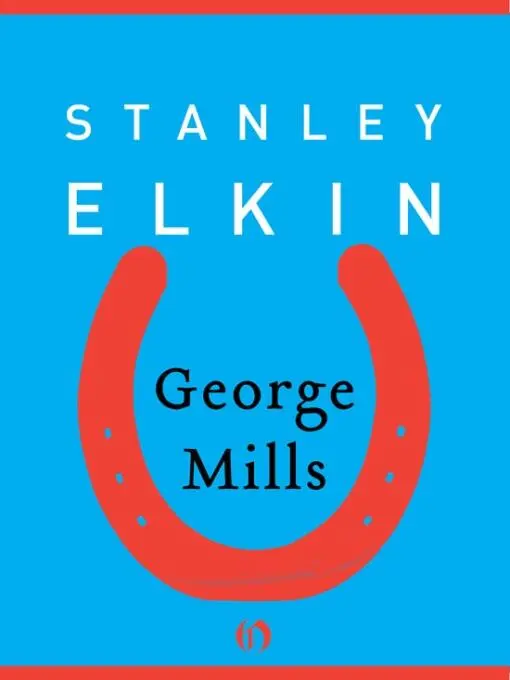
- Название:George Mills
- Автор:
- Издательство:Open Road Integrated Media LLC
- Жанр:
- Год:2010
- ISBN:нет данных
- Рейтинг книги:3 / 5. Голосов: 1
-
Избранное:Добавить в избранное
- Отзывы:
-
Ваша оценка:
George Mills: краткое содержание, описание и аннотация
Предлагаем к чтению аннотацию, описание, краткое содержание или предисловие (зависит от того, что написал сам автор книги «George Mills»). Если вы не нашли необходимую информацию о книге — напишите в комментариях, мы постараемся отыскать её.
George Mills — читать онлайн бесплатно полную книгу (весь текст) целиком
Ниже представлен текст книги, разбитый по страницам. Система сохранения места последней прочитанной страницы, позволяет с удобством читать онлайн бесплатно книгу «George Mills», без необходимости каждый раз заново искать на чём Вы остановились. Поставьте закладку, и сможете в любой момент перейти на страницу, на которой закончили чтение.
Интервал:
Закладка:
And started to climb a low knoll. And heard the train before he saw it. Not its comical whistle — certain of this, too: the outsize locomotive wail that would be hung about its neck like some apocalyptic joke — but its tinny chuff chuff as it pulled them along the banks and straightaways of its miniature routes. (Imagining Mrs. Glazer as a child, laughing hysterically, pissing her drawers, unable to help herself, seduced, ravished by motion.) Seeing it before he actually saw it (because despite reservation, protestation, all his low-grade weariness of their complicated, graceless lives, he had his Mills-given gift for the inventory of the rich, as intimate a knowledge of their safes, attics and basements as he had of his own clothes closet — precious treasure’s second sight).
At the top of the rise he spotted them in their luscious, bulldozed valley. Grant — who forebore to wear the engineer’s cap Mills saw stuffed in his pocket — sat behind a long locomotive on a sloping tender which served as a seat, his hands on controls which poked out of the rear of the engine like levers in a tavern game. Four topless passenger cars the dimensions of desks were pulled along at about fifteen miles an hour. The coaches’ only slightly scaled-down seats were plush, reversible, wide as rumble seat. George saw the heavy brass handles, tickets fluttering from them like bright feathers. Frames had been painted onto the wide safety glass that wrapped each car to give the illusion of windows. Milly sat primly alone in the last coach, his wife and Cornell facing each other in the second, their knees touching in the crowded quarters. Louise was the one who rode backward. Mary sat on a bench outside the station and glanced impatiently at her wrist watch and then up the line just as if she were waiting for a real train.
He started down the slope, his eyes on the single and sometimes double set of tracks which merged and seemed to cover each other like stripes on a barber pole. When he was halfway down the hill Louise spotted him and waved. She called to the engineer and Grant sounded the whistle, bass as a boat’s, and rang the bell, his face obscured in the plume of steam which feathered back from the stack.
George came to a siding next to some signals and switches and waited for the train to pass. He smiled — instinct again, or reflex — at Milly. Messenger grinned and shouted something to him which he couldn’t make out, and when the train had gone by he crossed the tracks and passed through the thin verisimilitude of tiny trees which masked the passengers’ vision from their toy environment, and walked directly across the carefully landscaped oval to the station.
He sat next to Mary, who seemed subdued now, all interest lost, if she’d ever had any, in the elaborate rig.
“That train ain’t going in your direction?”
“I never ride the day my mother is buried.”
“Oh,” Mills said.
“I bet they don’t stop,” she said. “Your wife and that Cornell character have been going round and round just forever. Not a thought for poor old Grant who has to catch all that steam in his face.”
“The steam is hot?”
“Well no, it isn’t hot exactly but it’s not very pleasant. It’s just especially horrible when you’ve just had your hair done, even if you’re sitting well back in the cars like Milly.”
“I see.”
She shifted about to face him. “But it’s all right at night if there’s interesting guests and we all get inside and Grant puts the roofs on the coaches. Then one can have air conditioning in summer or electric heaters in winter. Then it’s very cozy. Very especially if it’s a boy-girl party. There’s lots more track that runs through those woods yonder. Then it can be better than a sleigh or hayride. Then it’s just like the tunnel of love.”
The train came by without slowing and an enhanced Messenger stood up in the coach, his hands braced on top of the glass. “The horror, the horror, hey Mills?” He was laughing.
“If you want a ride you have to flag the train,” Mary said.
“That’s all right,” Mills said.
“There’s a toilet inside the station if you have to go. There’s a potbelly stove.”
“I know,” Mills said. “There’s a map of the line behind glass. There’s travel posters and old waiting room benches.”
Mary looked at him curiously. “Did Grandfather tell you?”
“No.”
“My mom?”
“Is Grant nice?”
“Very nice. He’s worked for the family years. We’re all very polite to Grant.”
“Is Grant his first name or his last name?”
“You’d have to ask Milly.”
“Where’s the flag?”
“Over there,” she said, “but you can use your handkerchief or raise your hand as if you were hailing a cab.”
“You do it,” Mills said.
“No,” she said, “it’s stupid.”
“Does Grant ever get to go for a ride?”
“He’s riding now.”
“I mean in the cars. I mean in the coaches.”
Messenger, grinning, helped Louise down from the train when it pulled in. It’s her big day, Mills thought.
“Can my husband have a ride?” Louise asked.
“I’m all right,” George said.
“Just once or twice around,” she said. “You can’t tell from here but there’s a tiny model city where the train makes its first turn. It’s very unique.”
“I’ve got to talk to you,” Cornell Messenger whispered.
“Miss Claunch said that maybe we could bring Daddy’s Meals-on-Wheels friends out for a ride someday,” Louise said. “It’s really amazing. You ought to try it, George.”
“There’s not much water in the boiler,” Grant said. “I’d have to fill it and fire it up again.”
“Oh yeah?” George said. “You’d have to go to all that trouble? For me? Oh yeah?”
And suddenly — Mills didn’t know how — the two of them were bristling about each other, hackled as rivals dithered and suspicious over pawed ground, cautious, their glands giving off signal, tooth-and-claw stuff.
Mills asked if Grant were Grant’s first name or last.
Grant wondered if George was the same George who’d taken Mrs. Glazer to Mexico to die.
“That’s right,” Mills said. “She asked for me.”
“Specifically asked for you?”
“Specifically. That’s right.”
“She was very ill.”
“Bereft,” Mills shot back. “Bereft of folks to count on.”
“Hey,” Messenger said. “Hey, come on.”
“Leave me alone,” George said.
Milly was crying. Mary, sedate on the bench, looked from her sister to the others. Louise announced that if they were driving back to the city she had better stop in at the station first. Grant walked to his tender and started to climb aboard. Mills followed him.
“It’s hot,” he said. “Those cars are air-conditioned. You didn’t turn it on for my wife.”
“I’d have had to put the roofs up.”
“You should have! She just had her hair done. Now it’s all unkempt from the steam.”
“It was unkempt when she got on board.”
“Don’t you talk about my wife that way.” But Grant had already started the train up. George backed away from the steam shooting out from the pistons. “I’m talking to you. Where are you going? Someone is talking to you!”
Grant turned around and smiled. “Who?”
“I’ve got to talk to you,” Messenger said behind him.
“What? What do you want?”
“Let’s go down a ways. I don’t want anyone to overhear.”
“I’ve got to get back to the city.”
“Hey fellow, come on, will you? I lit up again in the station. I’m so stoned you could make a citizen’s arrest. Why do I do this? Do I do this for fun? It’s the griefs, Mills. I owe it to my problems. It’s medicine for the griefs.”
Читать дальшеИнтервал:
Закладка:
Похожие книги на «George Mills»
Представляем Вашему вниманию похожие книги на «George Mills» списком для выбора. Мы отобрали схожую по названию и смыслу литературу в надежде предоставить читателям больше вариантов отыскать новые, интересные, ещё непрочитанные произведения.






Обсуждение, отзывы о книге «George Mills» и просто собственные мнения читателей. Оставьте ваши комментарии, напишите, что Вы думаете о произведении, его смысле или главных героях. Укажите что конкретно понравилось, а что нет, и почему Вы так считаете.