Stanley Elkin - George Mills
Здесь есть возможность читать онлайн «Stanley Elkin - George Mills» весь текст электронной книги совершенно бесплатно (целиком полную версию без сокращений). В некоторых случаях можно слушать аудио, скачать через торрент в формате fb2 и присутствует краткое содержание. Год выпуска: 2010, Издательство: Open Road Integrated Media LLC, Жанр: Современная проза, на английском языке. Описание произведения, (предисловие) а так же отзывы посетителей доступны на портале библиотеки ЛибКат.
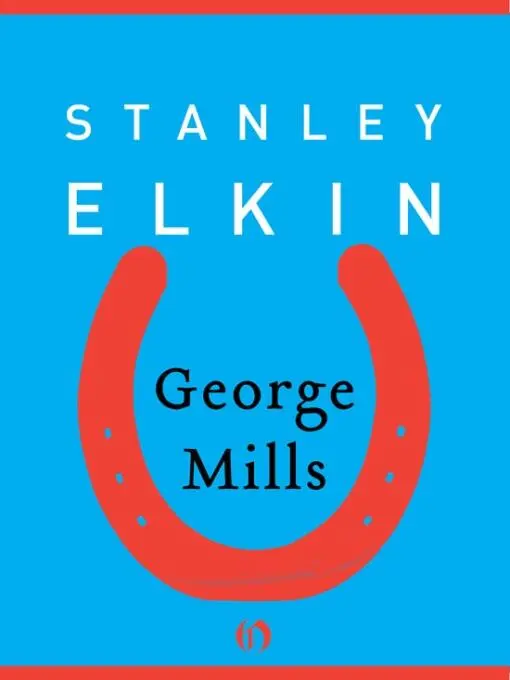
- Название:George Mills
- Автор:
- Издательство:Open Road Integrated Media LLC
- Жанр:
- Год:2010
- ISBN:нет данных
- Рейтинг книги:3 / 5. Голосов: 1
-
Избранное:Добавить в избранное
- Отзывы:
-
Ваша оценка:
George Mills: краткое содержание, описание и аннотация
Предлагаем к чтению аннотацию, описание, краткое содержание или предисловие (зависит от того, что написал сам автор книги «George Mills»). Если вы не нашли необходимую информацию о книге — напишите в комментариях, мы постараемся отыскать её.
George Mills — читать онлайн бесплатно полную книгу (весь текст) целиком
Ниже представлен текст книги, разбитый по страницам. Система сохранения места последней прочитанной страницы, позволяет с удобством читать онлайн бесплатно книгу «George Mills», без необходимости каждый раз заново искать на чём Вы остановились. Поставьте закладку, и сможете в любой момент перейти на страницу, на которой закончили чтение.
Интервал:
Закладка:
“No, really,” a widowed sister-in-law had said. “You were with Judith all that terrible time in Mexico. It would be a comfort to know certain things.”
“Well,” Mills said.
“It would make Mary feel so much better,” the other sister-in-law said softly, almost whispering. “It would make all of us feel better.”
“Gee,” Mills said, “I don’t…”
“Perhaps Mr. Mills would have to miss work,” the aunt said. “It could cost him a day’s wages to come with us.”
“Oh that’s awful,” the first sister-in-law said. “Of course the family would…”
“No no,” Mills said, “I’m not, I wouldn’t be…”
“Oh splendid,” she said, “it’s settled then.”
Cornell rode with the Millses in the Buick Special. “No guts,” he told Louise. “Those folks are real moguls. The elect hoity-toity of earth. I recognized a couple of university trustees. The chancellor was there. That guy Sam was squiring around. God, he never let him out of his sight…If they saw me light up,” he said, taking a joint from a package of low tar cigarettes. “You do pot, Louise?” He offered the pack. “Thanks but no thanks, eh? Ri-ight. I do it to enhance the ride. It already enhanced the funeral. But no kidding, Louise. There are some great houses out here. The stately homes of Missouri. Keep your eyes open, kiddo. Enjoy, enjoy.”
But to Mills, who had never been in this part of the county, it had already begun to look familiar. It was not déjà vu. It was history. The hundred tales he’d heard. Their marked Marco Polo life. He seemed to recognize hedges, birds, the iron verticals of their rich men’s fencing, their curving driveways like the packed, treated surfaces of tennis courts, the trees that lined them, their rare rich wood. He sensed porters’ lodges, cunning, low-ceilinged space within thick stone gateways, and smelled, far off, stocked ponds, game, posted woods and sculpted rivers.
Magically, he seemed even to know the way. Instinct working in him now, not grace. His own instinct merged with that calculating one of whatever inceptive, raw, original Claunch it had been who had seen not just the tract’s possibilities but its already inplace, on-stream, on-line de facto advantages.
“My goodness but it’s a way,” Louise said.
“Maybe we ought to get back to a main drag and stop over at a motel,” Messenger said. “Would you like that, Louise?”
“We’re almost there,” Mills said. Who had noticed, miles back, that they had passed the last of the prettified Lanes, Drives, Roads, Courts and Places with their scrolled, artisan’d address. Squire country, he had thought dismissively over Cornell’s easy admiration.
As they were past address itself now, on privatest property, still located of course, but in some geography of extraordinary jurisdiction where armed gillies and deputized gamekeepers enforced not law but custom, usage, tradition, folklore. Here they could be murdered for poaching, trespass. And not even instinct now but — his mood ring glows like ember, it sizzles his finger like a paper cut — his goofy, loyal, Mills-primed imagination: slain for a plucked wildflower or wrongly chosen bait. And suspects that what is operative here cuts deeper than statute, goes beyond compact and the legislative, scraping some raw nerve of the established ecological, their presence intrusive, pushing against a nature as fitfully balanced as a zoo, within striking distance, as Millses always were, of their oppressors’ murderous pet peeves. And is somehow gloomily proud that such power, chipped at and chipped at, nickel-and-dimed by revolution and reform, still manages to hold on, hold out, continues to exist in such culs-de-sac as the one he drives past now at twenty and twenty-two miles an hour, watching for deer crossing, bridle paths, grazing stock. And is as certain that the Buick Special is observed, its position called out from walkie-talkie to walkie-talkie, as he is of the existence of the power itself. Who knows that he is this snob of history, this anachronistic partisan? Lancaster’s man, York’s? (He himself has forgotten which.) Louise, who has had his cock in her mouth, doesn’t. She thinks, if she thinks about it at all, that he is Laglichio’s man, or the late Mrs. Glazer’s, or her own.
“Another couple miles,” George said.
“Jesus!” Cornell Messenger said when they had entered the main gate and turned into the driveway. “There ought to be a drawbridge. It’s a fucking goddamn castle!”
“They’re not checking plates today,” George explained. “There’s often open house when someone dies.”
“I never expected anything like this,” Cornell said. “I’ll tell you something. I bet Sam himself ain’t ever been here.”
Messenger could have been right. It was the girls, Mary and Milly, who took them on a tour of the house — though George felt, so familiar was he with its Platonic floor plan that he might have been able to do it himself — Sam and a few others following them about like visitors shy at the White House say, told it’s their home, but knowing better of course, hanging well back of their minds’ velvet ropes, not smoking and taking no pictures, their normal speaking voices lowered decibels.
“Hey,” Messenger said, whose enjoyment of the house had been enhanced one last time before climbing out of Mills’s car, “you think there’s a gift shop?”
“Here’s where I take ballet and fencing,” Mary said. “Grandpa had the mirrors and warm-up bar put in when Mother was a little girl. It’s special wood. You can’t get splinters.” She ran to the practice bar, turned to them, and carelessly raised her leg. They could see over the tops of her stockings.
“I don’t think someone should dance after a funeral,” Milly said.
“Your sister’s right, sweetheart,” Sam said.
“Oh, Daddy,” Mary said.
“I have to speak to you,” Cornell whispered in George’s ear.
“You have a lovely home,” Louise was telling the two girls. “Really lovely. You must be so proud. I suppose in a house as big as this one each of you probably has her own room.”
“We have our own lady’s maids, too,” Mary said. “We have separate cooks and our own private gardeners. We even have our own special milkman. And a postman who does nothing but just deliver our mail. Isn’t that right, Milly?”
“Mary is teasing,” Milly said. “We don’t even live here. We come out sometimes on weekends.”
“The really amazing, astonishing, wonderful thing is that Milly isn’t even spoiled. I am, but old Milly is just like everyone else even if she does have just hundreds and hundreds of thousands of dollars in her own private savings account.”
“It’s in trust,” Milly said. “I can’t touch it till I’m twenty-one.”
“Mary,” Sam said more forcefully, “Milly. That’s enough now.”
“It’s pretty urgent,” Cornell Messenger said.
The psychiatrist, down from the catharsis in which he had taken refuge, frowned. “I’m crashing,” he said. “I’m actually crashing. I’m sorry. I had no idea I was going to say all that stuff. I made a damn fool of myself, a stupid ass.”
“ Hey, ” Cornell said, “hey come on. It’s what she would have wanted.”
“You shut up,” Sam said, “you just shut up.”
“We ought to start back now, Louise,” George said.
“You got it, Sammy,” Cornell said. “My lips are sealed, Dean.”
“Thank you, young ladies,” Louise said. “It was awful nice meeting you, Doctor. I’m sorry about your wife, Mr. Glazer. She was very kind to my father when he was alive.” Louise turned to go.
“I’ve got to speak to you, Mills,” Cornell said, following him.
Читать дальшеИнтервал:
Закладка:
Похожие книги на «George Mills»
Представляем Вашему вниманию похожие книги на «George Mills» списком для выбора. Мы отобрали схожую по названию и смыслу литературу в надежде предоставить читателям больше вариантов отыскать новые, интересные, ещё непрочитанные произведения.



Обсуждение, отзывы о книге «George Mills» и просто собственные мнения читателей. Оставьте ваши комментарии, напишите, что Вы думаете о произведении, его смысле или главных героях. Укажите что конкретно понравилось, а что нет, и почему Вы так считаете.