Stanley Elkin - George Mills
Здесь есть возможность читать онлайн «Stanley Elkin - George Mills» весь текст электронной книги совершенно бесплатно (целиком полную версию без сокращений). В некоторых случаях можно слушать аудио, скачать через торрент в формате fb2 и присутствует краткое содержание. Год выпуска: 2010, Издательство: Open Road Integrated Media LLC, Жанр: Современная проза, на английском языке. Описание произведения, (предисловие) а так же отзывы посетителей доступны на портале библиотеки ЛибКат.
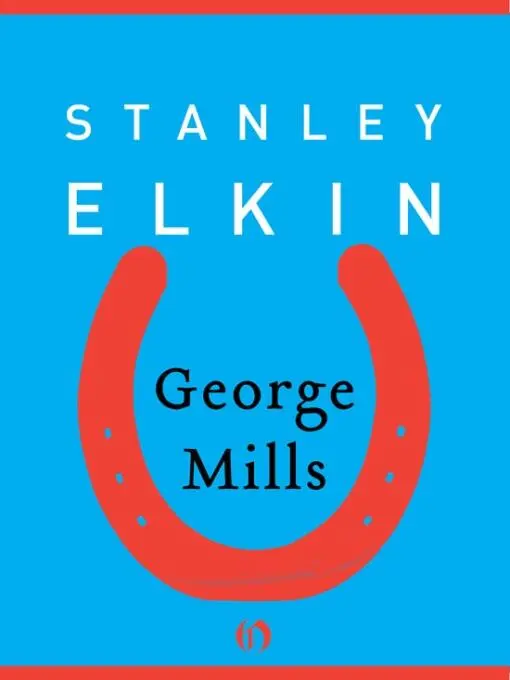
- Название:George Mills
- Автор:
- Издательство:Open Road Integrated Media LLC
- Жанр:
- Год:2010
- ISBN:нет данных
- Рейтинг книги:3 / 5. Голосов: 1
-
Избранное:Добавить в избранное
- Отзывы:
-
Ваша оценка:
George Mills: краткое содержание, описание и аннотация
Предлагаем к чтению аннотацию, описание, краткое содержание или предисловие (зависит от того, что написал сам автор книги «George Mills»). Если вы не нашли необходимую информацию о книге — напишите в комментариях, мы постараемся отыскать её.
George Mills — читать онлайн бесплатно полную книгу (весь текст) целиком
Ниже представлен текст книги, разбитый по страницам. Система сохранения места последней прочитанной страницы, позволяет с удобством читать онлайн бесплатно книгу «George Mills», без необходимости каждый раз заново искать на чём Вы остановились. Поставьте закладку, и сможете в любой момент перейти на страницу, на которой закончили чтение.
Интервал:
Закладка:
My hands dropped to my sides and His Majesty rubbed his neck, which by this time was quite red. Then he asked if I would get the clasp. He was referring to a fine gold chain which hung around his neck and from which a locket was suspended. I raised my hands but when he saw them he seemed to change his mind again and, waiting till he was calmer, managed to undo it himself. Before he handed it over to me he pressed a button at its top and the locket sprang open.
“There,” he said. “That’s Maria — Mrs. Fitzherbert.”
The locket contained a miniature of a beautiful young girl. “This child is married?” I asked.
“What? Oh. Well. She was younger when the portrait was made. She’s close to seventy now,” he said. “Then you don’t know her, do you?” I shrugged and returned the King’s necklace. “You’re not come from Brighton. You’re not in costume. You’re not from the revels,” he said, disappointed.
“These are my clothes, Majesty,” I said, and was reminded of the tapestry condition that Greatest Grandfather Mills had spoken of to Mills’s horse centuries before in the salt mine.
“Yes,” he said. “Of course they are.”
“We dress this way.”
“Yes.”
“For the mowing.”
“Oh yes.”
“For the tilling and toiling.”
“Yes, yes.”
“For the rubers and turnips.”
“Yes,” he said, “we know.”
“For the cabbage and kale.”
“Naturally.”
“For the beans and the beetroots.” (Because I couldn’t stop.)
“Certainly.”
“For reaching the fruits, their ripe rife rums and boozy brandies.”
“All right,” the King said.
“Never for revels.”
“No,” he said.
Because I couldn’t stop, you see. Or not couldn’t, wouldn’t. Who had never had audience. Not in forty-two or forty-three generations. Say forty-three. (Almost certainly forty-three. Forty-three absolutely.) Who’ve these passive, heirloom hearts you see, handed down father-to-son, father-to-son, father-to-son ad infinitum, who not only had sat out each riot, rebellion and revolt, every mutiny and coup d’etat from Wat Tyler’s defeated heroics to the fizzled Gunpowder Plot, but who’d never even signed a neighbor’s petition or written a letter to the editor. Who couldn’t stop, you see. Who might have in a palace or stately home, but not here in this unfurnished croft cottage of a “safe house”—who still didn’t understand the term but took it to mean something gay, something spoofy and nostalgic, with carefully blended choruses of pretend peasants holding flower baskets and singing opera — with its rude, spic-and-span meagerness.
“Never for fêtes, never for galas.”
“No, of course not.”
“Not for affairs, not for occasions.”
“I see.”
“We dress up. ”
“We understand,” he said. “We do.”
“We break out the cambric, we let loose the lace.”
“If you’re finished?” the King said.
“What picks up stains.”
“Quite.”
“What blemishes easy, what soils in the air.” And stopped now. Not because I had gone too far, or even far enough, but because grievance made me breathless, took my wind away I mean. Seeing how easy it was, how even someone like myself, who’d seen no kings but only heard of them, gone all logy with my ancient, sluggish heritage and languid beefs, had only to wait — whether he wanted to or not, whether he was interested or not — to float in his patience, treading it like shallow water, and one day not opportunity but accident itself would knock. Not chance, not even time laying about and lining things up — accident, bad odds, the pot-luck of doom and fate. And what made me breathless was that I perceived that all that differentiated me from the king killers and historical tuckpointers was inclination.
King George IV did not perceive this.
King George IV wanted me calmer, to talk me down from my resentment.
“I suppose you’re pious?” he said.
“Pious?”
“Religious.”
“No, not really.”
“Civic-minded then.”
“I don’t think so. I don’t think I’m civic-minded.”
“French things? Social contracts, the Rights of Man?”
“I’m English. I don’t take with wog ways.”
“No,” the Hanoverian said suspiciously. And explained to his subject what a safe house was.
I wasn’t far off.
What King George IV told George XLIII:
“Kings aren’t born. They’re made. In the sense that contingency heirs thrones. The first-born could be an idiot; an inopportune girl; someone too sickly for the times; at odds with the ministers, current events, the Cabinet — All manner of things can come between an apparency and a crown.
“But consider a prince. Assume what he assumes. That all will go well. That one day the King will die and, in the nature of things, he will be King.
“Now. There are only two sorts of kings. The battlers and the good time Charlies. You could look it up, but we assure you that history bears us out. (Shall we sit on the floor? Standing winds us. — There. Thank you, George. Oh, that’s much better. Much.)
“Of course the battlers have practically disappeared from the thrones they used to sit on like so many saddles. I mean the warrior kings, the conquerors — Bonaparte, of course, but he was no proper king; more to the point he was never a prince — the horseback heroes, all that pup tent royalty with their iron-assed, cavalry sensibilities and real estate hearts. I don’t mock them. I don’t. They made the world, its true cartographers, and did all this not from Heaven but from ambush. On maneuvers, campaigns, sieges, blockades. On scorched earth in the dead of winter. With billets for palace and trenches for fort. With rations for banquets and their kingdom front lines. So I don’t mock them. I don’t. But if they made the world, they broke it too. Surely the Fifth Horseman of the Apocalypse was a king.
“Well — battlers are chiefly dead now. The chiefly dead. And they fell not necessarily in the wars they lost but rather in the wars they won. Dead of politics and delegation and the piecemeal amelioration of the world. The battlers are dead, long live the good time Charlies!
“Princes I mean. Those ritual babes, those ceremonial children. In their toy tailoring, their plaything regalia. Up on their ponies, pulled in their dog carts. Taking trays in their bedrooms, their lunches from hampers on summer’s golden bivouacs. Outranking their music and dancing masters. Calling the tune. Outranking all their masters. Outranking, for that matter, the King himself who, for all his now ornamental power, his own now baubled governance and ascendancy, owed no greater obligation to his so-called kingdom than simple, subservient fatherhood. Who could chastise and even discipline — my father once shot the dog who pulled my cart — but could never repudiate, never disown. (Who could in effect, Mills, write no will, all that having been done for him by the very principles of succession that the battlers had battled for. Who would die, as it were, intestate as the lowest pauper in the land. And incidentally, George XLIII, did you enter this into your equations when you so rapidly calculated the twenty-year differential between a king’s generation and a commoner’s? It was because kings knew — they’d been princes themselves, remember — how much harder it would go with them once their children were born, how their already depleted authority would be even further adulterated by their coddled kin. It could have been some vaguely flickering memory of the look on a prince’s father’s face — I can still recall the foiled temper on my own father’s face when he shot the dog that pulled me about the royal park — his watered anger, his niggled rage. We battle passion, we good time Charlies, by fathering bastards.)
Читать дальшеИнтервал:
Закладка:
Похожие книги на «George Mills»
Представляем Вашему вниманию похожие книги на «George Mills» списком для выбора. Мы отобрали схожую по названию и смыслу литературу в надежде предоставить читателям больше вариантов отыскать новые, интересные, ещё непрочитанные произведения.

Обсуждение, отзывы о книге «George Mills» и просто собственные мнения читателей. Оставьте ваши комментарии, напишите, что Вы думаете о произведении, его смысле или главных героях. Укажите что конкретно понравилось, а что нет, и почему Вы так считаете.