Stanley Elkin - George Mills
Здесь есть возможность читать онлайн «Stanley Elkin - George Mills» весь текст электронной книги совершенно бесплатно (целиком полную версию без сокращений). В некоторых случаях можно слушать аудио, скачать через торрент в формате fb2 и присутствует краткое содержание. Год выпуска: 2010, Издательство: Open Road Integrated Media LLC, Жанр: Современная проза, на английском языке. Описание произведения, (предисловие) а так же отзывы посетителей доступны на портале библиотеки ЛибКат.
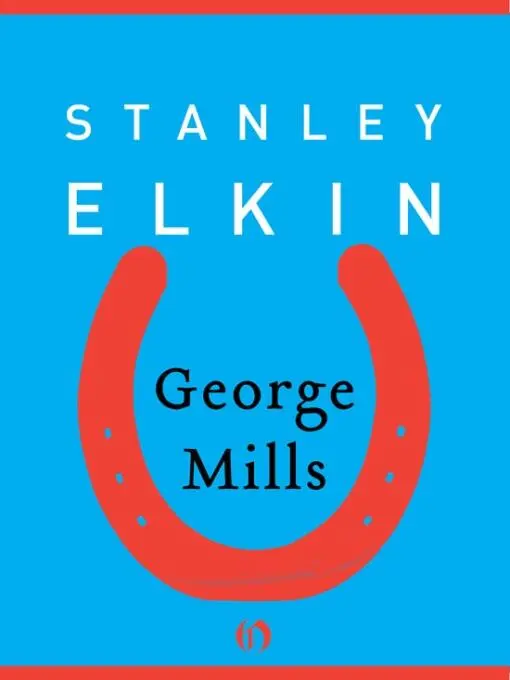
- Название:George Mills
- Автор:
- Издательство:Open Road Integrated Media LLC
- Жанр:
- Год:2010
- ISBN:нет данных
- Рейтинг книги:3 / 5. Голосов: 1
-
Избранное:Добавить в избранное
- Отзывы:
-
Ваша оценка:
George Mills: краткое содержание, описание и аннотация
Предлагаем к чтению аннотацию, описание, краткое содержание или предисловие (зависит от того, что написал сам автор книги «George Mills»). Если вы не нашли необходимую информацию о книге — напишите в комментариях, мы постараемся отыскать её.
George Mills — читать онлайн бесплатно полную книгу (весь текст) целиком
Ниже представлен текст книги, разбитый по страницам. Система сохранения места последней прочитанной страницы, позволяет с удобством читать онлайн бесплатно книгу «George Mills», без необходимости каждый раз заново искать на чём Вы остановились. Поставьте закладку, и сможете в любой момент перейти на страницу, на которой закончили чтение.
Интервал:
Закладка:
“ ‘Honor is ardor. It is dash and fire and thrill. It is the obligation skin owes blood, teeth appetite. My organ’s duty to my mood. It is entirely obsessive and endures no third parties. It welcomes no middlemen.’
“ ‘The Prince of Wales is hot tonight,’ said a guest.
“ ‘He is. He is, ’ we acknowledged. ‘We have our honor on us and we fly it like the colors.’
“ ‘And do you know, madam, in what my honor subsists? Why in my peculiar, spangled lust. In the singularity of my ruling passion, my most feeling fetish. Which we neither hide nor hinder, watch nor ward. Why should we? Is the Prince custodian of his ruling passion or only the lowly drayman of his drives?’
“ ‘Hear hear!’ said honored guests. And “Three cheers!’ And ‘Give three times three!’
“ ‘I asked to milk you, madam. No husband but husbandman plain enough. Oh, plain. Plain, quite plainly. I’ve this sweet tooth for softs, this yen for your puddings. George the Famished, George the Parched. Georgie the pap prince. Feed us, ma’am. Slake the slake rake! Sow, sew this rip!’
“And ‘Ahh,’ mouthful’d the fellowship. And ‘Ooh,’ oratoried the witnesses.
“And still no more crimson than an eggshell. Why you, sir, are more raddled. Fitzherbert herself was glacial as pack ice. She said she’d pray for me.
“ Pray for me, dun God with her demon orthodoxy! (Did I mention, Mills, that she was Catholic? She was Catholic, churched as a pope.)
“ ‘Do it then, madam,’ I told her coolly. ‘You know our prayers. You may say them for us!’
“And turned away politely to make the rest of my devoirs, saying my ‘So glads’ and ‘How pleaseds,’ aloof and indifferent as an already king.
“I learned she lived at Richmond and sent with my compliments my private yacht to fetch her. It came back empty. I sent it out again a week later, laden with gifts. The Gainsborough I’d promised, precious jewels, rare ivories. It came back empty, my gifts unopened. In a month I sent the ship out once more, this time with specific instructions to proffer my prince’s compliments to Lord Fitzherbert and to invite him and his amiable wife to stay at Buckingham House with my family and myself. There was no ‘Lord’ Fitzherbert of course, and what I offered was not so much a bribe as the promise of a bribe. Titled Catholics were practically unheard of in the country at this time. I knew my man and what I was doing. The appeal was not so much to his ambition as to his churchianity. The bark returned empty.
“And empty again when I dispatched it to Pangbourne, where I’d learned the Fitzherberts summered with a colony of their coreligionists.
“The King had of course heard of my efforts and their failures. How could he not? All society knew what I was up to. All it had to do was glance out its window whenever it heard a ship go by. The chances were excellent it would be the royal bark plying its unsuccessful trade route, hauling its unwanted merchandise about its watery itinerary like some failed merchantman. My mad king father was not yet mad. He was only angry. The truth, George, is that he missed his princedom, his own long-gone good time Charlie days when he had all the honors of a king but none of his dubious duties. They had been pushing him in the colonies. They were pushing him in France. The truth is, Mills, I pissed him. All he had for amusement in those days was my lust’s blunting against Mrs. Fitzherbert’s obdurate recalcitrance.
“He summoned me and offered a father’s advice in the throne room at Buckingham. He even removed the crown from his head before he spoke.
“ ‘Son,’ he said, ‘it disheartens us to see you so sobersides at a time in life when you should be all waggish and sportive. It tarnishes our comfort to perceive in you the mopes and melancholies of a distrait heart. We would have you cock-a-hoop, all frisk and frolic, and miss the horse laugh whoopee which was your once wont. Give us a chortle, love. Cackle a snigger for us. Titter — no offense, old son — titter your smirk. What? No? Not in we? Then send again to Richmond. I know what you demand of Mrs. Fitzherbert, and what you offer — paintings and pretties, jewelry and gewgaw. The woman is pious, mavourneen. She’s serious, treasure apple. You don’t go up in public to a pious, serious, high-minded woman like this and order her to put her titties in your mouth. What, in public? A sensitive, religious, married lady? It isn’t the way, it’s not how it’s done. You must be gentle, you must be discreet. You must offer reassurances. You must say: “Madam, I shall have my teeth pulled. The grinders and incisors, the molars and canines. All — all shall come out. I vow you, ma’am, then only will I chew and nibble, suck and gum!” Send to Richmond, lad; send to Richmond, son. We’ll make a picnic Thames-side and wait and wait till the cows come home.’ And laughed like a loon.
“I did send to Richmond, had already sent for her when my father had sent for me. When the yacht returned Mrs. Fitzherbert was on it, standing near the bowsprit and, with her generous, billowy, partially exposed bosoms, looking for all the world like the very figurehead on the ship’s very prow.
“I clambered aboard and took her in my arms.
“ ‘My darling,’ I said. ‘My dearest, you’ve come.’
“ ‘Fitzherbert’s dead,’ she whispered. ‘Tomorrow we’ll be married secretly by the priest. Then, suckling, shall you enjoy your little milkmaid to her bright twin pails’ sweetest residuals!”
“We dress up,” the King said. “We dress up, too. And lead free will these dumb show lives, our tastes a step behind our palates and our very existence revue, vaudeville, cabaret. And even our highest behaviors only simple ‘turns,’ studied as set piece, blocked as tableau. Sequenced as music hall and timed as spectacle. We don’t want walls and floors, ceilings and rooms but back cloths, stages, flats and scrim. Not property but props. Not bad luck but tragedy, not even happiness, only comedy. So we dress up. Good time Charlie, the merry-andrew. The milkmaid. The milkmaid milkmade man.
“Yes. Well. We were married. Secretly. You spoke of oaths. We swore oaths. As heavily pledged as debtors. Proclaiming and promising, vowing, professing. All intention’s by-all-that’s-holy’s.
“We honeymooned at Pangbourne while the royal yacht stood by. We boarded the ship and sailed to Scotland. We sailed to Ireland, where we anchored off a lovely blue bay. You could see palm trees.
“The marriage was secret, known only to the priest and to one or two of Maria’s friends. I like to think that those of our class who lived along those shores must have seen the ship and guessed it on some romantic errand, engaged in some pretty myth — all spurned love’s Flying Dutchman. We dress up. Oh yes.
“Well. Even someone as apparently arbitrary as a prince or king with his edicts and decrees and his ipse dixit say-so style lives a life proviso’d and ordinanced as any tavern keeper’s. And if there’s more loophole than loop to my bonds — I could, for example, have shot you before without bringing any more trouble upon myself than if I had sent my meat back to my chef — there is a special pandect of law for royalty.
“The Settlement Act forbids any of the King’s issue under the age of twenty-five to marry without first obtaining the consent of the King. This would have been forty years ago. I would have been twenty-three. The consent of the King? I knew better than even to ask for it. My only hope was to present my father with a fait accompli, thinking he’d think that the scandal which surrounded our relationship, and whatever embarrassment it may have caused him, might best be smoothed over by a royal announcement that we were now married.
Читать дальшеИнтервал:
Закладка:
Похожие книги на «George Mills»
Представляем Вашему вниманию похожие книги на «George Mills» списком для выбора. Мы отобрали схожую по названию и смыслу литературу в надежде предоставить читателям больше вариантов отыскать новые, интересные, ещё непрочитанные произведения.

Обсуждение, отзывы о книге «George Mills» и просто собственные мнения читателей. Оставьте ваши комментарии, напишите, что Вы думаете о произведении, его смысле или главных героях. Укажите что конкретно понравилось, а что нет, и почему Вы так считаете.