Stanley Elkin - George Mills
Здесь есть возможность читать онлайн «Stanley Elkin - George Mills» весь текст электронной книги совершенно бесплатно (целиком полную версию без сокращений). В некоторых случаях можно слушать аудио, скачать через торрент в формате fb2 и присутствует краткое содержание. Год выпуска: 2010, Издательство: Open Road Integrated Media LLC, Жанр: Современная проза, на английском языке. Описание произведения, (предисловие) а так же отзывы посетителей доступны на портале библиотеки ЛибКат.
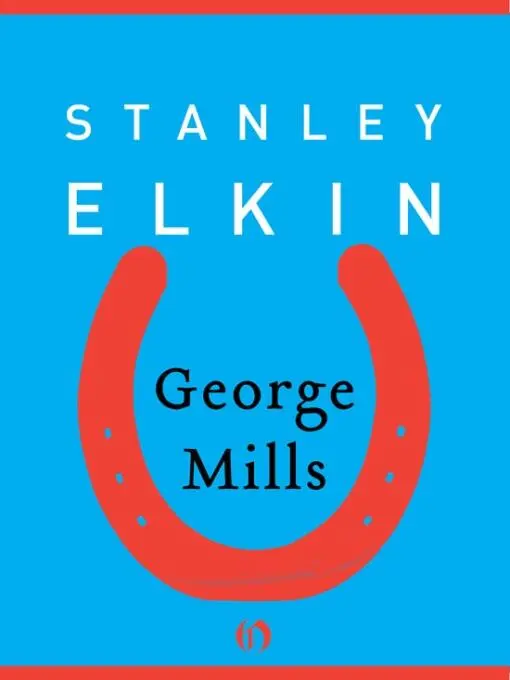
- Название:George Mills
- Автор:
- Издательство:Open Road Integrated Media LLC
- Жанр:
- Год:2010
- ISBN:нет данных
- Рейтинг книги:3 / 5. Голосов: 1
-
Избранное:Добавить в избранное
- Отзывы:
-
Ваша оценка:
George Mills: краткое содержание, описание и аннотация
Предлагаем к чтению аннотацию, описание, краткое содержание или предисловие (зависит от того, что написал сам автор книги «George Mills»). Если вы не нашли необходимую информацию о книге — напишите в комментариях, мы постараемся отыскать её.
George Mills — читать онлайн бесплатно полную книгу (весь текст) целиком
Ниже представлен текст книги, разбитый по страницам. Система сохранения места последней прочитанной страницы, позволяет с удобством читать онлайн бесплатно книгу «George Mills», без необходимости каждый раз заново искать на чём Вы остановились. Поставьте закладку, и сможете в любой момент перейти на страницу, на которой закончили чтение.
Интервал:
Закладка:
“Am I? I believe,” she said, “in life everlasting. I believe in Heaven, yet there are no dramatics there. God would not permit His angels to be troubled.”
Mills was not at all certain he was correct in his assessment of her treatments. It was certain that she had not again had the kind of night that had so frightened them both, but her energies were low, and she was no longer up to the car rides she had at first been so intent on. He suggested that if she was still concerned about expenses he could return their rental car and take taxis whenever they went to the clinic. She told him she thought they should hold on to the car a bit longer. “I may feel stronger. We would need it to get around when I am well enough to give alms again.”
Now he was giving her all her injections, feeding juices from the pits of apricots into her bloodstream, daubing alcohol across her once maddened flanks and stirred despite himself at the sight of her yellow, degraded hips. He knew he must be hurting her but she was unwilling to let anyone else do it. He didn’t know why.
And now he was bathing her too, carrying her naked to the tub and lowering her into it like an offering in pageant. Her eyes were closed all the time he washed her, and she was the very type of humiliation, stoical, never wincing, patient degradation on her like a scar.
“I was nuts eleven years,” she said. “In a private hospital with a small staff for the elegance of the thing. They couldn’t watch you all the time. We did frightful things to each other. Soap my crotch please, Mills.” And as he lowered the cloth she opened her eyes and forced herself to stare at her oppressor.
Because she believed in martyrdom. She hadn’t told him this but it was the only thing that explained her actions. Because she believed in martyrdom. Saint Judith Glazer of Cancer. Because she needed holy bruises, some painful black-and-blue theology of confrontation. And that was when he realized she was dangerous.
“Those people we picked up on the bridge and gave rides to,” she said one evening.
“Yes?”
“They were wetbacks.”
“They were coming into the country, not leaving it.”
“They were illegals. They go over for the day to work. The maid who cleans the room told me.”
“I don’t follow.”
“I could drive to El Paso. I could dose up on morphine and take someone with me. He could use your tourist card.”
Mills excused himself and returned to his room.
Where he hid, where he tried to figure out what to do. He remembered the times they had driven through the city seeking out beggars, showing their funds, flashing their pesos like scalpers. And recalled the visit to the barrio, her lap filled with cash. She would be a saint and throw herself into all the trenches of virtue, poised as a zealot for the last-ditch stand with her ducks-in-a-barrel innocences and vulnerabilities. He was only beginning to understand the Turk role she had assigned him, the barbarian and Vandal and red Indian possibilities. Stuffing money in his pockets, putting needles and syringes in his hands, her jaundiced cunt, bald as a babe’s, making him privy to her weakness, her body’s worst-kept secrets, a seductress with nothing left but the final, awful charms of earth and the terrible with which to provoke him. Leading him right up to the distant cusps of extradition and dismay, the very borders of flight and exile.
“I want,” she said, “all the traveler’s checks cashed.”
“It’s entrapment, Judith.”
“I want them cashed,” she said. “I’ll need it in pesos.”
“Sure,” he told her, and brought the money to her, the heaps of paper with their spurious glaze of value, like stock certificates, like Eagle stamps, like lottery tickets and the come-on bonanzas brought in the mails. He didn’t even tell her to count it. “That’s twenty-five hundred dollars,” he said.
“Yes,” she said. “I’ve called the desk. They’ve agreed to take a personal check. They called my bank. They sent someone to their bank. The money will be waiting for you at the cashier’s office. You’ll have to sign for it.”
“Sure,” he said. She made out a check for fifteen hundred dollars. He fetched her money. “That’s only four thousand dollars,” he said when he’d placed it beside the money from the traveler’s checks. “Do you really think I’d murder you for four thousand dollars?”
“Oh no,” she said, “there’s my rings and pearl necklace. There are things in my jewelry case.”
“Sure,” he said.
“There are my infuriating ways.”
“Get the maid to do it. Call room service. Ask the caretaker kid. Sit parked in the car. Everyone in town recognizes it by now.”
Because it was no secret anymore. And when she told him again she’d been crazy eleven years, he corrected her. “Twelve,” he said. “It used to be eleven.”
“No,” she said. “I know you won’t do it. You misjudged me, not I you. What’s so disruptive to your imagination,” she asked him, “about the idea of getting something for one’s death? Cancer gives you little enough return on your money. Not like bludgeoning. Not like street crime or poor Maria’s trusting betrayals. This is a Catholic country. No one here will harm me for my faith. Oh, Mills, they’re all Catholic countries now. They pray openly behind the Iron Curtain. My options are closed off. There are no more frontiers. When I die there will be no arrows in my breast. I won’t be torched like St. Joan or crucified on the bias like St. Francis. Beasts will never chew me. So where’s the harm in flaunting my pesos or flashing my jewelry? It’s only a farfetched possibility anyway, too oblique a contingency that I might ever be killed doing good deeds. It passes the time. And perhaps some bad man will take the bait, and God never notice that it was entrapment.”
“I noticed,” Mills said.
“We’ll leave the money lying around just in case.”
She did. When he came into the room now it was always there, at the foot of the bed or on the sink in the bathroom in the way of the housemaids or the man who came in to fix the air conditioning. Only Mills took money from the strewn cash. For expenses. For the serums renewed and paid for daily and kept in a refrigerator in the motel’s restaurant. For the El Paso newspaper, for Father Merchant, who had become a sort of dragoman, the sidekick’s sidekick.
It was Merchant who brought the medical supplies from the clinic, Merchant who sat with him sometimes while Mrs. Glazer dozed.
“Apricot pits,” he scoffed. “How could an extract of apricot pits cure a cancer?”
“Don’t talk so loud,” Mills said.
“She knows she’s dying. The señora is a realist. But apricot pits? Where is the realism in apricot pits?”
“I know,” Mills said. “You’re going to say it should have been peach pits.”
“Chemotherapy,” Father Merchant said. “Surgery. Maybe a nice hospice. But she should never have smoked. She should have watched her diet from the beginning.”
Mrs. Glazer opened her eyes.
“You shouldn’t leave your money lying around, señora. ”
“Oh,” she said listlessly, “he knows about the money. He knows about my jewelry. Now I shall be murdered in my bed.”
But no one wanted her life, and their life together — for now he lived with the woman more intimately than ever he had with his wife — had become relentless.
He knew the shape of her appetite, the shade of her stools. It was extraordinary. He knew her past — as she knew his; he told her about the first George Mills, he described Cassadaga for her and the Mills who had intrigued with courts and empires, filling her in on how the family had bogged down in history, how it remained untouched by the waves of rising expectations that had signaled the rest of Western civilization out of its listlessness, giving her the gray details of a survival that was neither hardy nor valorous — but with her own governing, emergent lassitude, she had broken off her once ordered narrative. There were odd lacunae. She was nuts in one frame and securing a large dance band for her elder daughter’s confirmation party in the next. He learned about the struggle for Sam’s deanship, Milly’s progress in piano. But what had happened to Judith, any coherent feel for all that had predated their introduction to each other on the strange occasion of his going to collect her condolence call, all, that is, that was beyond his immediate observation, or not pertinent to either her needs or her demands, remained privileged information. He was interested of course. She was all he had to fill up his time. And, as she herself had insisted, she had no secrets. If she had stopped talking, if she had stopped listening, it was because all she had to fill up her time was herself. She was simply too busy now feeling her way along the murky routes and badly graded switchbacks of her decline and separation from the world to have much time for him.
Читать дальшеИнтервал:
Закладка:
Похожие книги на «George Mills»
Представляем Вашему вниманию похожие книги на «George Mills» списком для выбора. Мы отобрали схожую по названию и смыслу литературу в надежде предоставить читателям больше вариантов отыскать новые, интересные, ещё непрочитанные произведения.


Обсуждение, отзывы о книге «George Mills» и просто собственные мнения читателей. Оставьте ваши комментарии, напишите, что Вы думаете о произведении, его смысле или главных героях. Укажите что конкретно понравилось, а что нет, и почему Вы так считаете.