Stanley Elkin - George Mills
Здесь есть возможность читать онлайн «Stanley Elkin - George Mills» весь текст электронной книги совершенно бесплатно (целиком полную версию без сокращений). В некоторых случаях можно слушать аудио, скачать через торрент в формате fb2 и присутствует краткое содержание. Год выпуска: 2010, Издательство: Open Road Integrated Media LLC, Жанр: Современная проза, на английском языке. Описание произведения, (предисловие) а так же отзывы посетителей доступны на портале библиотеки ЛибКат.
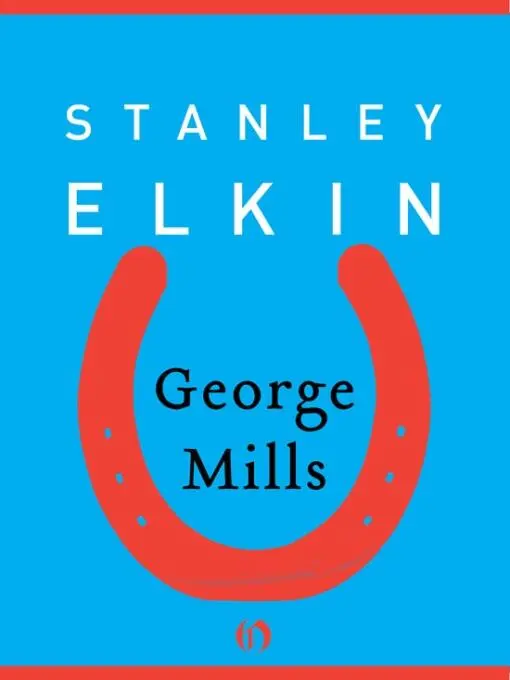
- Название:George Mills
- Автор:
- Издательство:Open Road Integrated Media LLC
- Жанр:
- Год:2010
- ISBN:нет данных
- Рейтинг книги:3 / 5. Голосов: 1
-
Избранное:Добавить в избранное
- Отзывы:
-
Ваша оценка:
George Mills: краткое содержание, описание и аннотация
Предлагаем к чтению аннотацию, описание, краткое содержание или предисловие (зависит от того, что написал сам автор книги «George Mills»). Если вы не нашли необходимую информацию о книге — напишите в комментариях, мы постараемся отыскать её.
George Mills — читать онлайн бесплатно полную книгу (весь текст) целиком
Ниже представлен текст книги, разбитый по страницам. Система сохранения места последней прочитанной страницы, позволяет с удобством читать онлайн бесплатно книгу «George Mills», без необходимости каждый раз заново искать на чём Вы остановились. Поставьте закладку, и сможете в любой момент перейти на страницу, на которой закончили чтение.
Интервал:
Закладка:
I went the following Saturday, who not only had no girl but who had never danced, whose music — the tuner on my little Philco was busted, the dial stuck just off key of a station that broadcast the Browns games, so that the play-by-play seemed to occur in a shrill wind, the star-of-the-game interview overseas — was mostly whatever people happened to be whistling, the pop tunes reaching me downwind, degraded, in a sort of translation, the melodies flattened, the high notes clipped. But I was twenty-seven years old, my Sunday mornings squandered in playgrounds with “the men,” those imaginary big brothers of my heart. I didn’t even own a suit. (And what did I own? Not my furniture, not my knives and dishes, not my sheets and pillowslips. I think I had bought — let’s see — a shovel, a hammer, a tape measure and hand saw, my fielder’s mitt of course, my baggy baseball pants and spiked shoes, my cap and my T-shirt, a Louisville Slugger, a sixteen-inch softball. Even the Philco was furnished. I honestly can’t think of anything else. Yeah, the mismatched clothes in my drawers and closets.)
I went to Famous and Barr to be outfitted for my free passes, and when the salesman in Men’s Furnishings asked if he could help me I think I told him just that, that it was for the free passes I’d come, to be outfitted, done up like the box steppers in the Delgado Ballroom. I didn’t even understand about alterations, you see, and thought the trousers and jackets he had me try on cut for bigger, taller men. “I can’t buy this,” I told him, glancing at myself in the three-paneled mirror (and the first time, too, I had seen myself in profile, in holograph, maybe the first time I understood I had sides, a back). “I already told you it was for dancing. I’d trip on the whaddayacall’em, the cuffs.”
The tailor told me I could pick the suit up Thursday. (And that was something, I tell you, the dapper Italian with pins in his mouth, chalking my crotch. “Stand still,” he demanded. And the century’s squirming, woebegone hick replied, “I can’t, I can’t.”) “But I need it tonight. Tonight is the dance.”
“Tonight? Tonight is impossible. On Special Rush maybe late Wednesday morning. Wear something else.”
And I had to tell him I had nothing else, only my work clothes, only my work boots, only my softball gear, only my cleats. Only not entirely the hick. The hick is without my margin of peremptory foreboding, my self-serving ingenuousness. He does not throw himself so easily on the mercy of the court.
“It’s for tonight, you see. The dance at the Delgado. The manager invited me. He said to bring a girl. I could meet one. I don’t own the right clothes.”
“Hey, Albert,” the tailor said.
“Yeah, Sal?” said the salesman.
“Thirty-two years in the business and Cinderella here thinks I look like a fairy godmother.”
“You going to fix him up, Sal?”
“What the hell, Albert, I’m going to put it on Super Special Crash Rush and see to the alterations personally.”
“That’s wonderful, Sal. I know my customer appreciates that.”
“Thank you,” I said. “I want to thank you.”
I sat on the little bench in the tiny dressing room two hours, my curtain open to the weather of the other customers, men with wardrobes, with three and four and five suits in their closets, with dressy slacks and sports coats, with — I didn’t know this then — tropical-weight worsteds for the warm seasons, heavy tweeds for the cold, who examined themselves imperially in the glass and spoke without looking at them to the salesman at parade rest behind their backs, scrutinizing the mirror close as shavers or people examining blemishes in a good light. They talked knowledgeably about buttons, the slant of a pocket, the cut of lapels, and I, alien as a savage, listened greedily. I couldn’t have been more interested if they had been women.
“Hey,” Sal said, when he came down to check a customer’s measurements, “it’s going to be a while yet. You don’t have to hang around here. Walk around the store.”
“I’m all right. This is fine.”
“Buy your shoes,” Sal said. “Buy your shirt, buy your tie.”
“That’s right,” I said. “I forgot.” I stood up.
“Tell the shoe man a brown oxford.”
“A brown oxford. Yes.”
“Maybe a tan shirt with a thin stripe. A dark, solid-color tie, no pattern. If there’s a pattern it should be delicate, no heavier than the stripe on your shirt.”
“Thank you,” I said.
“You got a decent leather belt? Something the color of new shoe soles, I think, but stay away from oxblood.”
“All right,” I said, “thank you.”
“Stockings,” he called after me. “Black. Knee length.”
It is perhaps the first time he has ever really examined himself in the glass. Looking for blemish, sorting rash, feature, the inventory of surface, the lay of the skull. He sees with wonder the topography of his hair, the evidence of his arms beneath his suit coat, the hinged and heavy wrists. He leans forward and splays his lips, stares at the long teeth, touches them. Before, if he has looked in the mirror, it has been with the shy, cursory glance of a customer into a barber’s glass, that automatic, that mechanical.
I was no virgin, you understand.
His sexual encounters had been in bars, low dives, his conquests drunk, mostly older, fumbling his cock in the alley, blowing him in cars, deeply, deeply, smothering his foreskin on their sore throats, scratching it on dentures. Hoarsely they had moaned, called out someone else’s name. Or come to them always in their beds, in cold rooms, in badly furnished apartments above beauty parlors. So that he believed, vaguely, that females had regulated intervals of abstinence, cycles of seasonal rut, their need encoded, driven by the calendar, the tides, the moon, by floundering glands, secret biological constants. (He stayed away from whores not because he believed their need was shammed but because he believed they had no need, that their natures had been torn from them, that their cunts were quite literally holes, hair and flesh covering nothing, like houses built on the edges of cliffs. He thought of them as amputees. He did not go with whores.)
[I did not go with anyone. When I wanted a woman I knew where to find her. Those bars. Maybe once a month I’d leave my neighborhood and take the bus north or south, get off somewhere in the city I had never been and find a tavern, and usually it was the only place with the lights still on, settled among the frame houses and dark apartment buildings — bowling alleys too, the lounges there, those Eleventh Frames, Lovers’ Lanes, Spare Rooms and Gutter Bowls near the pinball arcades and shoe rentals — so that I always had the impression I had come to the country. I didn’t waste time. I ordered my beer, showed them my money — I didn’t have a wallet; in those days I carried my cash in my pay envelope — and looked around, smiling not broadly so much as inconclusively. If I saw a woman put money in the jukebox I listened to hear what songs she’d picked and I played them too, leaning backward or forward when the music came on, waiting to catch her eye, raising my glass to her, toasting our taste. Almost always she smiled. I took my beer and moved down the bar toward her. If the stool next to hers was empty I sat down. I’d read the label on her beer and signal the bartender to bring us another round, talking all the time, not lying, you understand, but this wasn’t conversation either, telling my name and where I worked, the position I played, other things about me, all I could think of who didn’t know what my hair looked like or what were my strong points or the condition of my teeth, and never asked anything about her unless it was what she was drinking if it wasn’t beer or something I recognized, the difficulty being finding things to say after I’d told her my name, what I did for a living, where I was from, conversationed no better than a candidate, some pol at a gate when the shifts change, but talking anyway, having to, the distracting spiel of a magician, say, the cardsharp’s chatter, friendly, open, frank for a man in work shirts, boots, but steering clear, too, of questions and promptings and preemptive reference, not rude or aggrandizing but shy for her, modest for the lady, in charge only through consideration, a ricochet restraint, the billiard relationships and carom closures and retreats tricky as dance steps. Because I figured we both knew what was what, who, one of us at least, knew nothing. And assumed she assumed I would not mention it, her presence a matter of course, the body’s will, some compulsion of the skin, shame’s innings and lust’s licks, as if, were I to permit her the edgewise word that word would be a groan, a speech from heat, not conversation either, as if the both of us were mutes, but the driven diction of desire, I more than hinting she had gotten there as I had, on a bus, come in a car from some distant neighborhood, as much the stranger in those parts as myself. And where, I wonder, did those gestures come from, that silent toast, that almost knowledgeable little bow of deference and tribute, that polite, bar-length greeting, romantic, so close to civilized? How would I have learned these signs who had learned nothing? Not my profile, not my air. But deferential, always deferential, as deferential to her hormones as a gent to disfigurement or some grand-mannered guy to handicap, deferentially drilling her with my attentive small talk, clocking the parameters of her drunkenness all the way to its critical mass. Like a scientist, like a coach, like a doc at the ringside, gauging, appraising and contemplative, only then stepping in, cool as a cop: “That’s enough, don’t you think so? Look, you’re beginning to cry. Listen how shrill you’ve become. You don’t want to throw up, do you? You don’t want to pass out. Where are your car keys, where is your purse? Is that your coat? Did you come with a hat? Splash water on your face, go relieve yourself first. Beer, pee and estrogen. That’s a tricky combination. The beer’s in the pee. The pee floods the estrogen. Go on, go ahead, I’ll wait.” And damned if she didn’t. Do as I say. And grateful as well. As if I’d actually helped her. So that by the time I had her skirt up, her brassiere down, lowered her corset, raised her slip, sucked the garters, kissed the hose, and had the cups of her bra loose on her belly or awry at her side, she was actually watching, amazed as myself at her condition, convinced by her gamy, ribald chemistries, struck by what was neither rape nor love but only my simple, driven confidence, a kind of carnal transfusion, sexual first aid and the terrible blunt liberties of emergency, averting her eyes not even when she came, her moans and cries and whines and whimpers and skirls of orgasm a sort of breathless yodel, Baby Shameless beneath this fellow like some heavy lifter or love’s day laborer who did all the work and insinuated knees, fingers, hands, lips, mouth, tongue, teeth and cock too at last, not as weapons — as little seduction as rape — and not even as parts, members but as tools, the paramedical instrumentality of the available — as if I lived off the land, made do like a commando — so that only when I came did she avert her eyes, blink, as if only then I had exceeded my warrants, behaved less than professionally. But reassured the next moment by my withdrawal, suddenly thoughtful, charmed and sad. “Oh, say,” she’d say, “where’d you learn to do a girl like that? That was really something. Really something. You know I never…I didn’t frighten you, did I? When I made those sounds? Did I? Tell the truth, were you embarrassed? Honest, I never…It was like someone else’s voice. I swear it. It was like someone’s voice I’ve never heard. I never have heard it. I didn’t know I even knew those noises, words.” I all skeptical reassurance, muzzling my doubts as till the last minute I had muzzled my lust, as accomplished a dresser in the dark back seats of cars or on the damp sheets of those strange beds as undresser, saying: “Oh, hey, listen, that’s okay. That was only nature. You mustn’t mind what Mother Nature says. You’re not to blame — here’s your stocking — you couldn’t help it. Don’t you think I know that much? Sure. Anyway, it was your glands talking, only your guts’ opinions, just some tripe from the marrow. You think I pay that any mind? That I listen to endocrines? Women do that stuff when they get excited. They’re not in control. I know that much. It was just Nature and your ducts’ low notions. Hey now, cheer up. Do I look like the kind of guy who sets store in a fart? Here’s your earring. It must have slipped out when you were thrashing around like that.”]
Читать дальшеИнтервал:
Закладка:
Похожие книги на «George Mills»
Представляем Вашему вниманию похожие книги на «George Mills» списком для выбора. Мы отобрали схожую по названию и смыслу литературу в надежде предоставить читателям больше вариантов отыскать новые, интересные, ещё непрочитанные произведения.


Обсуждение, отзывы о книге «George Mills» и просто собственные мнения читателей. Оставьте ваши комментарии, напишите, что Вы думаете о произведении, его смысле или главных героях. Укажите что конкретно понравилось, а что нет, и почему Вы так считаете.